Ghostwriting means one person writes a text that's published under another person's name. Ghostwriters polish drafts or write whole books, speeches, songs and posts from interviews, matching the credited author's voice. Credit ranges from none to a "with" byline. Book ghostwriting runs on contracts, while ghostwritten academic work can count as academic fraud.
Key takeaways
- Ghostwriting is hiring someone to write a text that's published under and credited to another person.
- The job ranges from polishing a rough draft to writing a whole book from interviews, notes and an outline.
- Credit varies: no credit at all, a "with" byline, a co-author line, or a thank-you as a "research assistant".
- Universities can treat ghostwritten essays as academic fraud, which makes them a different matter from book ghostwriting.
- Sixty-eight percent of ghostwriters use AI at least some of the time, but ghostwriters at the 2025 Gathering of the Ghosts who use AI said they don't use it to write.
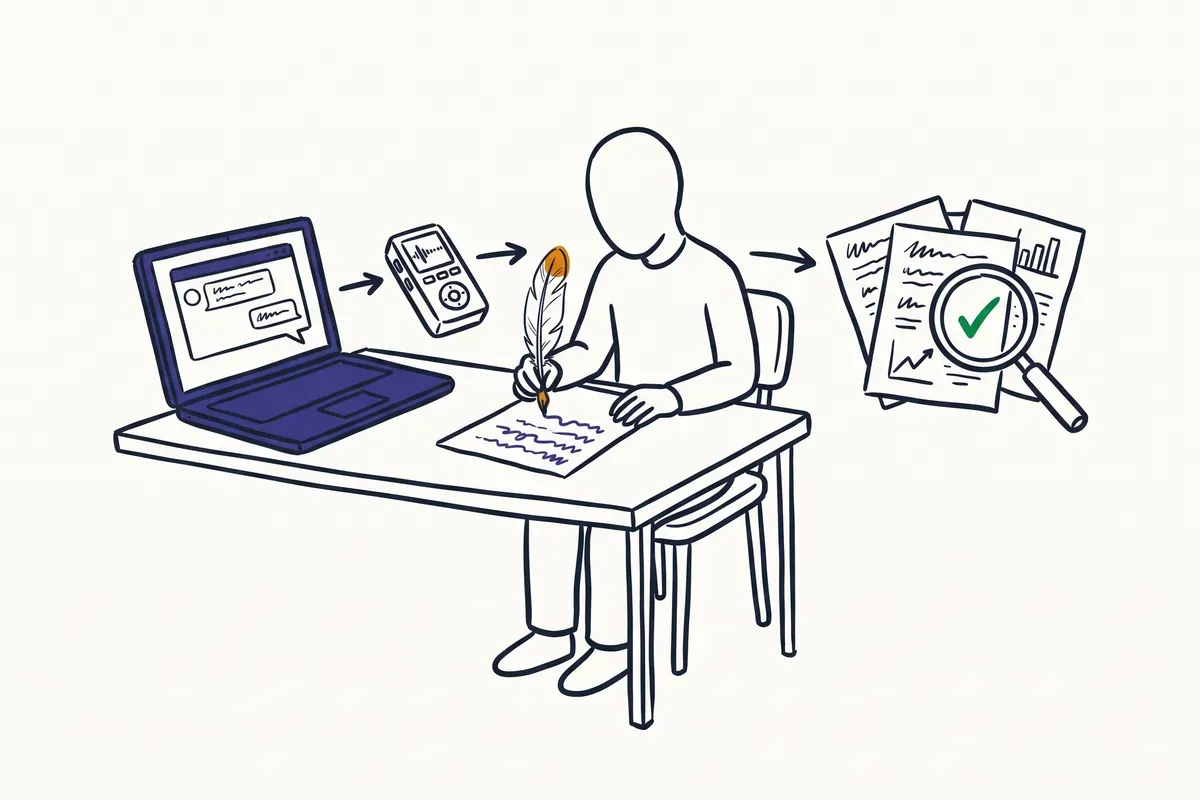
What is ghostwriting? In short, it’s writing that someone else takes the credit for. PBS’s literary series It’s Lit! defines it as hiring someone to write a text that will be published under and credited to another person. The ghostwriter does the writing. The credited author puts their name on it.
If you plan to hire a writer or become one, here’s the core of it. A ghostwriter researches, interviews and drafts in the author’s voice, and is usually bound by a confidentiality clause that keeps their role anonymous.
| Question | Short answer |
|---|---|
| What is ghostwriting? | A text written by one person and published under another person’s name |
| What does a ghostwriter do? | Anything from polishing a rough draft to writing an entire book from interviews |
| What gets ghostwritten? | Memoirs, how-to books, speeches, songs, screenplays, blogs and social media accounts |
| Do ghostwriters get credit? | Sometimes a “with” byline or a “research assistant” thank-you; often no credit at all |
| Is it ethical? | Disputed for books; ghostwritten coursework can be charged as academic fraud |
| How long does a book take? | Several months to a full year |
| Do ghostwriters use AI? | Sixty-eight percent use it at least some of the time |
What is ghostwriting (meaning and definition)?
Ghostwriting means one person writes a text and another person is credited with it.
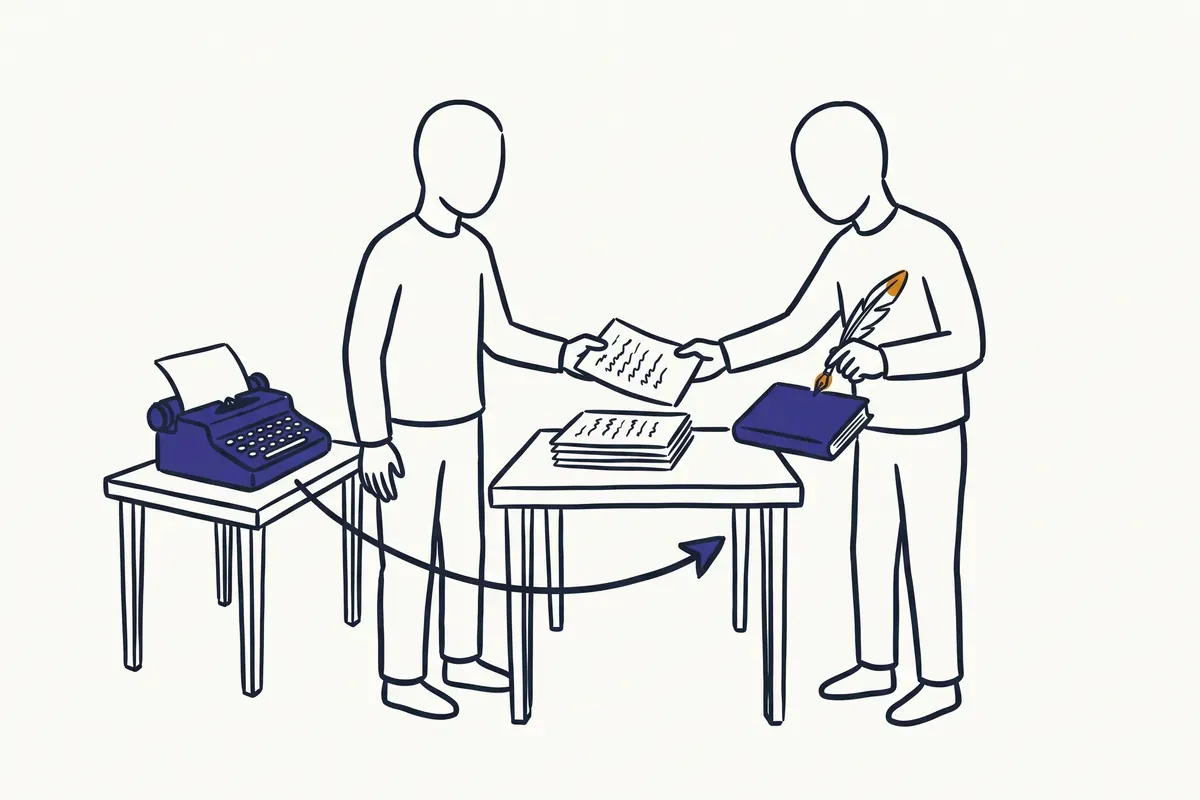
PBS’s definition reaches across every format: if a text can be written, it can be ghostwritten. The program lists books, novels, articles, blog posts, political memoirs and rap lyrics.
Wikipedia’s article puts the weight on voice. It says a ghostwriter is expected to closely replicate the writing style and voice of an author’s previous works while providing new content. It adds that ghostwriting, or simply “ghosting,” also occurs in other creative fields such as music and the visual arts.
Where ghostwriting ends is blurry. Wikipedia says that once credit is established for a writer, that writer would not be considered a ghostwriter, yet the same article describes ghostwriters who share a “with” byline on the cover. PBS raises the same question about credited co-writers, covered in the credit section below.
Why do people hire ghostwriters?
People hire ghostwriters because they have a story to tell but not the time or craft to write it. Wikipedia lists the usual reasons: celebrities and public figures may lack the time, discipline, or writing skills for a book several hundred pages long. Some can write a short article but don’t know how to structure a full book so it stays well-paced. Publishers also use ghostwriters to put out more books a year under a well-known author’s name, or to rush out a book tied to a news event.
PBS sums up the market side: ghostwriters exist because there is a demand for them, and sometimes the name on the cover is worth more than the person who typed the words.
What does a ghostwriter actually do?
A ghostwriter turns someone else’s stories, knowledge and voice into finished writing. How much they do varies. Wikipedia describes involvement that ranges from minor to substantial: some ghostwriters only clean up and polish a rough draft, while others write a whole book from stories, notes, an outline or interview sessions. The credited author tells the ghostwriter what style, tone and voice they want.
Before
So we lost the big client in March, and honestly I thought we were done, but then, um, the team basically rebuilt the whole onboarding thing in like two weeks, and that's kind of what saved us.
After
In March we lost the big client, and I thought we were done. Then the team rebuilt the whole onboarding process in about two weeks. That's what saved us.
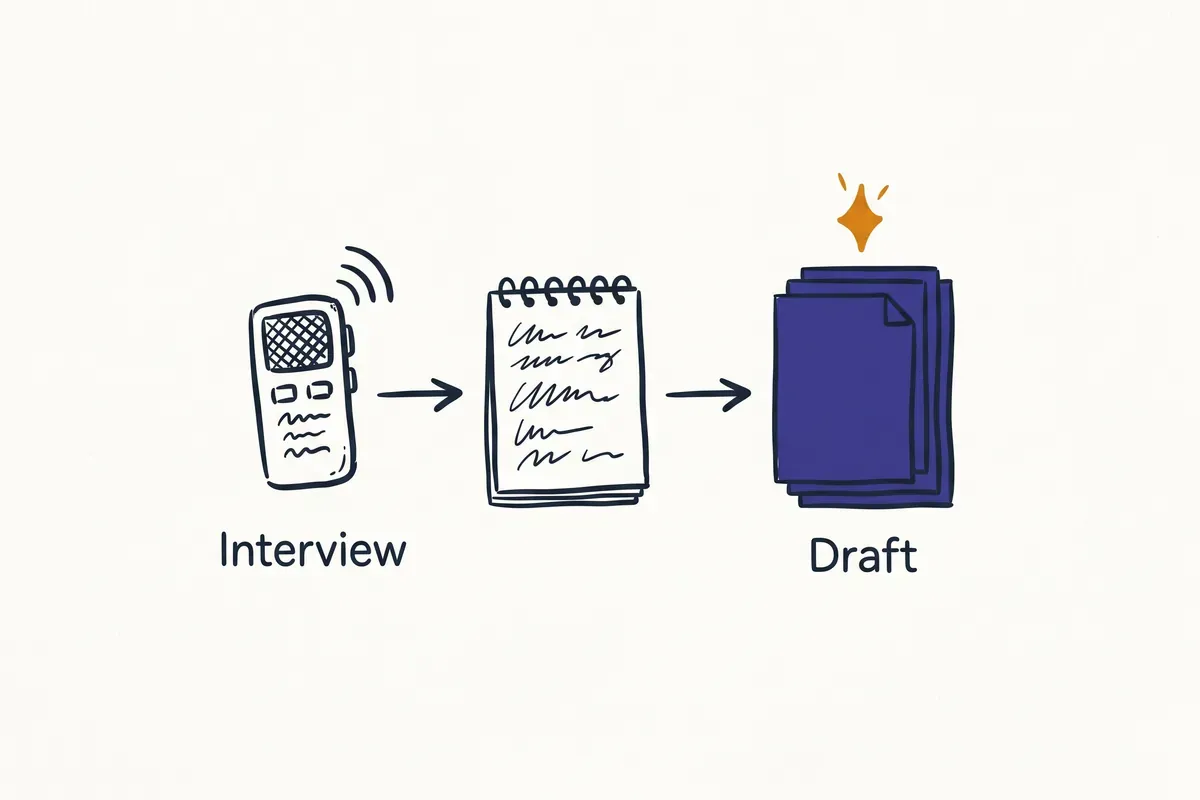
PBS adds that the job can involve extensive research, interviews with the credited author, or a style guide to keep the voice consistent.
Aside from AI, voice was a common thread at the 2025 Gathering of the Ghosts conference, reported by the American Society of Journalists and Authors (ASJA), where capturing the author’s voice was called a ghostwriter’s job one. Methods the panelists mentioned:
- Spend time talking before the real work starts, so the author feels comfortable opening up.
- Read what the author has written and listen to interviews they’ve given.
- Listen back to your own interview recordings, even if a service transcribes them.
- Make the prose clear first and add voice where it’s needed.
Memoir ghostwriters take pride in disappearing into the persona of the credited author. A separate guide covers what does a ghostwriter do on an ordinary working day.
Example: turning your spoken answer into a ghostwritten paragraph
Say you’re a founder working with a ghostwriter on a book chapter. In an interview you say:
“So we lost the big client in March, and honestly I thought we were done, but then, um, the team basically rebuilt the whole onboarding thing in like two weeks, and that’s kind of what saved us.”
A ghostwriter keeps your facts, your order and your plain way of talking, and cuts the filler:
“In March we lost the big client, and I thought we were done. Then the team rebuilt the whole onboarding process in about two weeks. That’s what saved us.”
The second version keeps every fact from the first and drops only filler words such as “um,” “basically” and “kind of,” so a reader still hears you.
What kinds of writing are ghostwritten?
Almost every kind of writing that carries a public name gets ghostwritten, from presidential speeches to pop songs.

Books and memoirs
Celebrities and public figures widely use ghostwriters for autobiographies and memoirs. Wikipedia lists Profiles in Courage, Trump: The Art of the Deal and Long Walk to Freedom among books produced or largely written by ghostwriters, along with several of Hillary Clinton’s books. Some how-to books, diet guides and cookbooks are written entirely by a ghostwriter and credited to a celebrity to help sales. Candidates in several countries commission ghostwritten autobiographies before elections. If that’s your project, memoir ghostwriting has its own process and costs.
Series fiction and continuations
Long-running fiction series often use ghostwriters under one pen name. “Carolyn Keene” and “Franklin W. Dixon,” the names on Nancy Drew and the Hardy Boys, came from the Stratemeyer Syndicate, a group of anonymous writers. One Nancy Drew writer earned $125 a book plus Christmas bonuses and signed away all rights to royalties and recognition. Writers on these series get a template of characters, speech patterns and expected tone, plus copies of earlier books to match the style. After V. C. Andrews died, her estate hired a ghostwriter to keep writing novels under her name.
Speeches and official documents
Political speeches have been ghostwritten in the US since George Washington, who PBS notes used a ghostwriter for his farewell address. PBS adds that you’d be hard pressed today to find an American politician who writes their own speeches. Wikipedia records that a number of papal encyclicals were ghostwritten too.
Songs and screenplays
Ghostwriting in music goes back centuries. Mozart was paid to ghostwrite music for wealthy patrons. Today a pop ghostwriter may write lyrics and a melody in the credited musician’s style, and the rising use of ghostwriters by high-profile hip-hop stars has caused controversy. Screenwriters also hire ghostwriters to edit or rewrite their scripts.
Blogs, social media and business content
Executives and public figures often have their blogs and social accounts ghostwritten. Wikipedia says many public figures have ghostwriters at least partially handle their Facebook and Twitter accounts, with the writing modeled on the credited author’s style and tone. Corporate ghostwriting has its own challenge: ASJA’s conference report notes that projects get harder when multiple people review drafts, such as a C-suite executive and their communications team.
Academic work
Students and researchers can buy essays from academic ghostwriting services. Academic ghostwriting is a different case from book ghostwriting, and it’s covered in the ethics section below.
Do ghostwriters get credit, and how is a ghostwriter different from a co-author?
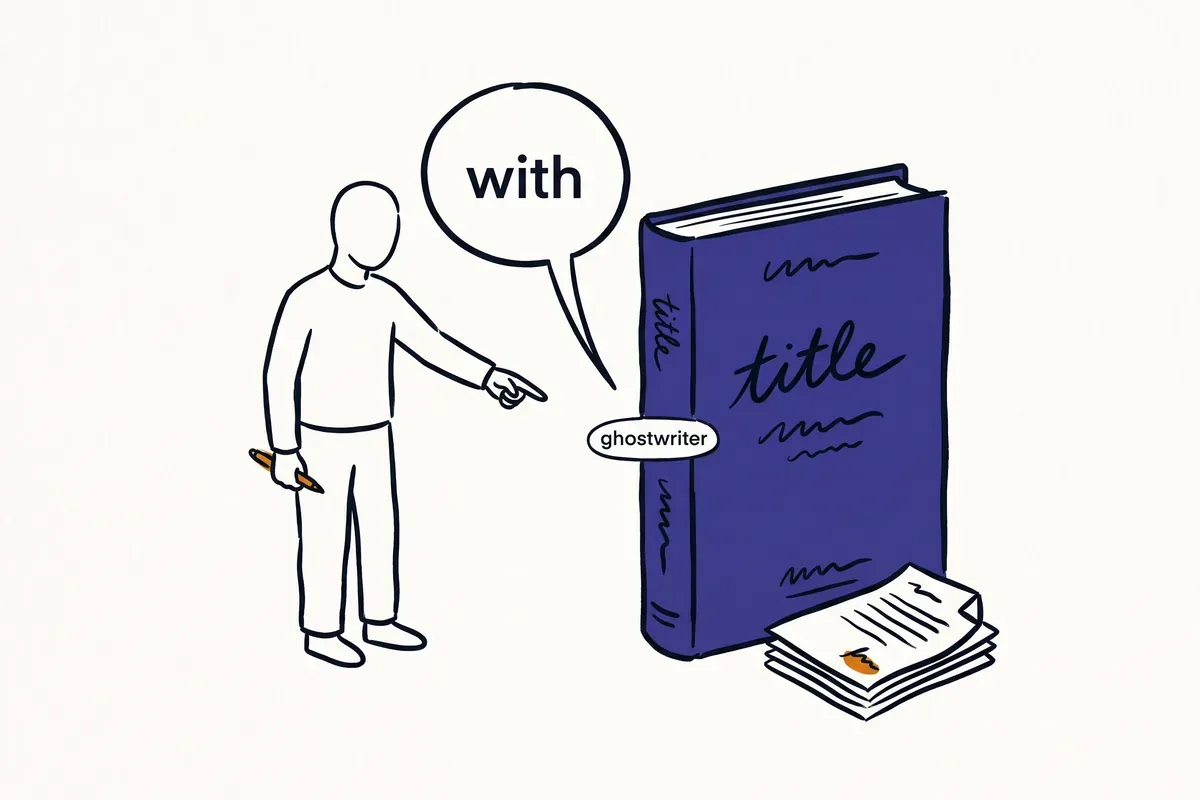
Many ghostwriters get no public credit, but some get a credit line, depending on what the contract says. Wikipedia describes the common options:
| Credit line | What the reader sees | Still a “ghost”? |
|---|---|---|
| No credit | Only the author’s name; the writer may sign a nondisclosure contract | Yes |
| Acknowledgment | A thank-you to a “researcher,” “research assistant” or “contributor” | Partly |
| “By (author) with [writer]” | Both names on the cover, the writer’s underneath | Credit is shared |
| Co-author | Two authors credited | No, by Wikipedia’s definition |
The “with” credit sometimes comes in place of pay, or in exchange for a lower fee, because the credit has value to the writer. Screenwriters who ghostwrote a script can be listed in the film credits.
Ghostwriters often separate “author” from “writer.” One ghostwriter told The Washington Post that a ghostwriter is an interpreter and a translator rather than an author, which is why clients deserve full credit.
Co-writing sits at the edge of the definition. PBS points out that James Patterson gives co-writing credit when it applies, and asks whether that still counts as ghostwriting. Credit can also backfire. When a children’s author ghostwrote a novel for the beauty blogger Zoella, she was acknowledged in the book but not credited on the cover. Fans objected because it was fiction and because Zoella’s brand rested on authenticity.
Is ghostwriting legal and ethical?
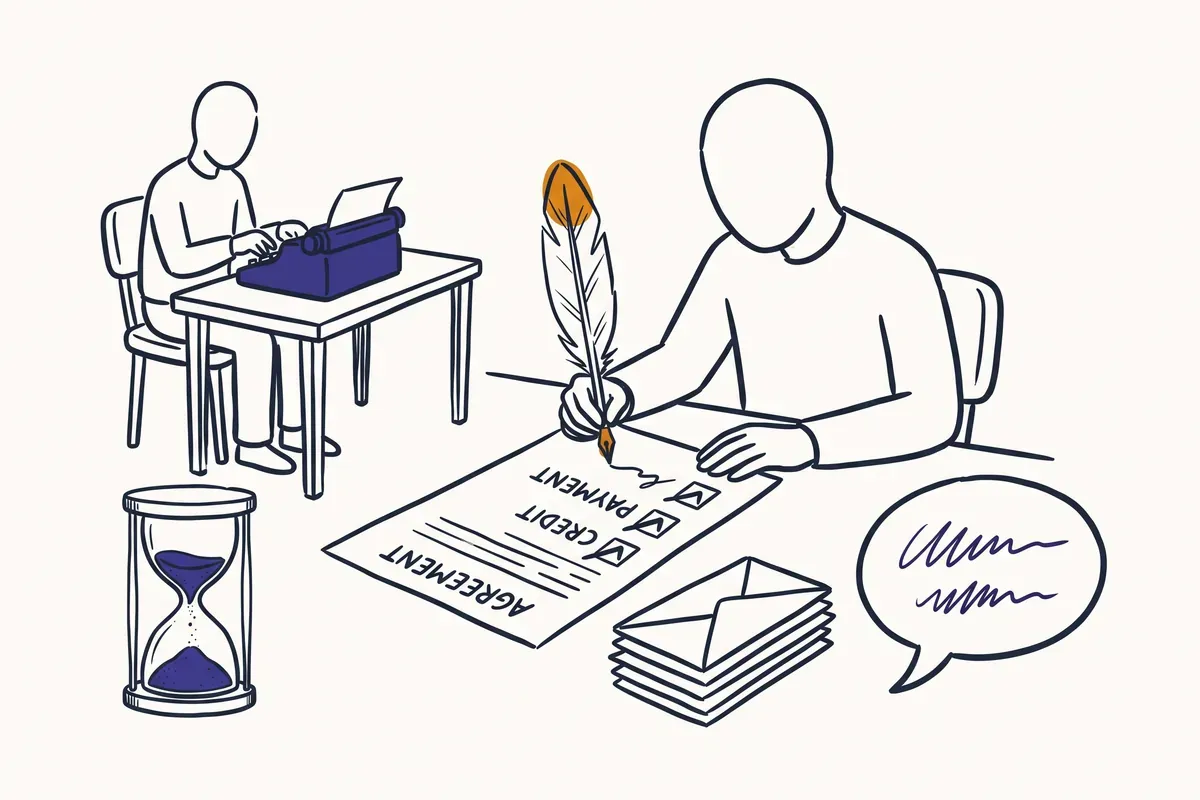
The court cases Wikipedia and PBS describe are fights over credit and pay rather than over whether ghostwriting itself was allowed, while the ethics remain disputed.
What the legal fights are about
Ghostwriting lawsuits in the record turn on who contributed what and who got paid. In 1993 songwriter Darryl Neudorf sued Sarah McLachlan, claiming an uncredited contribution to her album Touch. The judge ruled for McLachlan on the songs because neither had regarded the other as a joint author, and for Neudorf on the payment issue. Maquet took Dumas to court over co-authorship acknowledgments and royalties, and the court ruled for Dumas. The practical lesson for you: agree on credit and payment in writing before work starts.
The ethics debate
People disagree about whether ghostwriting misleads readers. PBS cites the founder of Plagiarism Today, who argues that by the usual definition ghostwriting is a type of plagiarism done with permission. PBS also cites an author and attorney who says the key test is the audience’s expectations and how much the work depends on the integrity of its authorship.
Book ghostwriting vs academic ghostwriting
Academic ghostwriting means buying graded work written on demand, and universities fight it. Wikipedia says these services can be associated with academic fraud and that universities have developed strategies to combat them. Some let professors give oral exams on papers they believe were ghostwritten, and a student who doesn’t know the content of their own essay can be charged with academic fraud.
How does a ghostwriting project work, step by step?
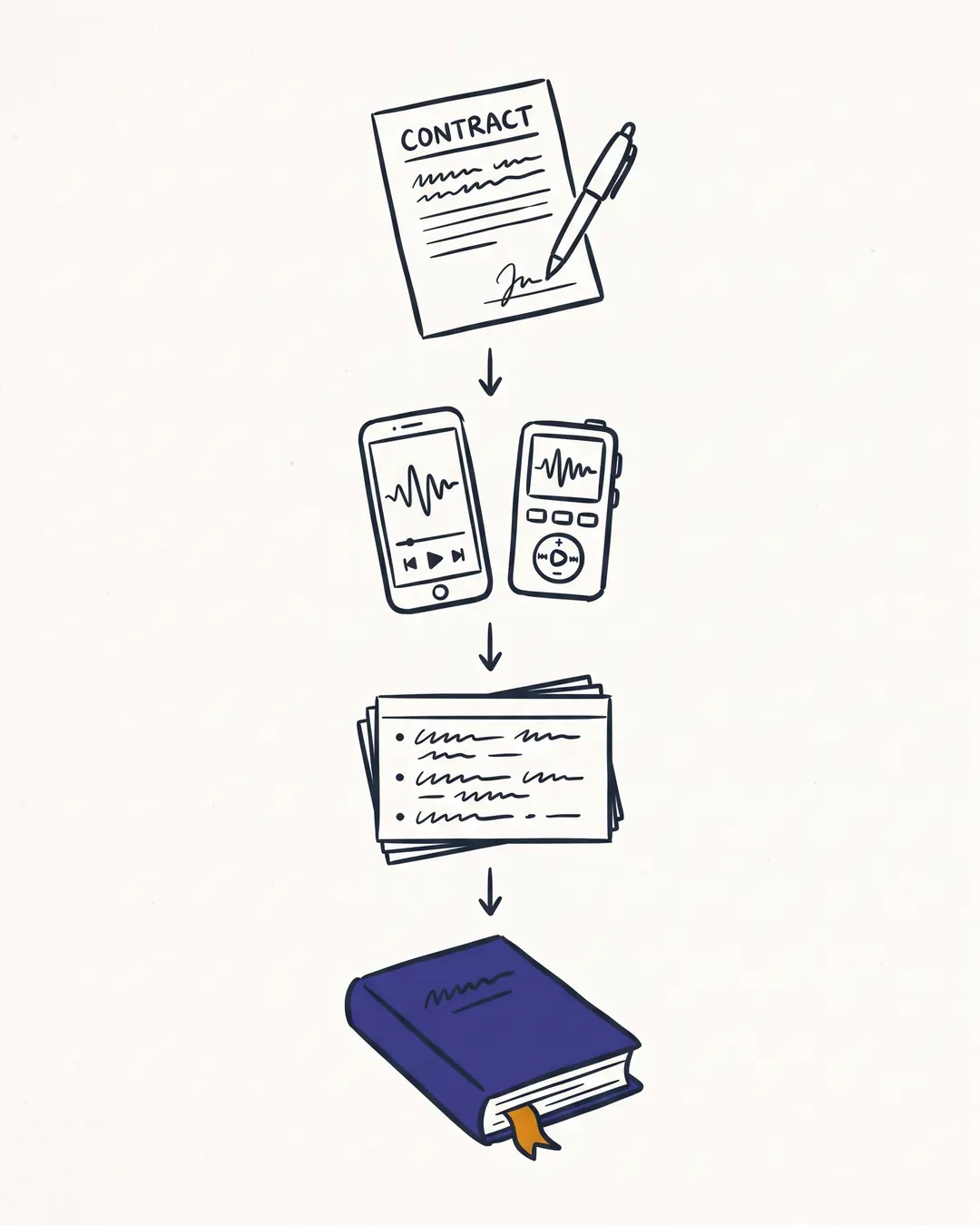
A book project usually moves from a deal, to interviews, to drafts, though ghostwriters at the 2025 conference agreed that the author and the project dictate the process. A typical sequence:
- Agree on scope and pay: per hour, per word or page, a flat fee, a share of royalties, or a mix.
- Settle whether the writer stays anonymous, gets an acknowledgment or gets a "with" byline.
- Spend time talking first, before on-the-record interviews begin.
- Record the interviews; most use AI transcription, some transcribe by hand to pick up the voice.
- Research and outline, all at once or chapter by chapter.
- Write a proposal if you're pitching publishers, with an overview in the same voice as the book.
- Draft and revise, which can take several months to a full year.
How is AI changing ghostwriting?
AI is now part of most ghostwriters’ toolkits, though mostly for tasks around the writing. The “AI and the Writing Profession Study,” reported by ASJA in November 2025, found that sixty-eight percent of ghostwriters use AI at least some of the time, compared with 61% of writers in general. Book ghostwriters were among the least advanced users: 11% called themselves advanced, 40% dabblers and 31% nonusers.
11%
Book ghostwriters who called themselves advanced AI users
Source: asja.org, as of Nov 28, 2026
40%
Book ghostwriters who called themselves AI dabblers
Source: asja.org, as of Nov 28, 2026
31%
Book ghostwriters who don't use AI
Source: asja.org, as of Nov 28, 2026
What panelists said they use AI for:
- Transcribing interviews
- Research, with every single fact checked
- Brainstorming titles and subtitles
- Summarizing academic articles and dense background material
- Researching a prospective client before the first meeting
The one task the AI-using ghosts at the conference said they skip is writing itself. One panelist called the output bland, full of clichés and corporate jargon. Another advised telling the tool exactly what you want, such as “use active voice and don’t use adverbs,” and asking “Are you sure?” plus requesting source links to catch made-up answers. If you write with AI yourself, the signs of ai writing are worth learning.
AI also worries the industry. The Authors Guild’s CEO told the conference that AI apps were illegally trained on books without the authors’ consent, and warned that without licensing, markets could be flooded with AI-generated books.
What to do next
Your next step depends on whether you’re hiring a ghostwriter or becoming one, and whether AI is part of your process.
- If you want to hire a ghostwriter, decide on the credit line you want and how you’d prefer to pay (hourly, per word or page, flat fee, royalties or a mix) before you talk to writers. The guide on how to hire a ghostwriter walks through the rest.
- If you want to become one, know that the Authors Guild calls ghostwriting a viable path for professional writers but says it is still hard to see how to break in. Start with how to become a ghostwriter.
- If you’re starting a book of your own, gather the stories, notes or outline you already have, since Wikipedia lists those, along with interview sessions, as what a ghostwriter writes a book from.
- If you use AI, follow the panelists’ lead and start with transcription and research, then fact-check everything the tool gives you.
Frequently asked questions
What is the ghostwriting meaning in simple terms?
One person does the writing and another person's name goes on it. Wikipedia notes the same arrangement outside writing: in fine art and comics, several assistants often work on a piece credited to one artist, and Andy Warhol supervised an assembly-line silk screen process for his artwork.
Is ghostwriting cheating?
Wikipedia separates academic ghostwriting from plagiarism because it doesn't copy existing texts, and essays from these services as a rule have their originality confirmed by the plagiarism detection software universities use. Universities have still developed strategies to combat these services, which Wikipedia says can be associated with academic fraud.
How much do ghostwriters get paid?
Pay varies with the project and how it's priced. Wikipedia compares book ghostwriting advances to film, where the Writers Guild's Minimum Basic Agreement sets a starting price of $37,073 for a non-original screenplay with no treatment. For current book rates, see a dedicated guide to ghostwriter costs.
Can you hire a ghostwriter from another country?
Yes. Wikipedia notes that ghostwriting can be outsourced to places such as India, China and the Philippines to save money. It adds that the writer's track record and writing samples matter even more when the writer's culture and first language differ from yours.
Does the ghostwriter keep any rights to the book?
That depends on the deal. A ghostwriter quoted on PBS's It's Lit! says that once she finishes ghosting a book it isn't hers anymore and belongs to her client, and one original Nancy Drew writer signed away all rights to royalties and personal recognition. Wikipedia notes that some ghostwriters are paid a percentage of the royalties instead, so read the rights and payment clauses before you sign.
Which famous writers worked as ghostwriters?
PBS's It's Lit! names H.P. Lovecraft, who ghostwrote for Harry Houdini, and Sinclair Lewis, who sold plots to Jack London. Katherine Anne Porter got her start as a ghostwriter. One career ghostwriter on the program estimates he has written about 70 nonfiction books and 10 novels for other people.
Is ghostwriting a real career?
Yes. The Authors Guild calls ghostwriting a viable path for professional writers, though it says the field is still frustratingly opaque. Close to 200 ghostwriters, agents, publishers and publicists attended the 2025 Gathering of the Ghosts conference in New York.
Sources
- Ghostwriter - Wikipedia
- AI Is Changing Ghostwriting, and Other Top Takeaways from 2025 Gathering of the Ghosts - American Society of Journalists and Authors
- It's Lit! | Fear of Ghost...Writing! | Season 1 | Episode 8 | PBS
- Breaking Into Ghostwriting: Finding Your Lane, Your Clients, and Your Boundaries - The Authors Guild