To become a ghostwriter with no experience, pick a subject you know, practice interviewing and writing in other people's voices, and build samples you can show. Most people who hire ghosts are professionals such as physicians and attorneys; publishers want experienced ghosts. Sign a contract covering copyright and credit. BLS reports a $76,910 median wage for writers and authors.
Key takeaways
- BLS puts the median wage for writers and authors at $76,910 (May 2025). Its writers-and-authors page has no separate figure for ghostwriters.
- A ghostwriter is never named on the cover, while a co-author typically is, so settle cover credit in the contract.
- Copyright in a ghostwritten book almost always goes to the client. Copyright Office Circular 30 explains works made for hire.
- Reedsy says it accepts around 1% of freelancer applications to its marketplace.
- A Gotham Ghostwriters study found sixty-eight percent of ghostwriters use AI at least some of the time, but conference panelists who use it said they don't use it to write.
You can learn how to become a ghostwriter without any experience. Pick a subject you already know. Practice catching other people’s voices from recorded interviews, then build samples you’re allowed to show. The Bureau of Labor Statistics says many writers and authors are self-employed.
The hard part is credit. Writer’s Digest explains that a co-author is typically identified on the cover, while a ghostwriter is never named. That means you have to show you can do the work without a book that carries your name.
| Question | Short answer | Source |
|---|---|---|
| Do you need a degree? | A degree in English, communications, or journalism is “generally required for a full-time position” as a writer. Blogging and internships also count as useful experience. | BLS writers and authors profile |
| What do writers earn? | Median of $76,910 for writers and authors in May 2025. The page has no separate ghostwriter figure. | BLS pay data |
| Is the field growing? | Little or no change is projected for 2025–2035, with about 11,900 openings a year | BLS job outlook |
| What do book ghostwriters charge? | $10,000–$50,000 for books of 50,000–70,000 words, in an informal 2010 poll | Writer’s Digest on ghostwriting fees |
| Who owns the copyright? | Almost always the client | Writer’s Digest on contracts |
| Do ghostwriters use AI? | Sixty-eight percent use it at least some of the time, according to a Gotham Ghostwriters study | ASJA conference report |
What does a ghostwriter actually do?
A ghostwriter writes books, speeches, posts and other material that another person publishes under their own name. Celebrities and politicians use ghostwriters, but Writer’s Digest says most authors who hire one are professionals such as physicians, attorneys and financial advisers. They want a book that attracts clients and marks them as experts, and they lack the time or the writing skill to produce it themselves.
Everyday people hire ghosts too, for anything from memoirs to novels to how-to guides. According to the same guide, publishers, book packagers, literary agents and corporations also hire ghostwriters for specific projects, though they look for experienced ones.
You can also start with short work. The EFA’s 2026 Rate Chart lists speechwriting and social media posts among its writing services, next to press releases and query letters. For a closer look at the daily routine, see what does a ghostwriter do.
What skills does ghostwriting need?
Ghostwriting needs you to collaborate, manage a project and write in another person’s voice. Writer’s Digest stresses that whether or not you get cover credit, you’re writing someone else’s book. The client has the final say, and you may also run the interviews and research and keep the client on schedule.
Voice came up again and again at the 2025 Gathering of the Ghosts conference. ASJA’s report from the event also notes that experienced ghosts warn against telling prospects “This is how I work.” If that isn’t how the client likes to work, it can be a reason not to hire you.
Do you need a degree or experience to become a ghostwriter?
You need a degree for some salaried writing jobs, and you need experience to land the most selective ghostwriting work. The BLS ties its degree requirement to full-time positions. It adds that experience gained through internships or any writing that improves skill, such as blogging, is beneficial. If you plan to freelance, that second part is the one you can act on this week.
On whether you need a book of your own first, Writer’s Digest says it helps to have published at least one book before you ghost for others. It adds that articles and other shorter published pieces can build up your résumé for prospects. Some marketplaces are selective: Reedsy says it accepts only around 1% of the freelancers who apply to its marketplace.
How to become a ghostwriter with no experience: where do you start?
Start by choosing a niche, training your ear for voice, practicing interviews and publishing short work under your own name.
Choose a subject you already know
A subject you already know gives prospects a reason to trust you. The author of Writer’s Digest’s guide specializes in health, fitness and nutrition, and almost all of her ghostwriting work comes from professionals in those fields. Her advice is to start with what you know and let editors, story sources and colleagues know you now ghostwrite.
Train your ear for other people’s voices
You learn to write in a client’s voice by studying how they talk. The Writer’s Digest guide suggests noting the words and phrases a client uses often. Do they speak in short, abrupt sentences or longer ones? Do they use industry jargon or tell “war stories”?
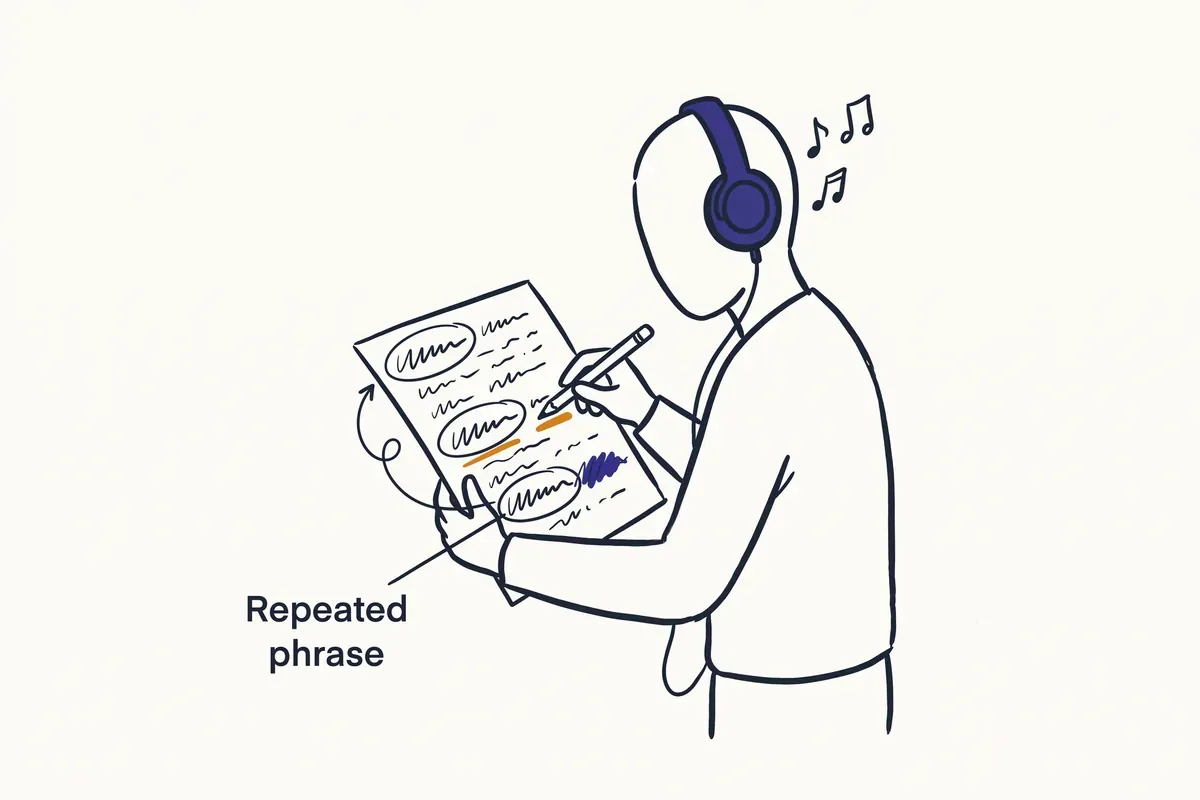
Ghostwriters at the 2025 conference described reading what the author has already written, listening to interviews they’ve given, and replaying their own interview recordings. One said they spend more time keeping the prose clear and add voice where it’s needed.
Practice interviewing and recording
Interviewing is one way ghostwriters gather material, so practice it on someone who will let you record. Writer’s Digest describes several ways a project can work: you interview the client and write from your notes, the client writes part of the book, or the client hands you background material. According to ASJA’s report, almost all of the ghostwriters who spoke at the conference record their interviews, and many use two devices: a phone and a recorder. Most use AI transcription. Some transcribe by hand because it helps them pick up the author’s voice. Speakers also advised spending time talking before the real work starts, so the author feels comfortable opening up.
Before
So, yeah, honestly most people come in and they think it's the knee, right? But nine times out of ten it's the hip. I tell them, look, the knee is just the messenger.
After
Most patients walk in sure the problem is their knee. Nine times out of ten, it's the hip. I tell them the knee is just the messenger.
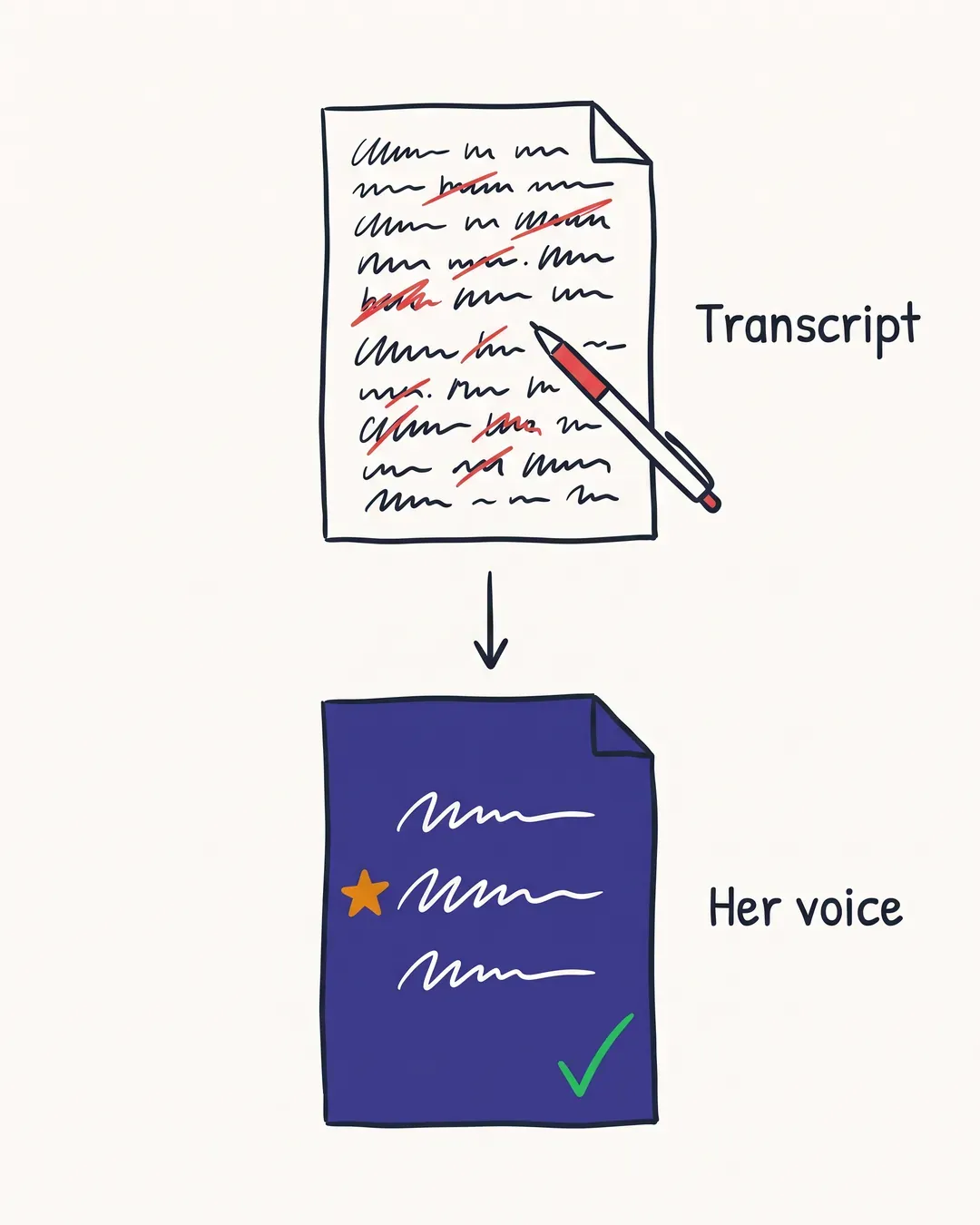
Example: turning a recorded answer into a client’s voice. You interview a friend who works as a physical therapist and ask why patients come in. Her answer from the transcript:
“So, yeah, honestly most people come in and they think it’s the knee, right? But nine times out of ten it’s the hip. I tell them, look, the knee is just the messenger.”
Your draft paragraph in her voice:
“Most patients walk in sure the problem is their knee. Nine times out of ten, it’s the hip. I tell them the knee is just the messenger.”
You cut the filler (“so, yeah,” “right?”). You kept her short sentences and the line she clearly repeats to patients. Do this a dozen times with permission and you have samples that show voice work.
Publish short work under your own name
Your own bylined articles are the samples a prospect can check. They’re the shorter published pieces Writer’s Digest says help your résumé, and the kind of skill-building writing the BLS calls beneficial.
How do you build a ghostwriting portfolio when you can’t show client work?
You build a portfolio from spec samples, bylined pieces and whatever a client agrees you may share. Here are ways to do it:
Checklist
- Interview a relative or colleague with a good story, write a chapter or post in their voice, and get their written OK to show it.
- Write a sample book proposal overview for a made-up or willing author.
- Before signing, ask whether you may name the client privately or share excerpts, and put the answer in the agreement.
- Describe your process, including project management on projects with several reviewers.
- Publish short bylined articles under your own name.
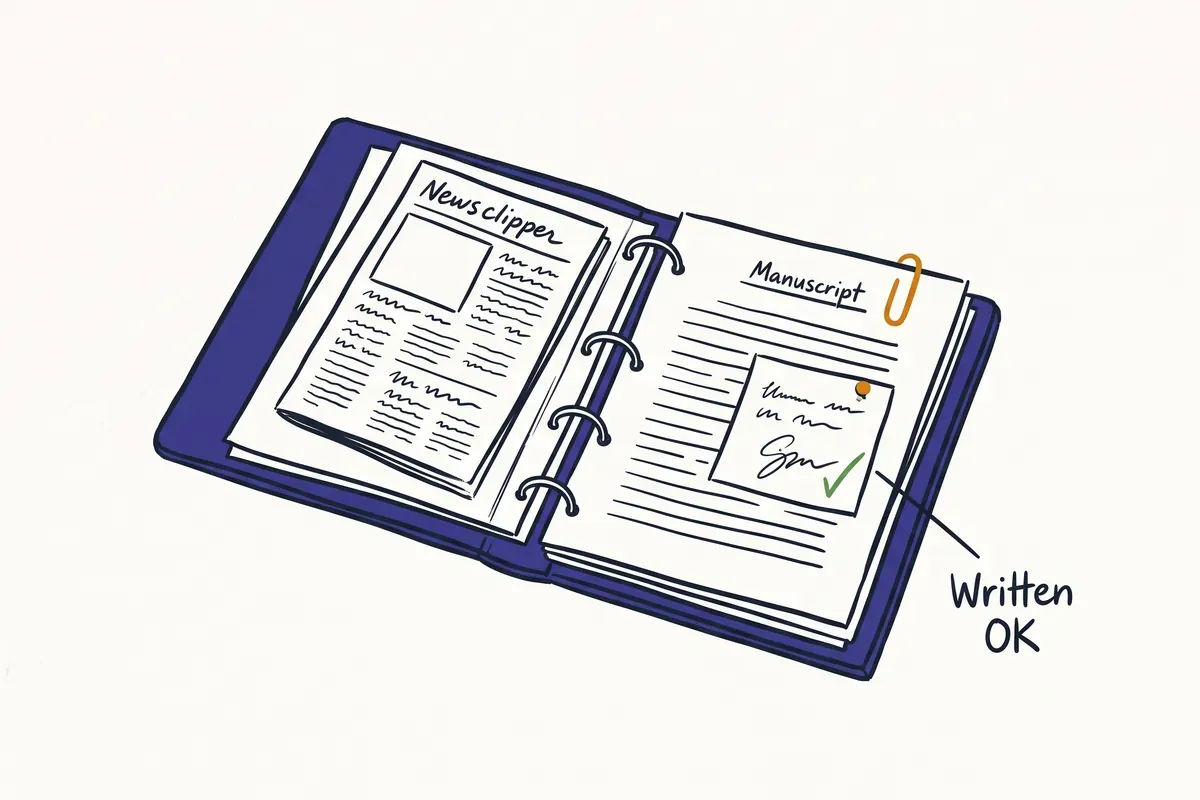
- Interview a relative or colleague with a good story, write a chapter or post in their voice, and get their written OK to show it to prospects.
- Write a sample book proposal overview for a made-up or willing author (the book section below covers what agents want in it).
- Before you sign a client contract, ask whether you may name the client privately to prospects or share excerpts, and put the answer in the agreement.
- Describe your process. ASJA’s report notes that projects with several reviewers turn ghostwriters into project managers, and says to promote those skills on LinkedIn and in pitches.
Where do beginners find their first ghostwriting clients?
Writer’s Digest describes two basic routes to ghostwriting work: answering posted listings, and telling potential clients that you ghostwrite.
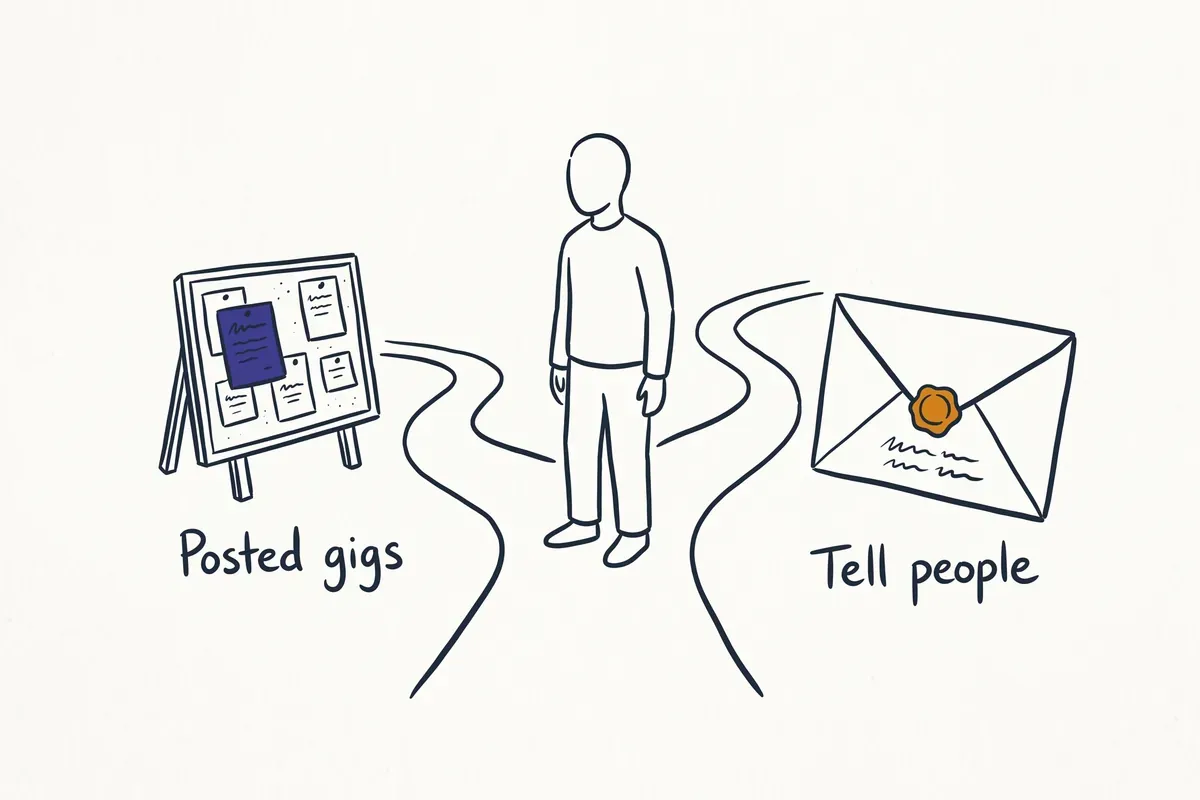
Answer posted gigs
The guide names Craigslist, JournalismJobs.com and Freelancedaily.net as places to look for ghostwriting and co-authoring listings. A separate guide covers where ghostwriting jobs are posted today.
Tell people you ghostwrite
To tell people you ghostwrite, say so on your website, your blog and in your email signature. The same guide mentions Publishers Marketplace, listed at $20 a month, as a place to promote your services. It recommends approaching prospects with a letter of introduction that describes your qualifications.
Agencies and curated marketplaces
Agencies and curated marketplaces sit between authors and writers. ASJA describes Gotham Ghostwriters as a New York agency that plays matchmaker between authors and ghostwriters. Gotham co-sponsors the Gathering of the Ghosts conference with the Association of Ghostwriters, and close to 200 people attended the 2025 event.
Reedsy also lists ghostwriters. It says they help authors shape a concept, write a proposal and capture their voice, and that projects on the site are covered by a project protection guarantee. For more on the platform, see reedsy ghostwriting.
Professional associations
The Editorial Freelancers Association, with nearly 3,300 members including editors, writing coaches and writers, offers a Job List and Member Directory to connect editors with potential clients.
How much do ghostwriters make, and what should you charge at first?
Pay varies widely, and the BLS page on writers doesn’t break out ghostwriters. The BLS reports that the median annual wage for writers and authors was $76,910 in May 2025. Its page reports on writers and authors as one group, so treat that number as a stand-in. The BLS projects little or no employment change from 2025 to 2035. Most of its roughly 11,900 yearly openings come from replacing writers who change jobs or retire.
76,910 USD a year
Median annual wage for writers and authors, May 2025 (no separate ghostwriter figure)
Source: bls.gov, as of Nov 28, 2026
11,900 openings
Projected yearly openings for writers and authors, 2025 to 2035, mostly from replacing writers who leave
Source: bls.gov, as of Nov 28, 2026
How ghostwriters set fees
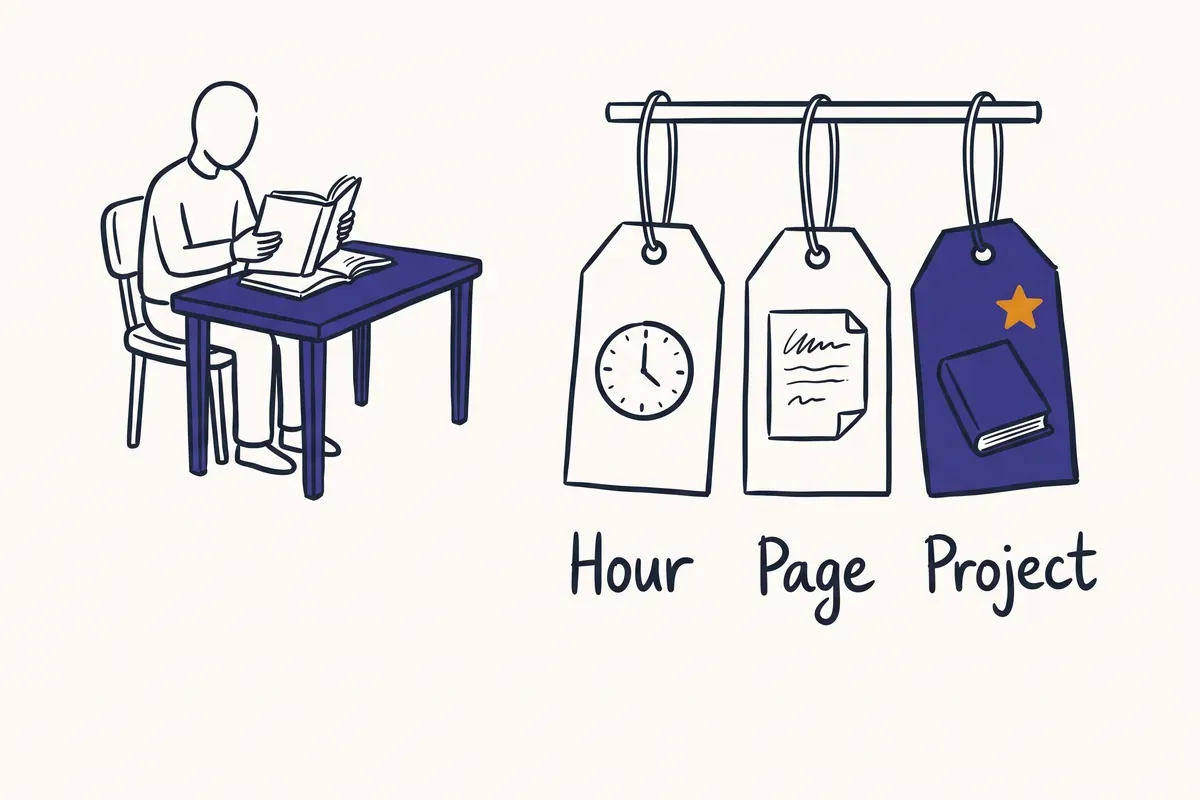
Writer’s Digest lists three ways to charge: by the hour, by the word or page (its examples are $10 a page or $0.25 a word), or by the project. It says most ghostwriting clients prefer a flat project fee. An informal 2010 poll found ghosts averaging $10,000 to $50,000 for books of 50,000–70,000 words, and most charged $5,000 to $10,000 for a book proposal.
Before you quote, find out how long the book will be and how you’ll get the material. In the guide, one ghostwriter notes that interviews take more time than written notes, so they cost the client more.
Example: checking a quote. You’re asked to bid on a 50,000-word business book. Before you name a flat fee, confirm the length and ask whether the client will hand you notes or expect interviews. Then compare your figure with reported fees for books that size, such as the 2010 poll’s $10,000 to $50,000 for 50,000–70,000 words. If the client wants weekly interviews instead of handing you notes, raise the flat fee to cover that time.
What the EFA rate chart can and can’t tell you
The EFA’s 2026 Rate Chart is based on a survey of over 1,100 respondents, run from November 2025 through mid-January 2026. The EFA says it neither sets rates nor advises members on them. Its site has a rate estimator and a converter between per-hour, per-page and per-word rates. The EFA’s announcement says the chart is for guidance only. It also notes this was the first year the survey was open to nonmembers.
How do you become a book ghostwriter?
Book ghostwriting can cover two pieces of work: the proposal and the manuscript. Agents at the 2025 conference said a proposal’s overview should run two to three pages. It should explain what the book is about, why it’s timely and who’s writing it, and it should be written in the book’s voice. Their consensus on total length was 30 to 50 pages, including a chapter outline and a sample chapter.
- Write an outline if the client hasn't, and get it approved first.
- Send chapters for approval as you go, and schedule a call when changes are large.
- Mark open questions with "TK" (to come) so you can search for them all at once.
- Combine the approved chapters into one master document for a final review.
- Stay on for editor revisions if a traditional publisher bought the book.
For the manuscript itself, Writer’s Digest says a book typically takes four to six months. Its workflow looks like this:
- Write an outline if the client hasn’t, and get it approved first.
- Send chapters for approval as you go, and schedule a call when changes are large.
- Mark open questions with “TK” (publishing shorthand for “to come”) so you can search for them all at once.
- Combine the approved chapters into one master document for a final review.
- Stay on for editor revisions if a traditional publisher bought the book.
For the full process, see ghostwriting a book.
What should be in a ghostwriting contract?
A ghostwriting contract should say what you’ll write, what you’ll be paid and when, the deadline, and who owns the copyright. That last answer is almost always the client, according to Writer’s Digest, which also advises getting legal counsel to draft or review the agreement. The guide adds a few more points to settle:
- Who does what, and when the client delivers notes or research
- Whether you get cover credit, which a co-author should
- Who pays for travel and other expenses
- How you’ll get the material: written notes, interviews or both
Name who approves drafts as well. ASJA’s report says projects get harder when several people review, such as a CEO and their communications team.
Copyright terms often use the phrase “work made for hire.” The U.S. Copyright Office’s Circular 30 explains the legal requirements for a work made for hire and who counts as the author and copyright owner. Its Circular 17 notes that the Office cannot give legal advice. The Authors Guild’s Writer’s Legal Guide includes a chapter on collaboration and ghostwriting agreements, plus one on works made for hire and joint works, which members can download.
Also tell the client up front that you aren’t an agent. Writer’s Digest notes that you can’t guarantee an agent will take the book or a publisher will buy it.
Is AI changing ghostwriting for new writers?
AI is already part of many ghostwriters’ work, and speakers at a 2025 ghostwriting conference differed on how much it threatens the field. The “AI and the Writing Profession Study,” as reported by ASJA, found that sixty-eight percent of ghostwriters use AI at least some of the time, compared with 61% of writers in general. The study came from Gotham Ghostwriters and collaborative writer Josh Bernoff, and its figures are one survey’s findings.
Panelists who use AI said they use it for transcription, research, brainstorming titles, summarizing dense articles and researching clients before a first meeting. They said to fact-check everything it produces. Every ghost who described using AI said writing was the one job they don’t give it. The Authors Guild’s CEO warned that markets could be flooded with AI-generated books. She said there will always be a market for celebrity and brand-name books, but a tighter one, especially without licensing.
A case study titled “Use of AI in Ghostwriting” looks at a business that teaches people to profit from outsourcing books. The business first relied on human writers paid below a living wage, then turned to AI for outlines and possibly whole manuscripts.
What to do next
Your next steps are to pick a niche, make a first sample and set your contract terms before any client asks for them.
- Pick your niche and add “I ghostwrite for (your field) professionals” to your email signature today.
- Record a short interview with a friend, then write one page in their voice using the transcript method in the example above.
- Draft a two-to-three-page proposal overview as a portfolio sample.
- Read Circular 30 on the Copyright Office’s circulars page before you sign your first agreement.
- Write a one-page contract checklist: scope, payment schedule, deadline, copyright, credit, expenses, and who approves drafts.
- Use the EFA’s rate converter to switch a per-word figure into per-hour or per-page terms.
Prices and features as of Nov 28, 2026, from each product's own pages.
Frequently asked questions
Can you ghostwrite part-time?
Yes. The ghostwriter who wrote Writer's Digest's guide says most of her books now come out under clients' names, and she earns as much working part-time hours as she did as a full-time freelancer. She fits two or three ghostwritten books a year around her own books and articles.
Do you need a degree to be a ghostwriter?
The BLS says a degree in English, communications, or journalism is generally required for a full-time position as a writer or author. It also says experience from internships helps, as does any writing that improves your skill. The BLS profile covers writers and authors as one group and has no ghostwriter category.
How much do ghostwriters make per book?
Fees vary widely. In Writer's Digest's informal survey, one established ghostwriter averaged $15,000–25,000 for books of 50,000–75,000 words, another made $12,000 for a 30,000-word book, and one very successful collaborator typically makes $30,000–50,000 per book. These are individual reports, not a statistical sample.
Will AI replace ghostwriters?
Nobody has settled that question. In the Gotham Ghostwriters study reported by ASJA, only 11% of book ghostwriters called themselves advanced AI users, 40% called themselves dabblers and 31% nonusers. A case study titled "Use of AI in Ghostwriting" describes a book-outsourcing business that moved from low-paid human writers toward AI for outlines and possibly whole manuscripts.
What are Reedsy's requirements for ghostwriters?
Reedsy's homepage doesn't list a minimum number of years or published books. It says it accepts around 1% of freelancer applications, and that each professional's profile shows their experience, past projects and results. Check Reedsy's own freelancer pages for its current criteria before you apply.
Is ghostwriting easier than writing your own book?
One ghostwriter quoted by Writer's Digest finds it easier in most cases, because there is less research: the client generally provides background material or points the writer in the right direction. The same ghostwriter says the hourly rate from ghostwriting is typically higher than with some other types of writing work. The guide's author adds that once the manuscript is done, promoting it is the client's job.
Sources
- Writers and Authors : Occupational Outlook Handbook: : U.S. Bureau of Labor Statistics
- How to Be a Successful Ghostwriter - Writer's Digest
- AI Is Changing Ghostwriting, and Other Top Takeaways from 2025 Gathering of the Ghosts - American Society of Journalists and Authors
- Circulars | U.S. Copyright Office
- Writer's Legal Guide - The Authors Guild
- Editorial Rates - The Editorial Freelancers Association
- EFA Announces 2026 Editorial Rate Chart - The Editorial Freelancers Association
- Use of AI in Ghostwriting
- Reedsy: Find the perfect editor, designer or marketer | Reedsy