AI-written text tends to overuse words like "intricate" and "underscore," swap specific facts for vague praise, group things in threes, add sentences about what a fact "highlights," and close with tidy recaps. You fix these by restoring concrete facts and plain wording. None of them proves AI use, and people are poor at telling the difference.
Key takeaways
- No single tell proves AI use: Wikipedia's field guide calls its list observations, not rules, and says many elements of AI writing also turn up in human-written editorials and blogs.
- According to Wikipedia, ChatGPT's best-known overused word peaked in 2023 and early 2024, then dropped off sharply in 2025.
- Research found no evidence that overused words come from model architecture or training data, and links them to learning from human feedback.
- Wikipedia warns that treating the signs alone as the problems to fix could just make detection harder, because the deeper problems remain.
- A 2025 study found people did no better than random chance at telling AI text from human text.
Signs of AI writing are habits that chatbot text shows far more often than human text: overused words like “intricate” and “underscore,” vague praise where a fact should be, lists of three, sentences that tell you what a fact “highlights,” and leftovers such as “The tone was adjusted to be more encyclopedic.” Spotting them helps you clean up a draft. None of them proves that a person used AI.
Wikipedia’s field guide to AI writing says so directly: “Not all text featuring these indicators is AI-generated, as the large language models that power AI chatbots are trained on human writing, including Wikipedia.” Below you’ll find each tell, the fix for it, and what to do if your own work gets flagged.
| Sign | What it looks like | Quick fix |
|---|---|---|
| Overused words | “intricate,” “underscore” | Use the word you’d say out loud |
| Inflated importance | “a revolutionary titan of industry” instead of “inventor of the first train-coupling device” | Put the specific fact back |
| Promotional tone | “thoughtfully imbued with local symbolism” | Keep the concrete details, cut the adjectives |
| Rule of three | “discussions about X, Y, and the Z” | Keep only the items you can back up |
| “Highlights” asides | “These names highlight the collaborative nature…” | State the fact and stop |
| Avoiding “is” and “are” | Fewer plain “is” and “are” after an AI revision | Write “is” |
| Name-dropping coverage | Says sources exist without saying what they report | Summarize what the source says |
| Vague justifications | “ensure neutrality,” “improve attribution” | Name the exact change |
| Stock recaps | “In summary,” “Therefore, it is imperative” | Cut the recap |
| Lecturing | “It’s crucial that we all work together” | Cut it, or make a specific request |
| Chatbot leftovers | “The tone was adjusted to be more encyclopedic and less promotional.” | Delete |
| Formatting glitches | Excessive boldface, broken markup, fabricated links | Open every link, fix the formatting |
What counts as a sign of AI writing, and why is none of them proof?
A sign is a pattern that AI text shows more often than human text, and it’s a reason to look closer, never a verdict. Wikipedia’s guide explains that AI-generated text “displays consistent patterns in syntax, word choice, and sentence construction that human writing does not display to nearly the same degree,” and because the patterns show up whatever the subject, the text ends up with an identifiable “voice.”
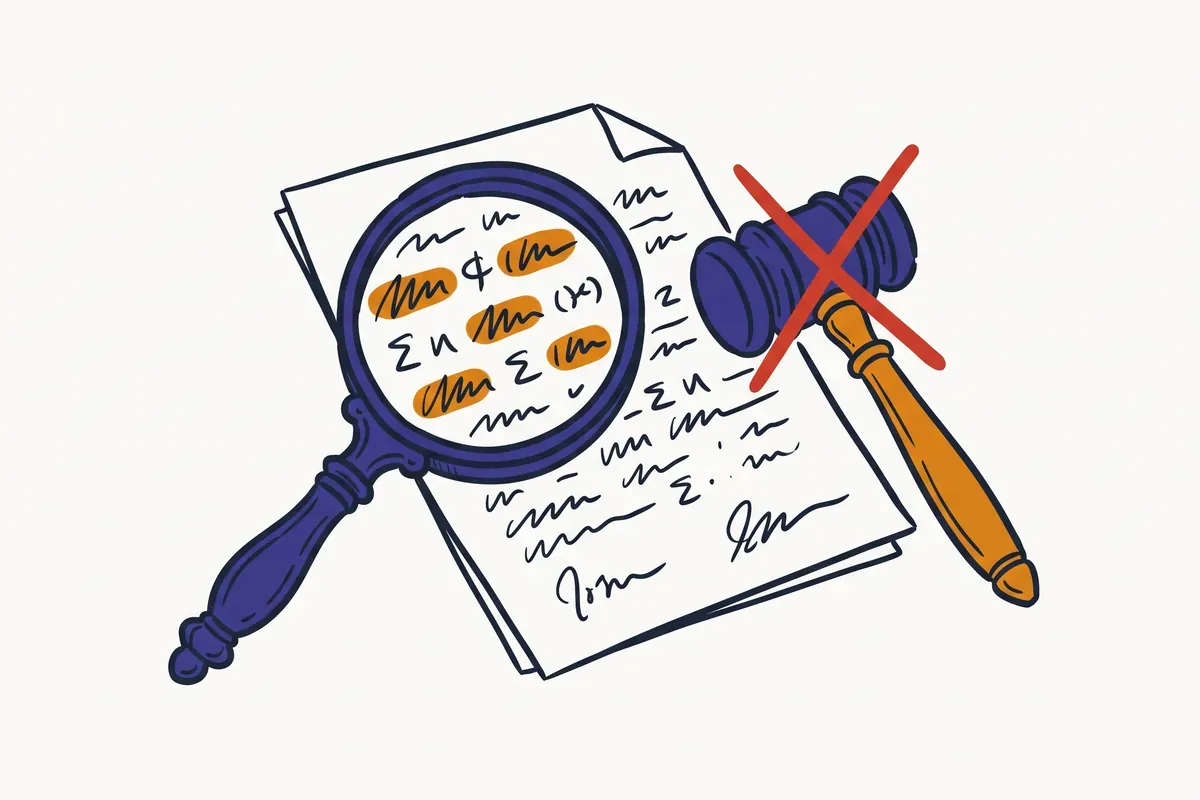
The same page calls its list “descriptive, not prescriptive” and says it “consists of observations, not rules.” It also points out that many elements of AI writing turn up in human-written editorials and blogs.
Models also differ from one another. Wikipedia notes that GPT-4o, “the language model used by ChatGPT from May 2024 to August 2025,” produced output with more variation from human writing than other language models of its time.
Which words does AI overuse, and why does ChatGPT favor them?
Research on scientific abstracts found a set of words, including “intricate” and “underscore,” whose rising use is likely the result of LLM usage, and Wikipedia says ChatGPT “famously overused” one particular verb. Research points to training on human feedback as a likely cause.
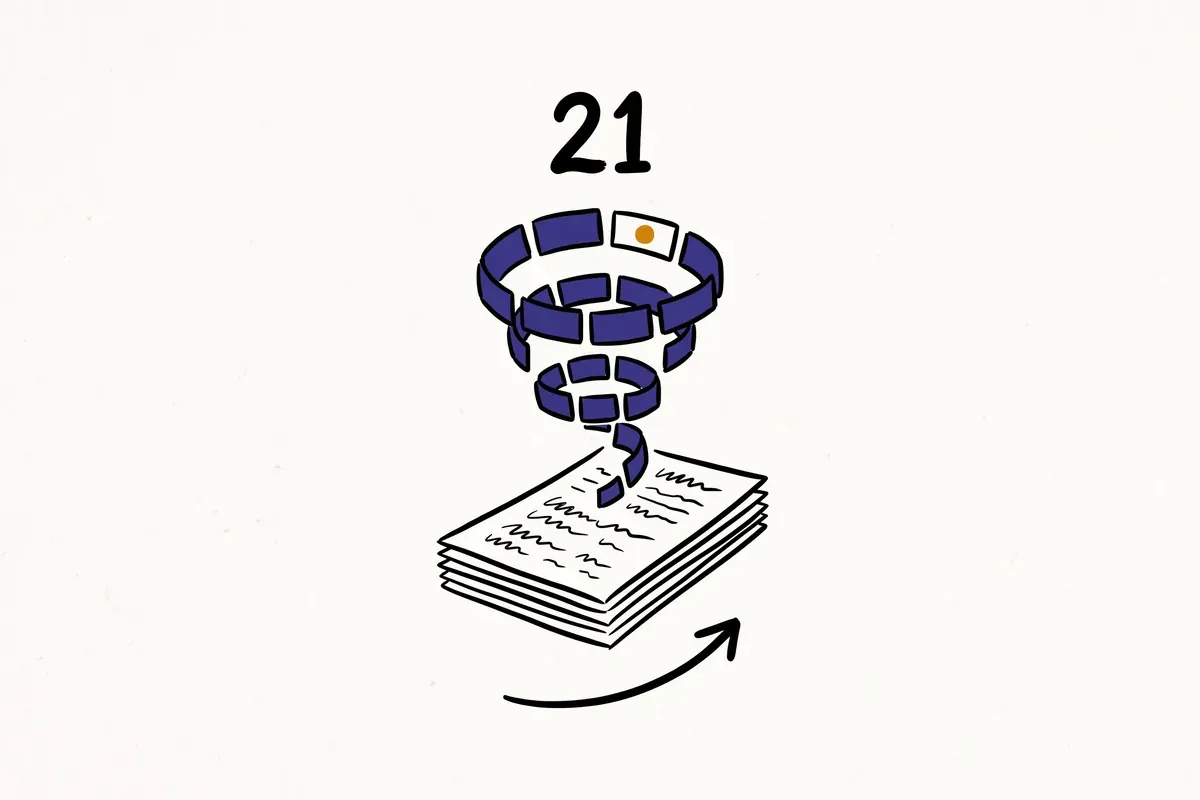
A COLING 2025 study of scientific English found words like “intricate” and “underscore” appearing far more frequently than just a few years ago. Its method identified 21 focal words whose increased occurrence in scientific abstracts “is likely the result of LLM usage.”
On the question of why, the researchers found no evidence that the overuse comes from model architecture, algorithm choices or training data. Their comparative model testing was “consistent with RLHF playing a role,” RLHF being reinforcement learning from human feedback. A 2025 follow-up using Meta’s Llama model went further. When the researchers recreated the feedback step in an experiment, participants “systematically prefer text variants that include certain words.”
The overused words also change over time. According to Wikipedia, ChatGPT’s best-known overused word was famously overused in 2023 and early 2024, became less frequent later in 2024, then dropped off sharply in 2025.
What tone and structure signs of AI writing should you check?
Beyond vocabulary, AI text gives itself away through how it builds sentences and paragraphs, mostly by inflating importance and commenting on its own facts. Each tell below comes with its fix.
Generic praise in place of specific facts
Models drop rare, specific facts and replace them with common, flattering ones. Wikipedia explains that LLMs learn from internet text where famous people are described in “positive, important-sounding language,” so a phrase like “inventor of the first train-coupling device” might become “a revolutionary titan of industry.” In the guide’s words, “The subject becomes simultaneously less specific and more exaggerated.”
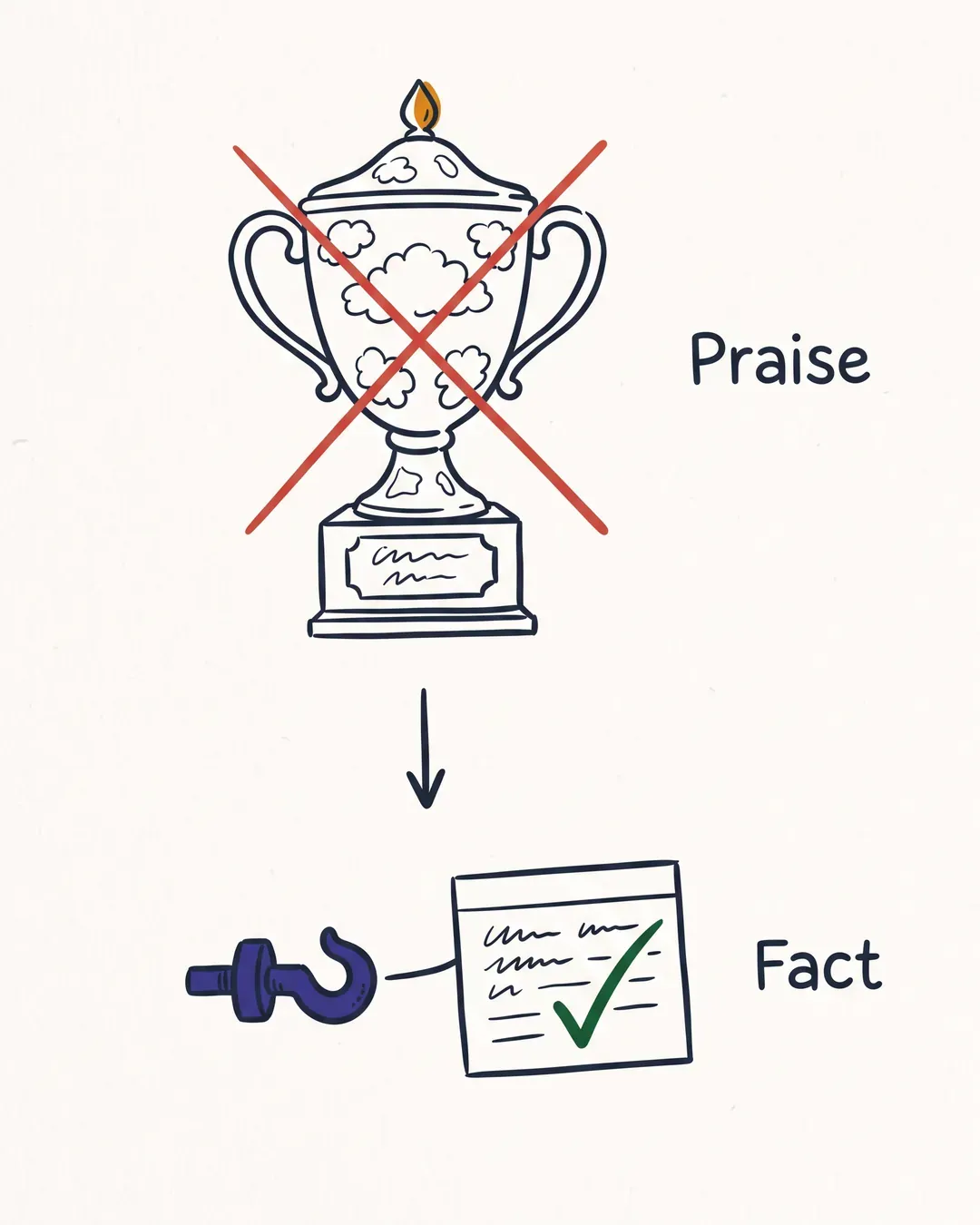
Fix: for every sentence of praise, ask what fact earned it, and write the fact instead.
Promotional, ornate description
AI descriptions often read like a brochure. Wikipedia quotes a temple article where the design is “thoughtfully imbued with local symbolism” and the colors and patterns “evoke enduring faith and resilience, qualities that resonate deeply within this close-knit, cross-border community.”
Fix: keep the concrete details from that same passage, such as citrus blossom motifs and a blue, green and gold palette, and cut the claims about what they evoke.
Lists of three
Chatbots sometimes follow the rule of three. Wikipedia’s template for it is “This has started discussions about X, Y, and the Z regarding something else.”
Fix: count the items you can actually support. Two real ones read better than three where the last is filler.
Sentences that explain what a fact “highlights”
AI likes to add a sentence telling you what the previous fact means. In one of Wikipedia’s examples, a list of craftsmen is followed by “These names highlight the collaborative nature of mosque construction and emphasize the contributions of skilled artisans.” Another sentence in the same passage “underscores the enduring practice of pious patronage.”
Fix: delete the comment. If the point matters, add evidence for it.
Avoiding plain “is” and “are”
AI copyedits tend to drop plain “is” and “are” constructions. Wikipedia cites a study where, when GPT-3.5 was prompted to “Revise the following sentence” in 10,000 abstracts, “the words is and are appeared less often in the revised versions.”
Fix: where a plain “is” or “are” says what you mean, use it.
Mentioning coverage without saying what it says
AI text tends to “allude to the existence of coverage but not actually summarise the content of that coverage.”
Fix: name the outlet, say what it reported and link to it.
Wordy, vague justifications
When AI explains an edit, it gets longer and less specific. Wikipedia contrasts a human note, “removed excessive links per MOS:OVERLINK,” with AI notes about changes made to “ensure neutrality” or “improve attribution.”
Fix: in any note about your edits, say exactly what you changed and why.
Stock recaps and transitions
Some of Wikipedia’s AI examples end by restating the case. One opens “In summary, the current edits to the article are consistent with Wikipedia’s guidelines” and another closes with “Therefore, it is imperative to approach this editing process with the utmost care.”
Fix: cut the recap and end on your last new point.
Lecturing the reader
AI replies slip into moral advice. One example in Wikipedia’s guide reads, “It’s crucial that we all work together to uphold Wikipedia’s standards while maintaining a positive and cooperative environment.”
Fix: remove it, or replace it with a concrete request (“Please reply on the article’s talk page before reverting”).
Chatbot leftovers
Some drafts still contain the chatbot talking to its user. Wikipedia’s examples include a ChatGPT note saying “The tone was adjusted to be more encyclopedic and less promotional”, and it reports that at least one LLM tends to insert “submission statements” seemingly intended for reviewers.
Fix: search your draft for lines addressed to you instead of your reader, such as “Here is” or “The tone was adjusted.”
Formatting and citation glitches
Some tells are mechanical. Wikipedia lists “excessive boldface, broken markup, citation style quirks” as easy to fix, and URLs that look made up as worth questioning.
Fix: open every link before you send the draft, and trim excessive boldface.
How do you fix each sign in your own draft?
The fix is to put back the specifics the tell replaced, then read for the patterns above. Work through a draft in this order:
Before
As a visionary leader, she brings a deep commitment to innovation, excellence, and growth. Her journey underscores the transformative power of resilience, and her work serves as a cornerstone of the local food scene.
After
She ran a neighborhood bakery before founding the company, which now supplies bread to restaurants across the city.
- Mark every sentence that praises or claims importance and write the fact that proves it. No fact? Cut the sentence.
- Swap each formal word for the one you'd use out loud: "shows" for "underscores," "detailed" for "intricate."
- Delete sentences that comment on the sentence before them.
- Change "serves as" back to "is."
- Cut closing recaps and any leftover chatbot lines.
- Open every link and check that the page says what you claim.
- Read the draft aloud and rewrite any line you'd never say to a client.
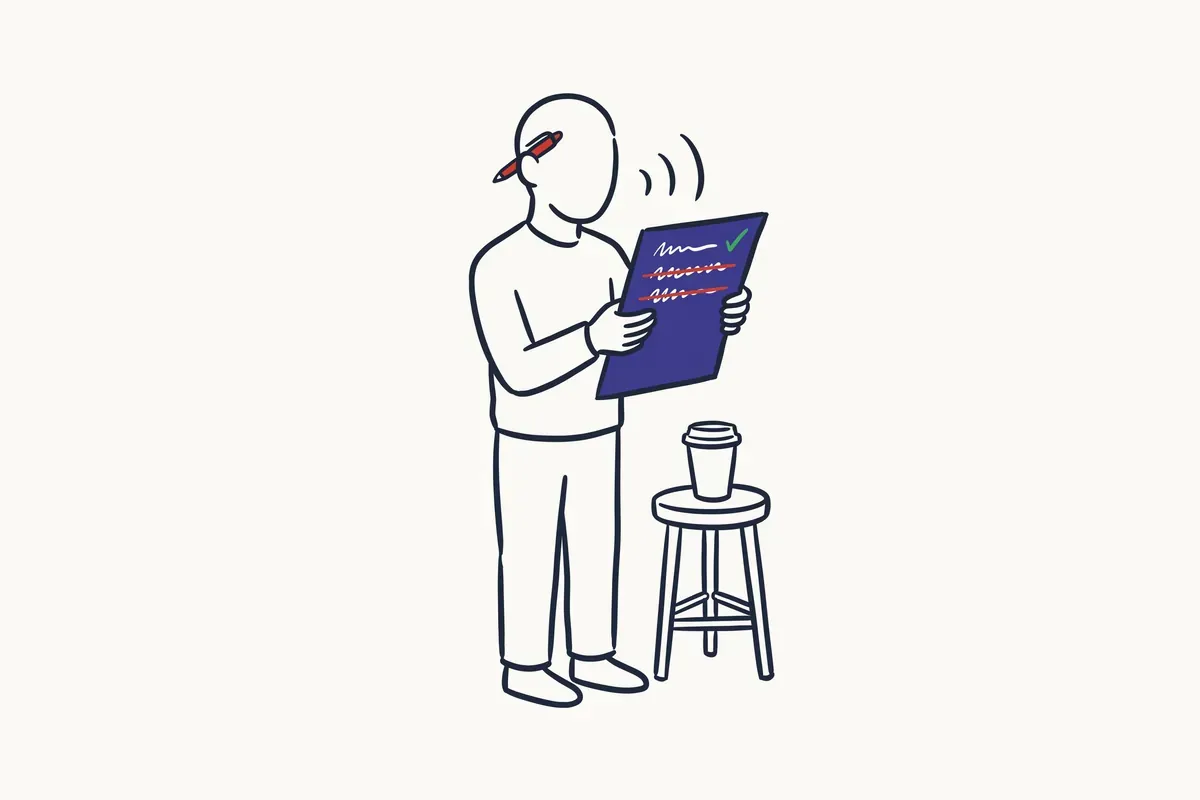
Wikipedia warns editors not to merely treat these signs as the problems to be fixed, since that “could just make detection harder.” The guide says the actual problems are the deeper concerns the signs point to, and those still need to be addressed.
Example: a founder bio drafted with AI.
Before: “As a visionary leader, she brings a deep commitment to innovation, excellence, and growth. Her journey underscores the transformative power of resilience, and her work serves as a cornerstone of the local food scene.”
After: “She ran a neighborhood bakery before founding the company, which now supplies bread to restaurants across the city.”
The “before” version packs four tells into two sentences: inflated importance, a list of three, an “underscores” comment and a “serves as” where “is” would do. The “after” version trades claims for checkable facts. In your own bio, add the numbers only you know, such as years in business and how many customers you serve. If you write with AI regularly, see the guide to prompts to make AI write like a human; whatever the prompt, you still have to supply the facts.
Can anyone tell for sure whether text is AI-written?
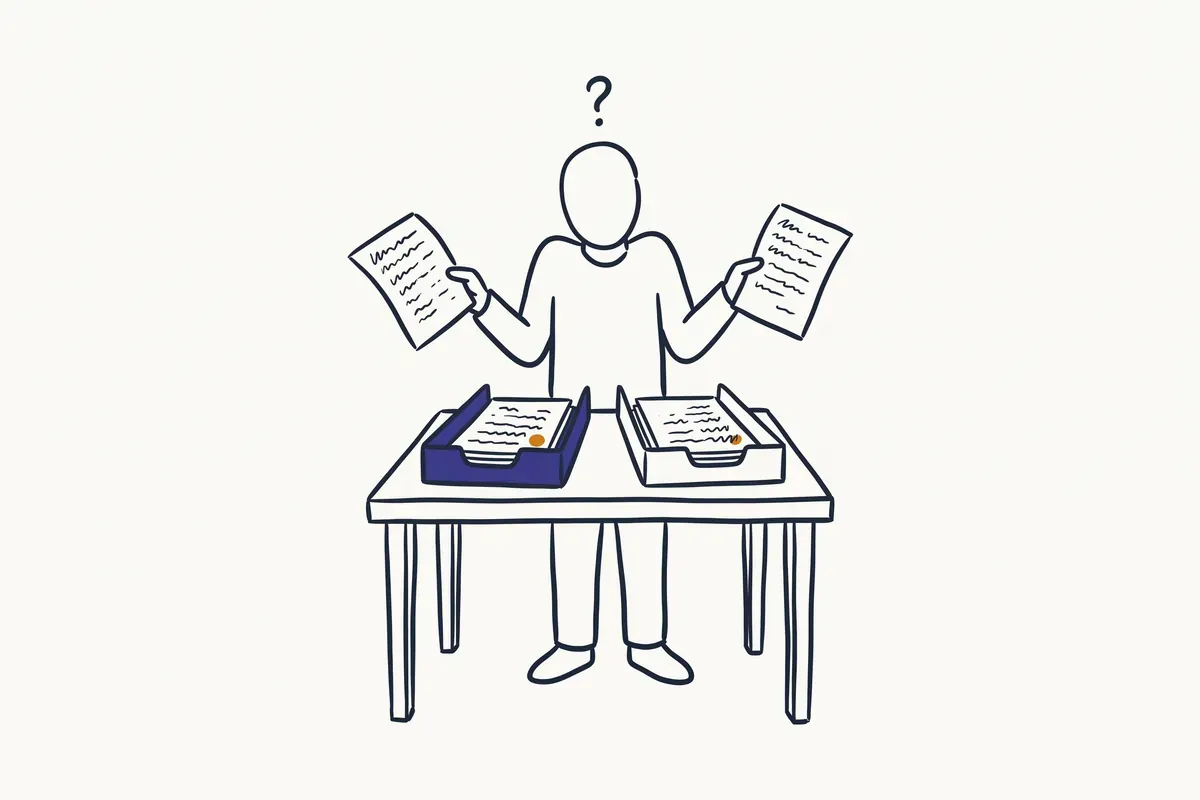
People can’t reliably tell by reading, according to the research Wikipedia cites. The guide warns that “Humans are notoriously bad at distinguishing human and LLM-generated text,” citing a 2025 study in which human ability to tell the two apart was “no better than random chance.” Another 2025 study, on German theses, found humans managed a “recognition rate of 57 % for AI texts and 64 % for human-generated texts.”
57%
Recognition rate for AI texts in a 2025 study on German theses
Source: en.wikipedia.org, as of Nov 28, 2026
64%
Recognition rate for human-generated texts in the same study
Source: en.wikipedia.org, as of Nov 28, 2026
What should you do if your own writing gets flagged as AI?
Ask which passages were flagged, then show how you wrote them. Wikipedia’s advice to its editors is a fair model: editors “should be able to explain why they made an edit or mistake,” and if a URL looks fabricated, “you can ask how the mix-up occurred instead of jumping to conclusions.”
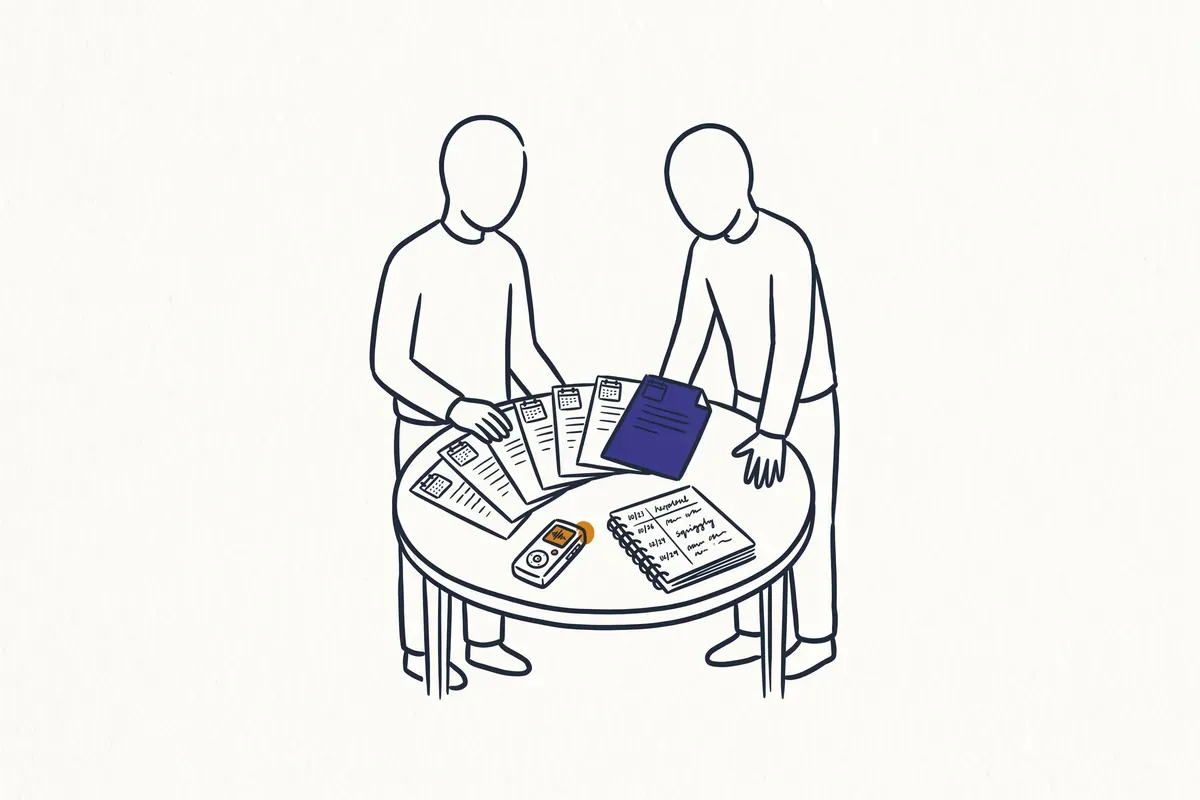
Wikipedia editors use tools called Who Wrote That? and WikiBlame to find the revision where a block of text was added. For your own work, the equivalent is your document’s version history, dated notes and interview recordings. If you ghostwrite for clients, keep those files for every project. For a step-by-step plan when an AI detector says my writing is AI, see the dedicated guide.
What to do next
Start with one draft you’ve already written and work through it with the quick-answer table at the top of this page.
Checklist
- Search the draft for "In summary," "serves as," "highlight," "underscore" and "The tone was adjusted," and rewrite each hit.
- Next to every sentence of praise, write the fact that proves it, or cut the sentence.
- Open every link in the draft before you send it.
- Turn on version history for your drafts and keep your notes, so you can show your process if anyone asks.
- Read the word lists by LLM "era" in the Signs of AI writing guide to see which words date from which period.
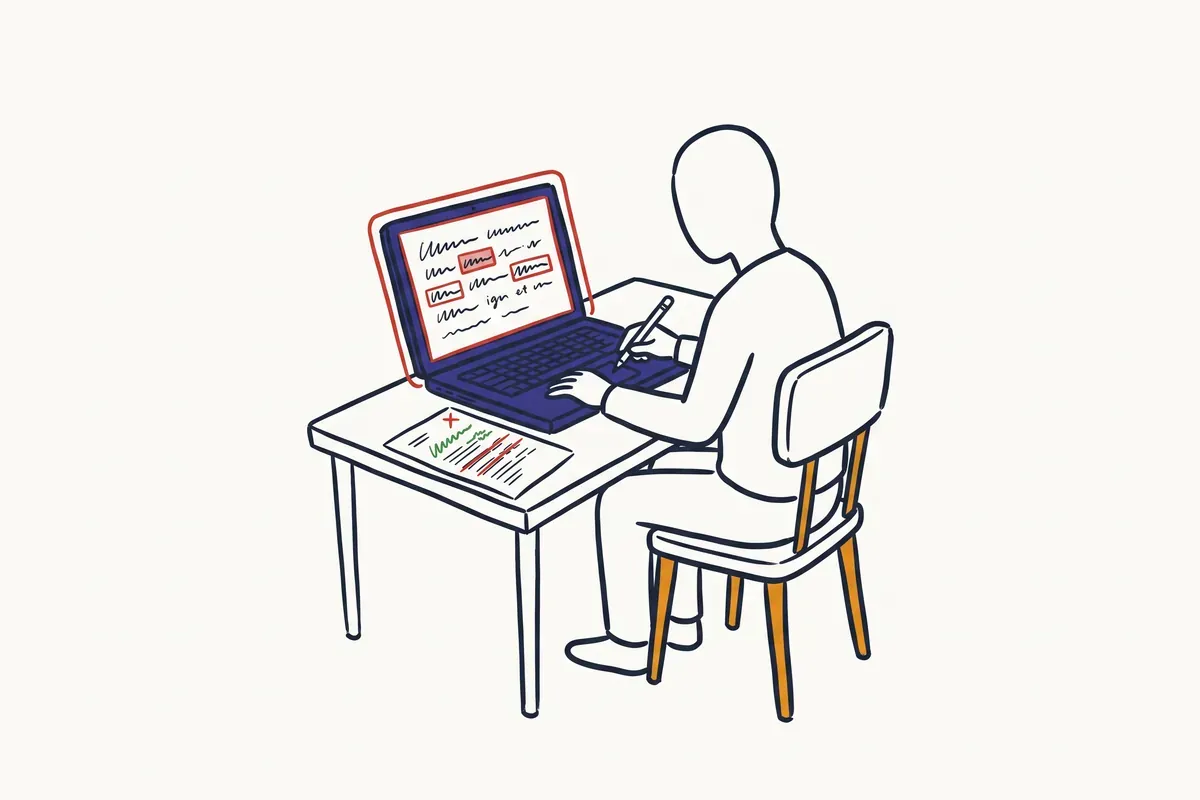
- Search the draft for “In summary,” “serves as,” “highlight,” “underscore” and “The tone was adjusted,” and rewrite each hit.
- Next to every sentence of praise, write the fact that proves it, or cut the sentence.
- Open every link in the draft before you send it.
- Turn on version history for your drafts and keep your notes, so you can show your process if anyone asks.
- Read the word lists by LLM “era” in Wikipedia’s Signs of AI writing guide to see which words date from which period.
Frequently asked questions
How can you tell if something is written by AI?
You can't confirm it by reading alone. The most you can do is notice a cluster of tells, such as vague praise, recap paragraphs and chatbot leftovers, and then ask the writer about their process. Wikipedia's guide says some of its signs may not apply outside Wikipedia, so adjust the checklist to the kind of text you are reading.
Why does ChatGPT overuse certain words?
Research links it to training on human feedback. A 2025 study using Meta's Llama model describes this word overuse as a kind of misalignment and points to a possible gap between what the feedback workers expected and what everyday LLM users expect. An earlier COLING 2025 study also found that participants may react differently to ChatGPT's best-known overused word than to the other words on its list.
What is Wikipedia's "Signs of AI writing" page?
It is a field guide that helps editors spot undisclosed AI-generated content on Wikipedia, with real examples taken from articles, drafts and comments. It includes signs specific to Wikipedia, such as drafts carrying a pre-declined review template, which it calls a strong indicator of LLM generation. It also lists which overused words belong to which LLM "era."
How do you make AI writing sound human?
Allow plain sentences. Wikipedia notes that when LLMs write articles they default to a "formal, neutral, encyclopedic tone" and avoid constructions that are common in human writing, often perfectly acceptable under its Manual of Style, and in some cases even preferred by it. The words a model leans on also shift between model generations, which is why Wikipedia groups them by LLM "era."
Sources
- Wikipedia:Signs of AI writing - Wikipedia
- [2412.11385] Why Does ChatGPT 'Delve' So Much? Exploring the Sources of Lexical Overrepresentation in Large Language Models
- Why Does ChatGPT “Delve” So Much? Exploring the Sources of Lexical Overrepresentation in Large Language Models - ACL Anthology
- [2508.01930v1] Word Overuse and Alignment in Large Language Models: The Influence of Learning from Human Feedback