In memoir ghostwriting, a hired writer turns your interviews into a book published under your name. One memoir ghostwriter does 30 to 50 hours of interviews; another quotes six to nine months. Reedsy's 2026 data puts a nonfiction book at $18,000 to $50,000, and one memoir specialist charges $125,000. Fees are usually flat, with no royalties.
Key takeaways
- Reedsy's 2026 data puts a ghostwritten nonfiction book at $18,000 to $50,000. One memoir specialist charges $125,000.
- Most of a memoir comes from interviews. One ghostwriter does around 30 to 50 hours of them per book.
- One memoir ghostwriter quotes six to nine months, and slow feedback from you makes it longer.
- Ghostwriters usually charge a flat fee paid in installments and typically get no royalties.
- Put credit, confidentiality, copyright and the payment milestones in the contract before work starts.
Memoir ghostwriting means paying a professional writer to interview you, shape your stories into a book and leave only your name on the cover. Reedsy’s ghostwriter hiring page describes the result as a book with “your ideas, your voice, and your name on the cover.”
The price depends on who you hire. Reedsy’s 2026 fee data puts a nonfiction book at $18,000 to $50,000. One memoir specialist on a 2024 Reedsy panel about ghostwriting memoirs said she charges $125,000. Full book projects are usually priced as a flat fee paid in installments, and the writer typically gets no royalties.
| Question | Short answer |
|---|---|
| What does a ghostwritten nonfiction book cost? | $18,000 to $50,000, per Reedsy data from 2026 |
| What did the average Reedsy project cost in 2025? | $450 per 1,000 words, or $36,000 for an 80,000-word book, across 2,006 collaborations (Reedsy) |
| What do top ghostwriters ask? | $50,000 to $100,000 for a full-length manuscript written from scratch (Reedsy) |
| Per-word and hourly ranges | $0.10 to $3 per word, or $35 to $200+ per hour (Reedsy fee guide) |
| How many hours of interviews? | Around 30 to 50 hours per book, for one memoir ghostwriter (Reedsy panel) |
| How long does it take? | Six to nine months in one memoir ghostwriter’s quotes (Reedsy panel) |
| Royalties? | Typically none. Ghostwriters take an upfront payment instead (Reedsy FAQ) |
| Who pays? | You, if you self-publish. A traditional publisher usually covers the fee, depending on when the writer joins (Reedsy fee guide) |
What is memoir ghostwriting?
Memoir ghostwriting is ghostwriting applied to a life story: someone else writes the book, and you’re credited as its author. Wikipedia’s ghostwriter entry notes that celebrities and public figures widely use ghostwriters for autobiographies and memoirs, and that the ghostwriter’s involvement “ranges from minor to substantial.” At the light end, the writer cleans up and polishes your rough draft. At the heavy end, the writer produces the whole book from interview sessions, notes or an outline, and you decide the style, tone and voice.
The same entry says memoir ghostwriters “pride themselves on ‘disappearing’ into the persona of the credited author.” Reedsy puts the goal in similar terms: the writer should “vanish completely into your voice until the only person on the page is you.”
People hire memoir ghostwriters for practical reasons. Wikipedia cites a lack of time, discipline or writing skill for a book several hundred pages long, and not knowing how to structure one so it reads at a good pace. For the wider practice beyond memoirs, see our explainer on what is ghostwriting.
How does memoir ghostwriting work?
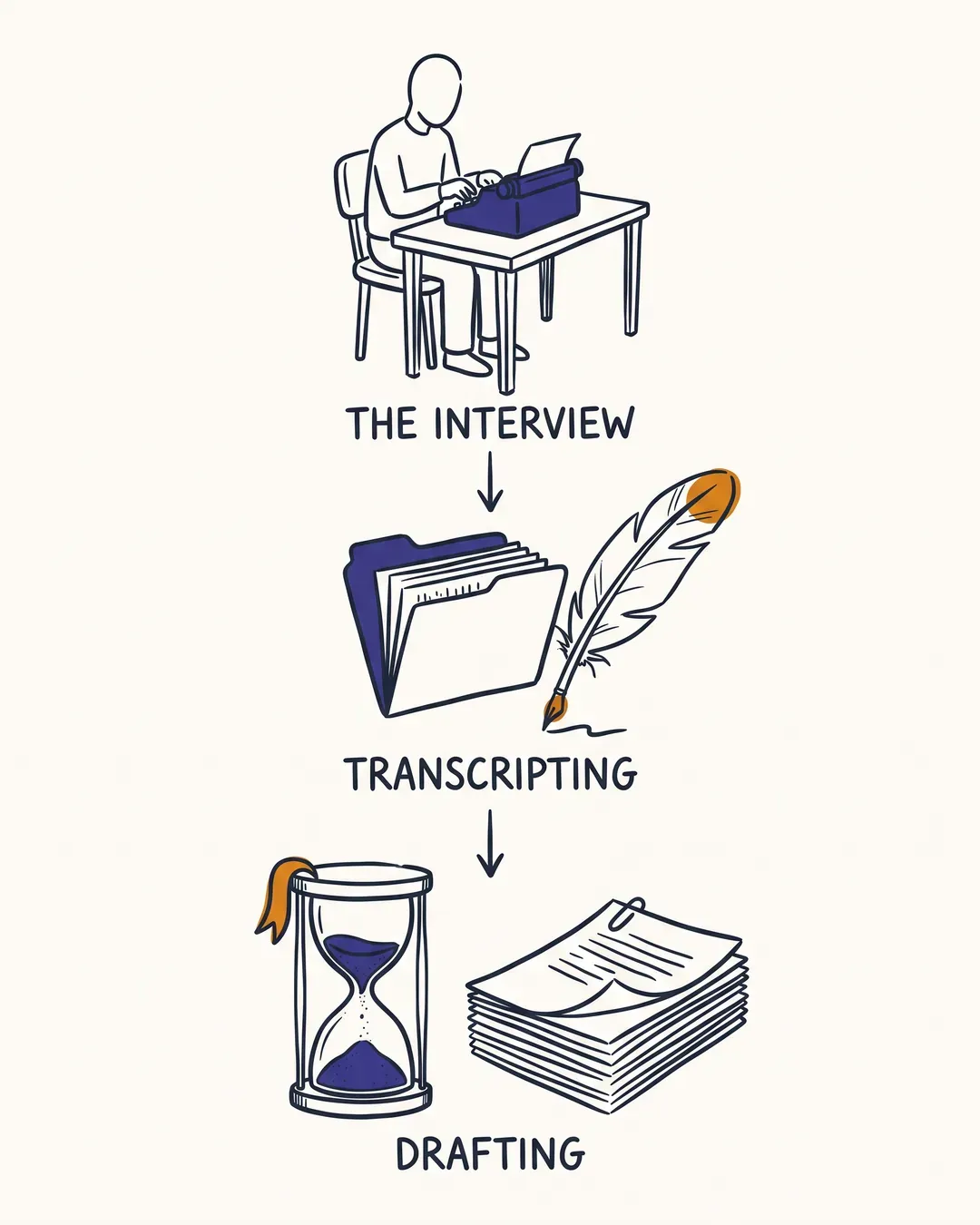
Memoir ghostwriting runs on conversations first and drafts second, in the accounts working ghostwriters give on Reedsy. Their steps include a fit call, outline sessions, recorded interviews, a sample and drafts you review, though each writer sizes and orders them in their own way.
- Fit callA video call before you sign to test the chemistry and whether you could be completely honest with this writer.
- Outline sessionsYou tell your story as a series of events, for example in about three two-hour meetings.
- InterviewsAround 30 to 50 hours of recorded sessions for one writer, kept short so the material doesn't suffer.
- Sample and draftsA sample of around 2,500 words to agree tone and pacing, then the book in chunks.
- Revisions and sign-offYou read and shape every draft. It's the author's book, so you keep the final say.
- EditingAn editor or proofreader checks the draft, because the ghostwriter is too close to it.
The fit call
Start with a video call before you sign. One ghostwriter quoted in Reedsy’s guide to ghostwriter fees insists on a Zoom call first because “chemistry is vital in a ghost writing relationship.” He opens by asking, “Why do you want to write this book?” Reedsy’s hiring advice suggests you use the same call to ask yourself whether you’d feel comfortable being completely honest with this person.
Outline sessions
The outline comes from a high-level telling of your story. One panelist on Reedsy’s memoir panel starts with about three two-hour meetings. In them, you tell the story as a series of events and skip the detail. That outline then works as a checklist during the interviews. On Reedsy, you approve the ghostwriter’s outline after the recorded interviews.
Interviews
Most of the book’s material comes from the interviews. The panel’s host said he does around 30 to 50 hours of interviews per book and keeps each session short, because sessions longer than three or four hours tire everyone out and the material suffers. Another panelist holds interviews as a series of three-hour Zoom calls, or has clients come to her for three eight-hour days in a row (Reedsy panel transcript).

Ghostwriters often record and transcribe every session. One writer in Reedsy’s fee guide says he copies, pastes and rewrites large portions of the transcripts, so “much of the book is your actual voice.” Another uses AI to transcribe interviews but rereads every transcript, because AI “can’t manage every accent.”
Sample and drafts
Drafting starts small and grows. One panelist writes a sample of around 2,500 words so you can agree on tone and pacing, then delivers the book in chunks of 10,000 words (Reedsy panel). A writer quoted in Reedsy’s guide sends batches of 3,000 to 5,000 words and talks with the author a couple of days later. He warns that the first chapter or two may be written 3 or 4 times before the voice is right.
Revisions and sign-off
You keep the final say over the manuscript. Reedsy says you “read and shape every draft until it’s the right one.” One ghostwriter in the fee guide calls it the most important rule in ghostwriting: it’s the author’s book. He’ll point out the drawbacks of an approach, but if the author still wants it their way, that’s how it’s done.
Editing after the ghostwriter
A finished draft still needs someone else to check it. Reedsy says not to expect your ghostwriter to proofread the book they wrote, because they’re too close to the work to spot every typo. One panelist does a self-edit and, when working with an agent, typically sends the draft to an editor once it’s “ready for the editorial process” (Reedsy panel).
Before
"So my dad had this truck, an old Ford I think, and every Saturday we'd drive out to the dump. Honestly that was the only time he really talked to me."
After
Every Saturday my father drove me to the dump in his truck. It was the only time he really talked to me.
Example: how a transcript becomes a page
Before (your words in an interview transcript):
“So my dad had this truck, an old Ford I think, and every Saturday we’d drive out to the dump. Honestly that was the only time he really talked to me.”
After (a draft paragraph built from it):
Every Saturday my father drove me to the dump in his truck. It was the only time he really talked to me.
The draft keeps your own phrasing (“the only time he really talked to me”) and leaves out the make of the truck, because you said “I think.” Confirm it before it goes into the book.
How long does it take to ghostwrite a memoir?
A ghostwritten memoir usually takes several months to a year. A memoir ghostwriter on the Reedsy panel quotes six to nine months. She adds that a client who takes a month to give feedback on 10,000 words will stretch that. Wikipedia says ghostwriters often spend “from several months to a full year” on a book. The average Reedsy collaboration lasts 3 months, but that average covers every kind of ghostwriting project on the marketplace, not just memoirs.
6–9 months
How long one memoir ghostwriter on a 2024 Reedsy panel quotes for a book, longer if feedback is slow.

A ghostwriter in Reedsy’s guide says the most common reason projects fail is that the author didn’t understand how much time they’d have to give. He tells authors that if calls once or twice a week will be hard, the project probably shouldn’t go ahead. Ghostwriters can also get booked up months in advance, so check your first choice’s availability early.
How much does a memoir ghostwriter cost?
A memoir ghostwriter can cost anything from a few thousand dollars to $125,000 or more, depending on the writer. The figures below come from Reedsy and from individual ghostwriters. Read them as ranges from the source that published them, not as one market rate.
450 USD/1,000 words
Average Reedsy ghostwriting price per 1,000 words in 2025
Source: reedsy.com, as of Nov 29, 2026
36,000 USD
What Reedsy says that average comes to for an 80,000-word book
Source: reedsy.com, as of Nov 29, 2026
2,006 collaborations
Reedsy collaborations behind the 2025 average
Source: reedsy.com, as of Nov 29, 2026

Reedsy’s figures

- Reedsy’s 2026 data: $18,000 to $50,000 for nonfiction books, depending on the ghostwriter’s experience and the genre.
- The same guide: $0.10 to $3 per word, $35 to $200+ per hour, or $1,000 to $100,000 per project.
- Reedsy’s 2025 marketplace numbers: an average of $450 per 1,000 words across 2,006 collaborations, which Reedsy equates to $36,000 for an 80,000-word book. Top ghostwriters ask $50,000 to $100,000.
What individual ghostwriters charge
- One memoir specialist on the 2024 panel charges $125,000 for a memoir, which she says is based on industry standards. She started at $15,000 to $20,000 a book. Another panelist also works for flat fees and says she tends to undercharge.
- A professional ghostwriter writing for the Alliance of Independent Authors’ advice center sets an absolute minimum of £400 or $500 for each 10,000 words, and says he regularly charges double that. He bills £80 an hour for time spent with the client, plus travel expenses including meals. A commenter on the same page mentions a publishing coach who recommends writers charging $1 to $3 per word.
What sets the price
- The book itself. Reedsy says costs vary with genre, target word count and research needs.
- An existing draft. Starting from a partial draft “won’t necessarily affect the budget,” Reedsy notes, because reworking existing material can take as long as writing from scratch.
- Who publishes. If you self-publish, you pay. A traditional publisher usually covers the fee (Reedsy).
Example: budgeting a 60,000-word memoir
Say your memoir will be 60,000 words. At Reedsy’s 2025 average of $450 per 1,000 words, that comes to 60 × $450 = $27,000. On the payment terms one panelist uses, 10 percent down and the rest on delivery, you’d pay $2,700 to start and $24,300 at the end. A writer charging $125,000 would be more than four times that total. For rates across every genre, see how much does it cost to hire a ghostwriter.
How are memoir ghostwriters paid?
Memoir ghostwriters are usually paid a flat fee in installments. Reedsy’s fee guide says most professionals charge a flat fee for full-scale projects that covers research, writing and revision, then bill by the hour for extra work. It calls per-word or hourly pricing “highly unlikely” except for short books or partial jobs.
Milestones
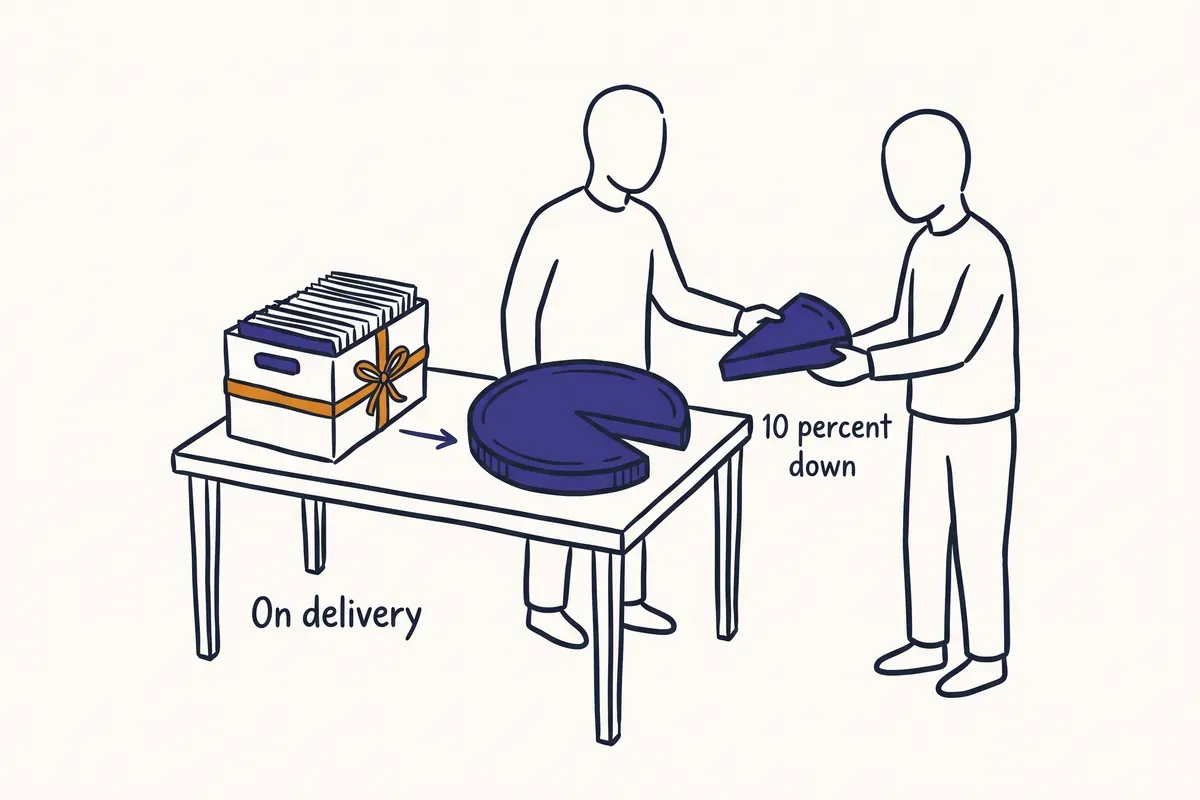
You can expect to pay part of the fee upfront and the rest in installments. Reedsy notes that “a memoir might have different milestones than a novel.” You might pay by chapter, after the first half of the draft, or when the full first draft is done. Paying in installments also lets you walk away if the collaboration doesn’t work. One panelist takes 10 percent down and the full payment on delivery. On Reedsy, she follows a schedule so clients get material continuously in return for each payment (Reedsy panel).
Royalties
Most memoir ghostwriters don’t take royalties. Reedsy’s FAQ answers “No” and says ghostwriters typically receive an upfront payment instead. Wikipedia lists more ways ghostwriters get paid: by the hour, word or page, as a flat fee, as a percentage of royalties, or some combination. So royalty deals do exist, but the memoir writers on Reedsy’s panel described flat fees.
Cover credit
Credit is something you negotiate. Wikipedia describes a common format: “by (author’s name)” on the cover, with “with [ghostwriter’s name]” underneath. That credit is sometimes given instead of part of the pay. In nonfiction, a ghostwriter may also be credited as a “contributor” or “research assistant,” or get no credit at all and sign a nondisclosure contract.
What does a memoir ghostwriter earn?
The closest federal benchmark is the Bureau of Labor Statistics category for all writers and authors, which isn’t specific to ghostwriters. The BLS Occupational Outlook Handbook puts the median annual wage for writers and authors at $76,910 in May 2025. It also notes that many writers and authors are self-employed. The BLS wage survey page for the occupation states that its estimates do not include self-employed workers, so the figure may not reflect freelance ghostwriters.
The same handbook projects little or no change in employment from 2025 to 2035, with about 11,900 openings a year on average. A panelist who writes intense emotional memoirs works on one at a time, and another warns that the lower you charge, the more clients you need to make a living (Reedsy panel). If you’re on the writer’s side, see how to become a ghostwriter.
Where can you find a memoir ghostwriter?
You can find memoir ghostwriters on marketplaces such as Reedsy, or through agents and publishing contacts. Reedsy says it manually vets ghostwriters, accepts only the top 3% of applicants and has 200+ professionals on its marketplace. It also says its writers have written books for over 2,000 authors since 2016. With a free account you can request quotes from up to 5 professionals. If a collaboration goes off track, Reedsy offers mediation, which it says gives you more protection than hiring the ghostwriter directly, and its homepage says projects are covered by a project protection guarantee. For a closer look, see our review of Reedsy ghostwriting.
Wherever you search, Reedsy’s tips for choosing a ghostwriter apply:
- Filter by genre and favor writers who’ve done books like yours. “A successful memoir ghostwriter might not be an expert in children’s books.”
- Read writing samples, since every writer brings some of their own habits.
- Have a video call before you sign.
Some work comes through the industry instead. One panelist said agents or editors at publishing houses sometimes pair her with projects (Reedsy panel). Wikipedia notes that outsourcing ghostwriting to countries such as India, China and the Philippines can save money. In that case, the writer’s track record and samples matter even more. Our step-by-step guide on how to hire a ghostwriter covers the hiring process in more detail.
What should a memoir ghostwriting contract cover?
A memoir ghostwriting contract should settle money, credit, confidentiality and ownership in writing before the first interview. If you hire on Reedsy, it generates the contract and lets you amend the collaboration if the timeline changes. Either way, check that the contract covers these points:
- Payment schedule. Set the deposit, what each installment is tied to, and what happens if either of you stops (Reedsy).
- Scope and extra work. Spell out what the flat fee includes and the hourly rate for anything beyond it.
- Expenses. Some writers bill travel expenses including meals on top of the fee.
- Confidentiality. Wikipedia says ghostwriting contracts usually include a confidentiality clause that keeps the ghostwriter anonymous, or that stops the credited author from revealing them.
- Credit. Agree whether the writer appears as “with,” in the acknowledgments, or not at all.
- Copyright. One ghostwriter quoted in Reedsy’s fee guide reminds other ghostwriters that someone else will hold the copyright, and that there’s no obligation to credit them. Make sure the contract says so.
- Book proposal terms. If your ghostwriter writes a proposal and no publisher buys it, Reedsy says what you already paid for the proposal is deducted from the final fee when you go ahead independently.
Should you hire a ghostwriter or an editor for your memoir?
Choose a ghostwriter for your memoir if you lack the time, skills or inclination to write it yourself. If you’re keen to write it and can spare the hours, Reedsy’s FAQ suggests a book coach instead. If you already have extensive notes or a messy first draft, some ghostwriters will take it on with a mix of developmental editing and ghostwriting.
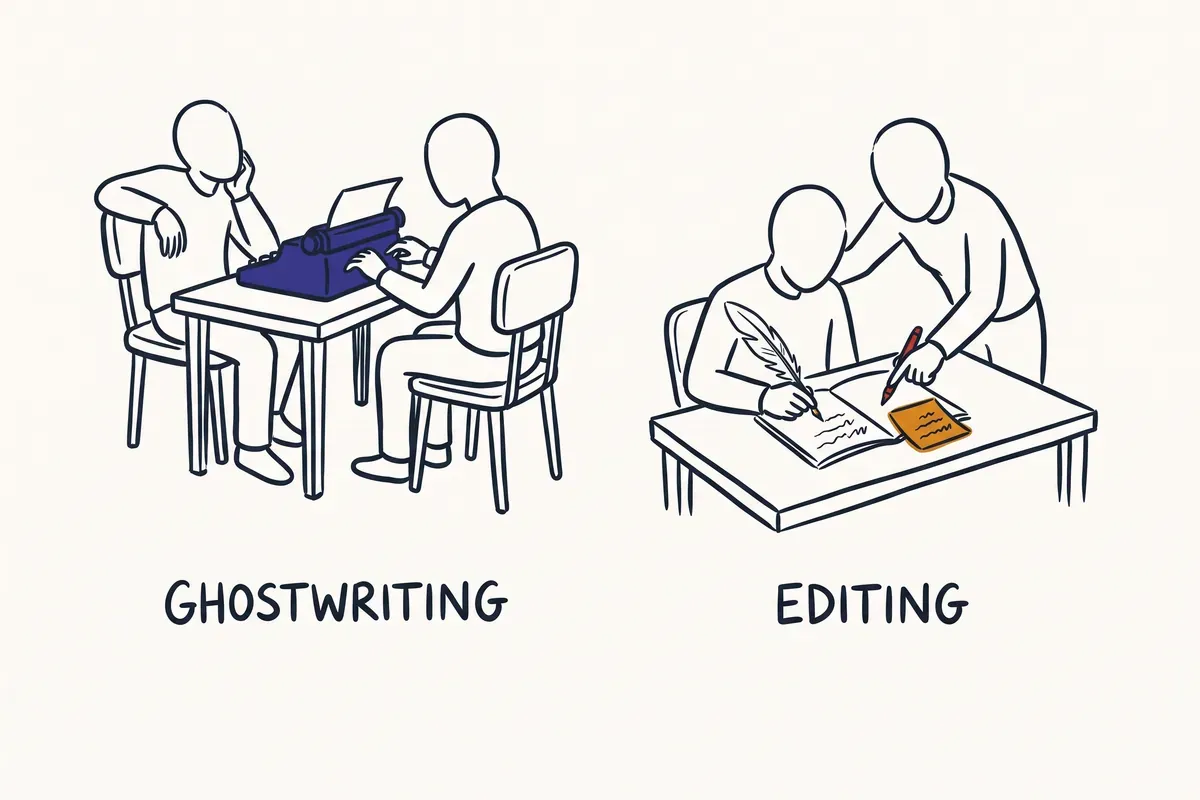
Memoir projects often land in between. The panel’s host described some memoirs as straight interview jobs and others as hybrids of ghostwriting and editing. One panelist said her best client relationships start “with nothing,” because 20,000 existing words raise hard questions about what to keep (Reedsy panel). On the editing side, Reedsy’s homepage lists editors for big-picture guidance, writing coaching and a final proofread.
What are the alternatives to paying for a full ghostwritten memoir?
Alternatives to paying a ghostwriter for a whole memoir include writing it yourself with a book coach, commissioning a shorter book, recording your own stories, and paying for a proposal first.
Writing it yourself with a book coach
If you’re keen to write and can spare the hours, Reedsy suggests hiring a book coach to guide you through the writing process instead of a ghostwriter. You do the writing yourself.
A shorter book
A shorter manuscript lowers the starting price. Wikipedia quotes the ghostwriting company Manhattan Literary saying books of 30,000 to 42,000 words “start at a cost of $15,000.”
Recording your own stories
Because professional memoirs are built from recorded interviews, you can start the same way. Record yourself telling the story from start to finish, have it transcribed, then reread the transcript for errors in names and places. You then have the stories on record whichever route you take.

Can AI help write your memoir?
AI already helps with one part of memoir work: transcription. A ghostwriter in Reedsy’s fee guide uses AI to transcribe interviews, then checks every transcript by hand, because AI can’t manage every accent. If you want to draft with AI yourself, our guide to ai assisted writing covers how to keep your voice.
A proposal first
For nonfiction, you can hire a ghostwriter just for a book proposal and pitch it to publishers. If the book is commissioned, the publisher usually pays the ghostwriter to write the full manuscript (Reedsy).
Is ghostwriting a memoir ethical?
Ghostwriting a memoir is a mainstream publishing practice. Reedsy calls ghostwriting a widely used and perfectly acceptable practice within the publishing industry. Wikipedia does flag unethical uses in other fields, such as medical papers and students buying essays from essay mills, but memoirs aren’t among them. If disclosure matters to you, a “with” credit or an acknowledgment names the writer publicly.
Ghostwriters also set their own limits. A panelist who mostly writes about grief and trauma says many people ask for books about their ex-husbands, ex-wives or jilted lovers, and calls that “not a mission for me to get behind” (Reedsy panel). A writer in Reedsy’s guide said he didn’t want to be part of a “revenge project,” and he and that prospective client parted amicably. And the panel’s host has kept personal details a client shared out of a draft, even though the publisher would have wanted them, to protect the client.
What to do next
You can start preparing for a ghostwritten memoir today, before you contact any writer.
- Write one paragraph answering “Why do you want to write this book?” You’ll be asked it on the first call.
- Choose a route: self-publish and pay the ghostwriter yourself, or start with a proposal aimed at a traditional publisher.
- Set a budget from the figures above, for example word count ÷ 1,000 × $450 for Reedsy’s 2025 average, and decide your ceiling.
- Block time for weekly or twice-weekly calls over six to nine months before you commit.
- Shortlist writers who’ve done memoirs, request quotes (up to 5 on Reedsy) and read their samples.
- Check that your first choice can work to your timeline, since ghostwriters can be booked months in advance.
- Book a video call with your top choices and ask about their interview hours and how they deliver drafts.
- Get the payment milestones, credit, confidentiality and copyright terms in writing.
- Start recording your own stories this week, so you have material whichever route you choose.
Prices and features as of Nov 28, 2026, from each product's own pages.
Frequently asked questions
How much does it cost to have someone write your memoir?
Current quotes run from a few thousand dollars to $125,000 or more. Wikipedia reports older benchmarks too: in 2013 a literary agent put the average ghostwriter's advance for major publishers at "between $40,000 and $70,000." At the very top, The New York Times estimated in 2001 that the ghostwriter of Hillary Clinton's memoir would get about $500,000 of her $8 million advance.
Do ghostwriters get royalties on memoirs?
Usually not. An article from the Alliance of Independent Authors' advice center warns ghostwriters not to accept a profit share instead of a fee, because that puts the risk on the writer. Reedsy's cost guide adds that very few books make much money from sales, so you're unlikely to earn back the fee from sales alone, especially enough to split the royalties with the writer.
Do you need a literary agent to hire a memoir ghostwriter?
Reedsy's guides describe hiring a ghostwriter directly if you self-publish, and they don't say an agent is required. Agents do come in on the traditional route: one Reedsy panelist said agents and editors at publishing houses sometimes pair her with projects.
How do memoir ghostwriters handle family stories and sensitive material?
On Reedsy's 2024 memoir panel, the host reminded clients that once material is printed on the page, you can't take it back. One panelist said some projects were delayed by months because clients were still processing past events, and that feedback calls can turn into something like therapy sessions. Another said the client has to trust the ghostwriter, or they hold back what the book needs.
Is a ghostwritten memoir worth the money?
It depends on your goal. A Reedsy panelist tells clients that a book on its own is a poor business investment, but it gains value if you build a platform, for example as a speaker. Reedsy's cost guide suggests treating the fee as an investment toward publishing a book you're proud of, not as money you'll earn back from sales.
What's the difference between a memoir ghostwriter and a co-author?
Reedsy's answer starts with credit: a co-author's name goes on the cover and a ghostwriter's doesn't. A co-author usually has a say in the book's creative direction and may share the advance or royalties. A ghostwriter works only to your vision and does neither. Reedsy also notes that some authors credit their ghostwriter as a co-author anyway.
Sources
- How Much Does It Cost to Hire a Ghostwriter? [Rates and Fees]
- Panel Discussion — Ghostwriting Memoirs & Narrative Nonfiction
- Award-Winning Professional Ghostwriters | Reedsy
- Reedsy: Find the perfect editor, designer or marketer | Reedsy
- Writing: What to Say If Friends Ask You to Ghostwrite their Memoir — The Self-Publishing Advice Center
- Ghostwriter - Wikipedia
- Writers and Authors : Occupational Outlook Handbook: : U.S. Bureau of Labor Statistics
- Writers and Authors