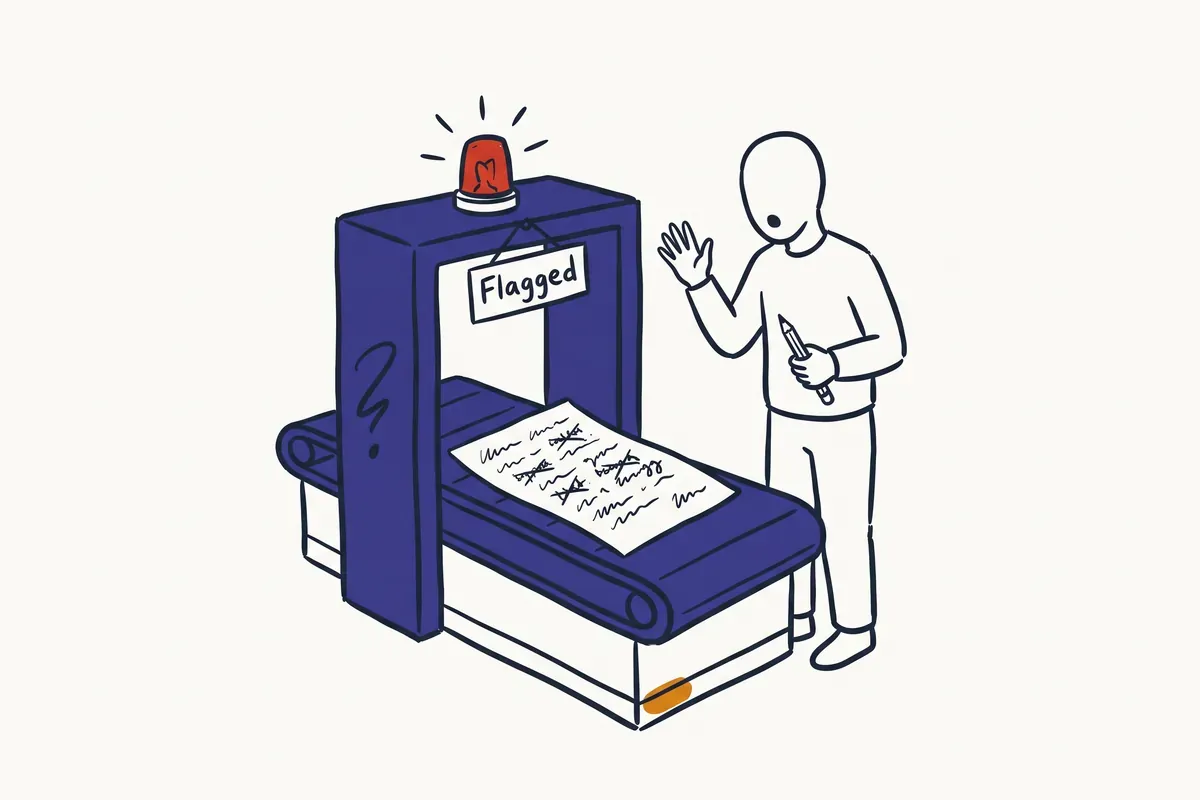
A detector flag is not proof. OpenAI says its research didn't find AI detectors reliable enough for high-stakes judgments, and its own detector labeled Shakespeare as AI-generated. If you're flagged, ask which tool and score were used, leave your file unchanged, and show how you wrote it: drafts, version history, notes and sources, plus an offer to explain your work.
Key takeaways
- OpenAI says AI detectors didn't prove reliable enough in its research for judgments with "potentially lasting consequences."
- When OpenAI trained its own detector, it labeled Shakespeare and the Declaration of Independence as AI-generated.
- Turnitin claimed a 1% false positive rate when it launched in 2023. Vanderbilt calculated that if the tool had run on its 75,000 papers from 2022, around 750 could have been incorrectly labeled.
- A 2026 preprint testing 13 detectors on human writing found false positive rates anywhere from 0.0% to 100.0%, depending on the tool.
- Your best defense is a record of how you wrote: version history, drafts, notes, sources and an offer to explain the work in person.
If “the AI detector says my writing is AI, but I wrote it” is running through your head, know that the score is not the final word. OpenAI, the company behind ChatGPT, asks “Do AI detectors work?” on its help center, and its answer is no. It says its research found these tools sometimes flag human-written content as AI.
Your strongest response is evidence of how you wrote the piece, plus a calm conversation with whoever ran the check.
| Question | Short answer |
|---|---|
| Are AI detectors reliable? | OpenAI says its research didn’t show them to be reliable enough for judgments about students. |
| Can human writing really be flagged? | Yes. OpenAI’s own detector labeled Shakespeare and the Declaration of Independence as AI-generated. |
| What false positive rate did Turnitin claim? | 1% at its 2023 launch, as reported by Vanderbilt University. |
| Are non-native English writers at higher risk? | A 2023 study found several detectors consistently misclassify non-native English writing as AI-generated. |
| Can ChatGPT tell whether it wrote something? | No. OpenAI says those answers are random and have no basis in fact. |
| What helps you most? | Your drafts and your other work. Vanderbilt tells instructors to compare a suspect paper with the student’s other writing. |
Why would an AI detector flag writing I did myself?
An AI detector can flag your own writing because, in OpenAI’s research, these tools sometimes suggest that human-written content was generated by AI. How a given detector reaches its verdict is often unclear. Turnitin says more than 16,000 institutions worldwide partner with it, and Vanderbilt University notes that Turnitin has said only that its tool looks for patterns common in AI writing. Vanderbilt adds that Turnitin doesn’t explain or define those patterns.
Research points to a few traits that raise the risk. When OpenAI built its own detector, it found signs that the tool could disproportionately impact students learning English as a second language and students whose writing was “particularly formulaic or concise.”
Polish matters too. A 2026 preprint looked at manuscripts before and after professional English editing. It found that the same edits raised AI scores in some detectors and lowered them in others. In that study, editing changed the scores even though the authors and the content stayed the same.
Why does my writing sound like AI?
Your writing can look machine-made to a detector when it is formulaic or concise, the traits OpenAI links to false flags, or when it has been professionally edited. The 2026 preprint found that score changes correlated with how much editing a manuscript received.
A tone checker can point out phrases and patterns that read as machine-made in your draft. Keep in mind that no tool can predict what a particular detector will score, because detectors disagree with each other.
How accurate are AI detectors, really?
AI detectors are less accurate than their scores suggest. That’s the view of OpenAI, of independent researchers, and of Vanderbilt University. Turnitin calls the risk of a false positive small.
What OpenAI found
OpenAI says its research didn’t show detectors to be reliable enough “given that educators could be making judgments about students with potentially lasting consequences.” One of its key findings was that these tools sometimes call human-written content AI-generated. Its own detector made that mistake with Shakespeare.
What independent testing found
A 2023 study published in the International Journal for Educational Integrity tested 12 publicly available tools and two commercial systems, Turnitin and PlagiarismCheck. The researchers concluded that the tools are “neither accurate nor reliable.”
They also found that the tools had “a main bias towards classifying the output as human-written rather than detecting AI-generated text.” In other words, the tools tended to label text as human-written.
What Turnitin says about its own false positives
Turnitin’s guide for students calls the risk of a false positive “minimal” but doesn’t give a number. Its guide for educators calls the risk “small” and still tells teachers to plan for those conversations.
1%
False positive rate Turnitin claimed when its AI detector launched in 2023, as reported by Vanderbilt
Source: vanderbilt.edu, as of Nov 29, 2026
75,000 papers
Papers Vanderbilt submitted to Turnitin in 2022
Source: vanderbilt.edu, as of Nov 29, 2026
750 papers
Student papers that could have been incorrectly labeled as partly AI-written at that rate
Source: vanderbilt.edu, as of Nov 29, 2026
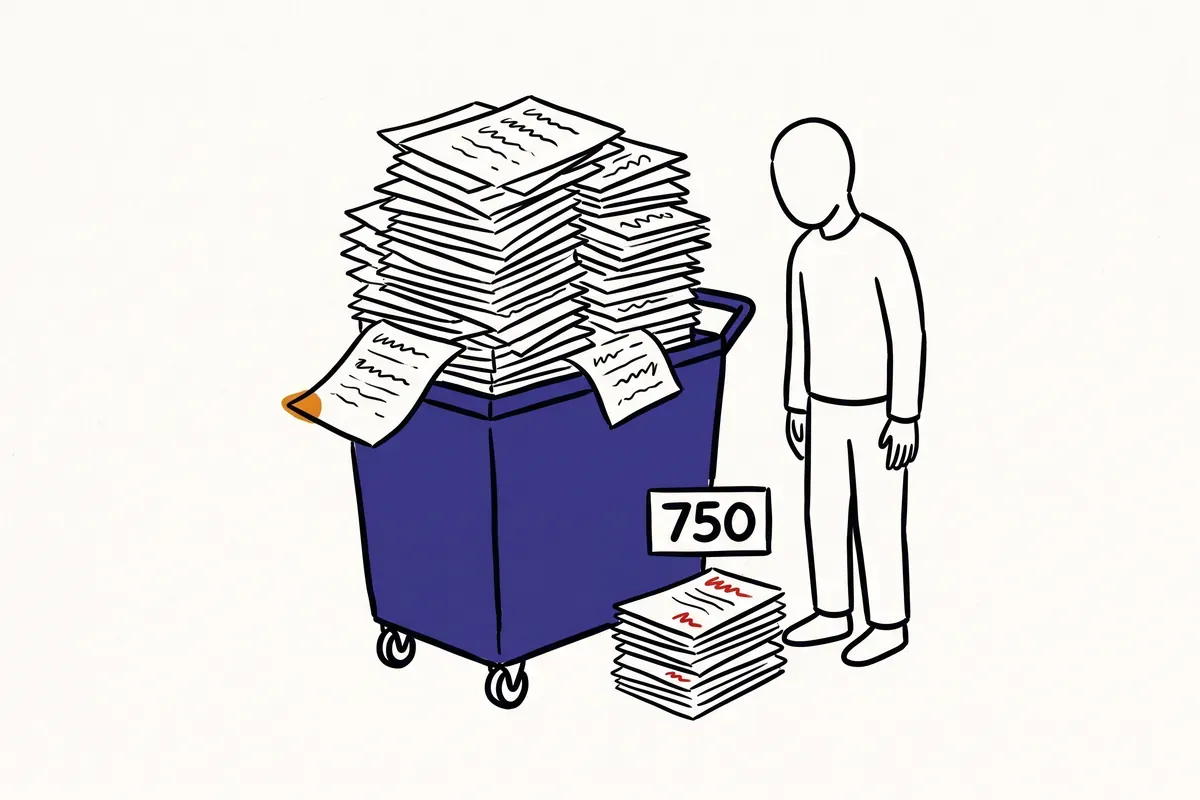
The figure Vanderbilt reports comes from launch: Turnitin claimed a 1% false positive rate when the tool came out in 2023. Vanderbilt did the math: it submitted 75,000 papers to Turnitin in 2022, so if the tool had been available then, around 750 student papers could have been incorrectly labeled as partly AI-written. That 1% claim dates from 2023, and Turnitin’s models may have changed since then.
Are non-native English speakers more likely to be flagged?
Non-native English writers were flagged more often in a 2023 study, and a 2026 preprint found that false positive rates on human writing vary widely from one detector to the next. The 2023 study, titled “GPT detectors are biased against non-native English writers”, found that several widely used detectors “consistently misclassify non-native English writing samples as AI-generated,” while native samples were identified correctly. The authors caution against using detectors “in evaluative or educational settings.” The abstract doesn’t name Turnitin among the tools tested, so don’t apply its results to Turnitin.
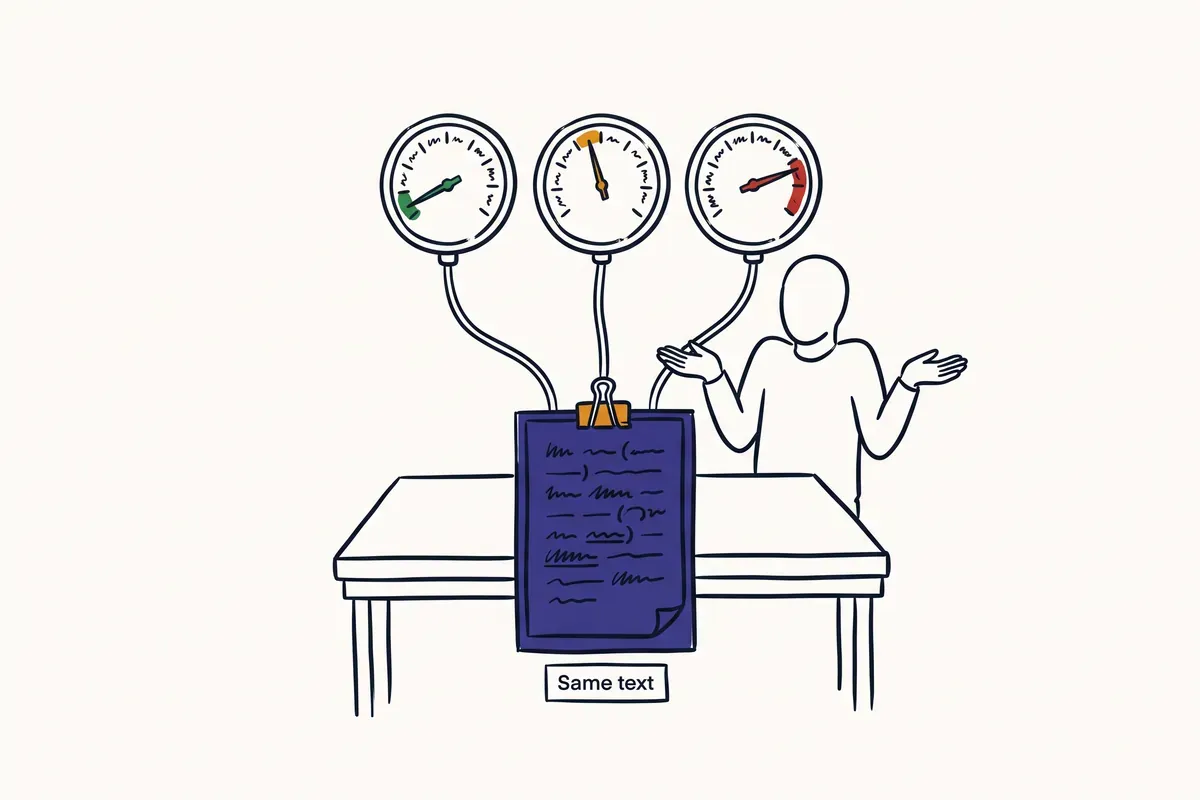
The 2026 preprint makes the picture more complicated. Researchers examined 135,389 document pairs from a professional editing service (2018 to 2025), each a non-native manuscript and its native-edited version. Across 13 detectors, false positive rates for human-written texts ranged from 0.0% to 100.0%. It was posted to arXiv in August 2026 as a preprint, so treat it as early evidence. In that study, the choice of detector made a large difference to how often human writing was flagged.
Vanderbilt cited the non-native concern when it turned off Turnitin’s detector, noting that detectors are more likely to label text by non-native English speakers as AI-written.
What should I do when an AI detector says my writing is AI?
When you’re flagged, collect facts and leave the work exactly as you submitted it. Here’s the order that keeps your options open:
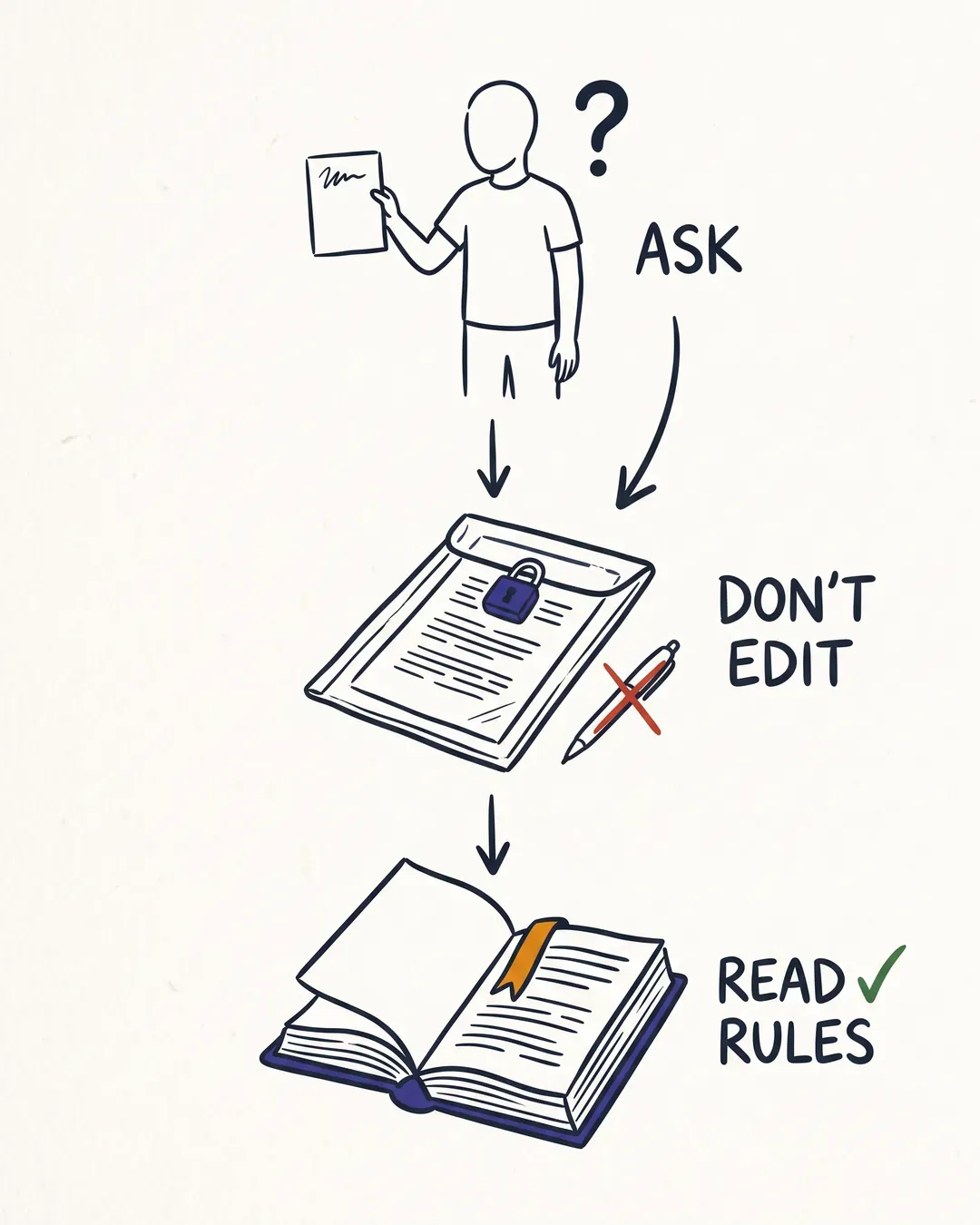
- Ask what was used. Find out which detector ran the check, what score came back, and whether it flagged the whole document or certain sentences. Turnitin says students usually reach its tools through their institution or instructor, so ask your instructor for the report.
- Don’t edit the flagged file. If you run it through a humanizer or rewrite it now, it will no longer match your drafts, and the drafts are your evidence.
- Read the rules. OpenAI points out that many school districts and colleges don’t yet address generative AI in their academic honesty policies, while others have written new ones. Find the policy that applies to you before your meeting.
How can I prove I didn’t use AI?
You show you wrote something by showing the process behind it. No single file settles the question on its own, but together they make a record a detector can’t produce. Gather what you have:
Checklist
- Version history: export or screenshot the timeline showing the text growing over days
- Earlier drafts and outlines with crossed-out ideas
- Research notes and sources: highlighted PDFs, library records and a source list you can talk about
- Your other writing: past essays or reports that show your usual style, tone and level
- An offer to explain your argument or write a short piece under supervision
- If AI help was allowed and you used it, the conversation you had with the tool
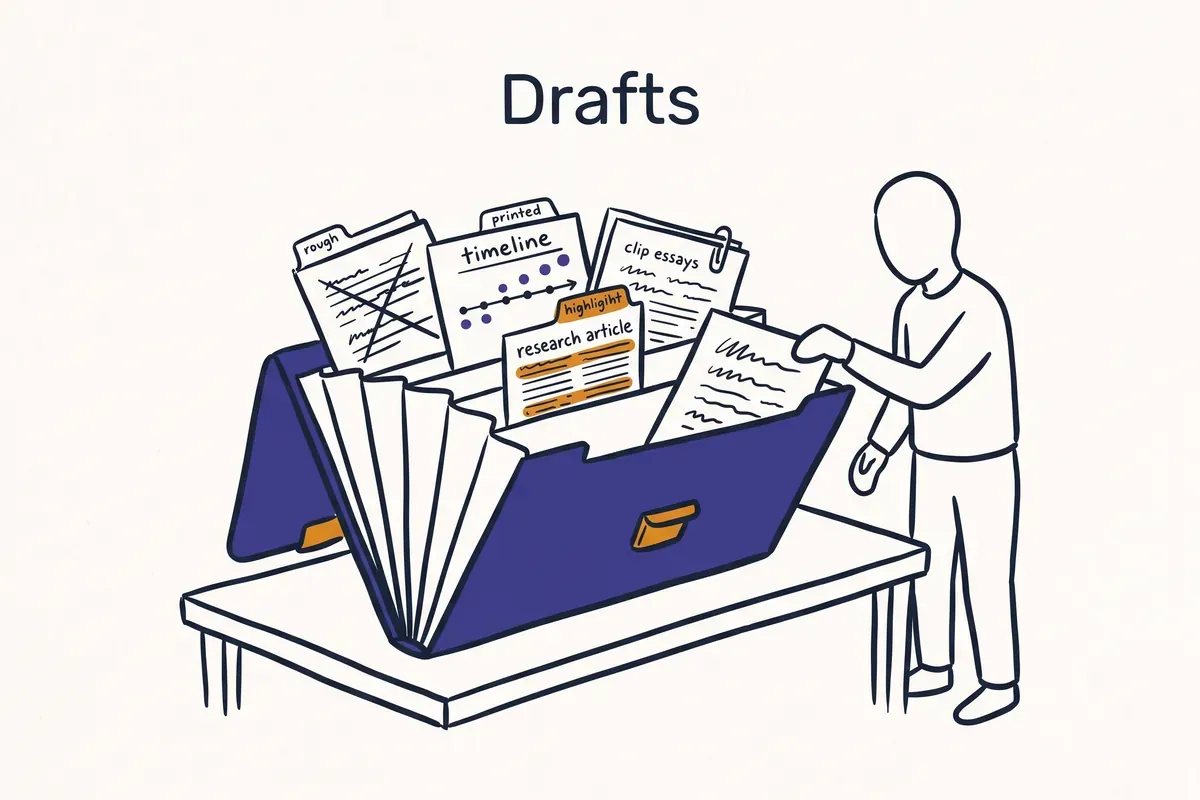
- Version history. If your writing app saves versions, export or screenshot the timeline showing the text growing over days.
- Earlier drafts and outlines. Rough versions with crossed-out ideas show your thinking changing.
- Research notes and sources. Highlighted PDFs, library records and a source list you can talk about. Vanderbilt notes that AI tools often invent sources, so real sources you can discuss count in your favor.
- Your other writing. Vanderbilt advises instructors to check whether a flagged paper matches a student’s earlier “style, tone, and level.” Bring past essays or reports.
- An offer to explain. Offer to talk through your argument or write a short piece on the topic under supervision. Vanderbilt lists in-class writing among the options instructors can consider when reworking assignments over AI concerns.
If AI help was allowed and you used it, for example to brainstorm, share that conversation too. OpenAI suggests teachers ask students to share specific ChatGPT conversations so they can see how the tool was used.
Turnitin’s student guide says that using a self-reflection form may help students feel better prepared for the discussion.
How do I talk to a teacher, school or client about a false flag?
Talk about it as a question of evidence, and use the tool makers’ own words. Turnitin published separate guides on false positives for students and educators. The educator guide says that building strong relationships is “foundational for having a productive conversation that won’t lead to defensiveness.”
Turnitin flagged my essay as AI but I wrote it
Ask for a meeting, bring your evidence, and quote OpenAI’s line that detectors weren’t reliable enough for judgments with “potentially lasting consequences.” You can also point to one university’s decision. In 2023, Vanderbilt disabled Turnitin’s AI detector “for the foreseeable future,” concluding that AI detection software is not “an effective tool that should be used.” That was one university’s decision. Your school’s policy may differ, so present it as context rather than a rule.
Before
I did NOT use AI. Turnitin is wrong and this is unfair. I want my grade fixed.
After
Thank you for raising this. I wrote the essay myself and would like to show you how. Could you tell me which detector was used and share the report? I can bring my outline, my earlier drafts with version history covering the week I wrote it, and my source notes.
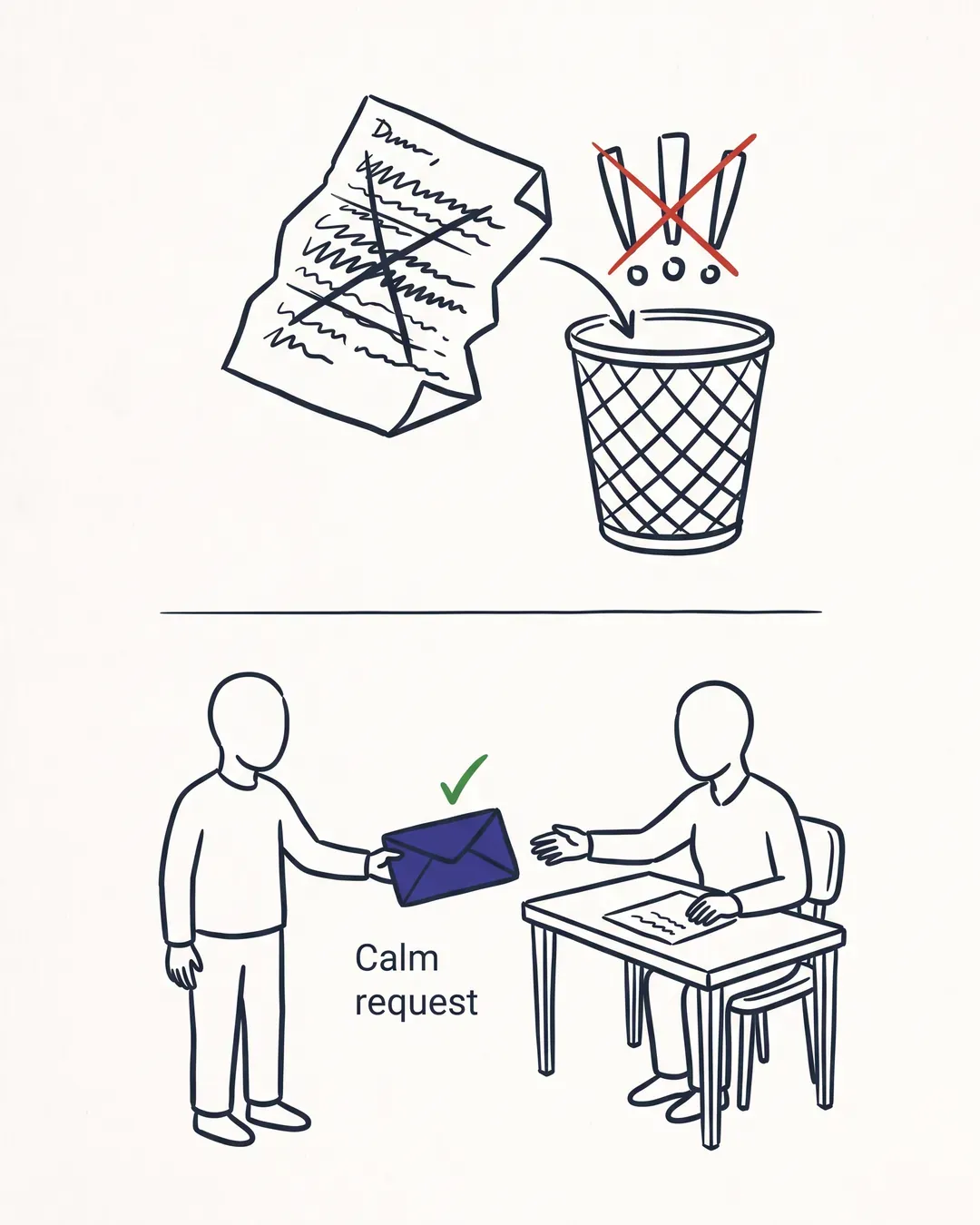
Example: an email after a flag.
Before:
I did NOT use AI. Turnitin is wrong and this is unfair. I want my grade fixed.
After:
Thank you for raising this. I wrote the essay myself and would like to show you how. Could you tell me which detector was used and share the report? I can bring my outline, my earlier drafts with version history covering the week I wrote it, and my source notes. I’m also glad to walk you through my argument or write a short response on the topic during office hours. Turnitin’s own guide for educators covers how to handle possible false positives, and I’d appreciate the chance to show my process.
The second version asks for the facts, offers evidence, and gives the teacher an easy way to check.
If a client or employer flagged your work
Freelancers, ghostwriters and job applicants can follow the same steps: ask which tool was used, share drafts and notes, and offer to explain how you wrote the piece.
Can ChatGPT tell if it wrote something?
No. OpenAI says ChatGPT has no “knowledge” of what content could be AI-generated. It will sometimes make up answers to questions like “did you write this [essay]?”, and OpenAI says “these responses are random and have no basis in fact.”
Don’t paste your essay into ChatGPT to check yourself. If someone accuses you because ChatGPT said “yes, I wrote this,” send them OpenAI’s help page.
How can I avoid being flagged by AI detectors next time?
No writing style guarantees you’ll pass. The 2026 preprint showed that identical edits pushed scores up in some detectors and down in others. Protect yourself by keeping a record as you write:
- Write in an app that saves version history, and don’t paste in big blocks of finished text from somewhere else.
- Save your outline and at least one rough draft for every graded or paid piece.
- Keep a running source list with links or page numbers.
- If your school uses Turnitin Clarity, know that Turnitin describes it as giving educators “full transparency into your students’ writing process”.
- Disclose any AI help that was allowed. Vanderbilt recommends disclosures and citations wherever AI use is permitted.
- Keep a folder of past writing so you have samples to compare against.
What to do next
Start with a calm email today, then build your evidence folder before any meeting takes place.
- Today, email your teacher or client a calm request for the detector’s name, the score and the report. The example above gives you a template.
- Export your version history and gather your drafts, outline and sources into one folder.
- Pull two or three pieces you wrote earlier to show your usual style.
- Read your school’s or client’s AI policy and note what it says about detector scores.
- Save the OpenAI help page and the Turnitin guide for your situation so you can cite them in the meeting.
- For your next assignment, start the document early in an app that keeps version history, so the record builds as you write.
Prices and features as of Nov 28, 2026, from each product's own pages.
Frequently asked questions
Why do AI detectors flag my human writing but miss text that really came from AI?
Detectors are easy to get around. OpenAI says that even if detectors worked, students "can make small edits to evade detection." The 2023 study in the International Journal for Educational Integrity also found that content obfuscation techniques "significantly worsen the performance of tools." So a clean score says little about someone else's honesty, and a high score says little about yours.
Did OpenAI ever release its own AI text detector?
Yes, and it was pulled. Vanderbilt's guidance cites a July 25, 2023 TechCrunch report headlined "OpenAI scuttles AI-written text detector over 'low rate of accuracy'." OpenAI's help center still answers "Do AI detectors work?" with a no, based on its own research.
Should I check my essay with a free online AI detector before I submit it?
Treat any one score with caution. In the 2026 preprint on non-native academic writing, the same human text could score very differently from one detector to the next. Vanderbilt also raised privacy concerns about putting student writing into detectors run by separate companies "with unknown privacy and data usage policies."
Can professional editing make my writing look AI-generated?
It can change your score. The 2026 preprint compared manuscripts before and after professional editing and found that "score changes correlated with the extent of editing." The authors name professional editing style as "a key confounding variable" in detector results. It is a preprint, so read it as an early finding.
Can I see my own Turnitin AI score as a student?
Usually only through your school. Turnitin says student access to its products "is typically provided through their educational institution or instructor," mostly inside the school's learning management system. If you've been flagged, ask your instructor for the report itself, not just a summary of it.
If my class allowed some AI help, how do I cite it?
Vanderbilt points out that guidelines already exist for citing AI and ChatGPT in APA and MLA formats, and it recommends disclosures and citations wherever AI use is allowed. OpenAI also suggests that students log and cite sources when they use ChatGPT, and share the conversation link so a teacher can see how they used it.
Sources
- How can educators respond to students presenting AI-generated content as their own? | OpenAI Help Center
- [2304.02819] GPT detectors are biased against non-native English writers
- Testing of detection tools for AI-generated text - White Rose Research Online
- [2608.26710] Style as a Confound: False Positives in AI Detection of Non-Native Academic Writing
- Dealing with AI false positives: Student perspective
- Handling AI false positives: Guide for educators
- Guidance on AI Detection and Why We’re Disabling Turnitin’s AI Detector | Brightspace | Vanderbilt University
- Empower Students to Do Their Best, Original Work | Turnitin
- Turnitin's solutions for education, research, and business