The best AI humanizer depends on your goal. Undetectable AI is built to bypass detectors and refunds output flagged as not human. Grammarly's humanizer is free to try and says it isn't meant to beat detectors. Walter Writes pairs a humanizer with its own detector. Turnitin now checks for humanizer output, and detector-guided paraphrasing beat many detectors in research.
| Product |  Undetectable AI |  Grammarly AI Humanizer |  Walter Writes AI | mull |
|---|---|---|---|---|
| Best for | Writers, students and businesses who want to detect AI-generated content and rewrite AI text so it reads more like human writing. | Students, professionals and teams who want help giving their writing more personality, plus proofreading, tone adjustments and AI-text detection. | Students, content teams, marketers and business writers who draft with AI and want to check it for AI patterns, then rewrite it to sound natural, with grammar and plagiarism checks included. | People who want posts drafted from their own spoken or typed answers to a short interview. |
| Price from | $9.99 a month | $30.00 a month | $12.00 a month | $19.00 a month |
| Free plan | Not stated | Yes | No | Yes |
| Languages | Not stated | English, more than 20 languages | over 80 languages | Not stated |
| Mobile app | Not stated | Yes | Yes | No |
Key takeaways
- Undetectable AI's own products page says its humanizer 'bypasses detection'. Grammarly's page says its humanizer 'is not intended to bypass AI detectors.'
- Trials are short: Undetectable AI's pricing page caps its free trial at 250 words, and Walter Writes offers a 300-word trial.
- A University of Bristol notice says Turnitin added detection for humanizer output, and reports made before August 27, 2025 have to be resubmitted to use it.
- In a 2025 arXiv paper, detector-guided paraphrasing cut detection rates by an average of 87.88% across a range of detectors.
- Grammarly says using a humanizer to hide AI use where it's restricted or must be disclosed could count as cheating or plagiarism.
The best AI humanizer depends on what you need it to do. If you want a tool sold most directly on getting text past AI detectors, of these three that’s Undetectable AI. If you want AI text to read more naturally and also need to show how it was made, Grammarly’s humanizer comes with disclosure features and says outright that it isn’t meant to beat detectors. Walter Writes AI sits in the middle: it bundles a humanizer, its own detector and team plans.
Undetectable AI backs its output with a refund if it’s flagged as not human, and a University of Bristol notice says Turnitin now detects humanizer output. Each tool below is described from its own pages, followed by the research on humanizers versus detectors and the situations where using one can get you in trouble.
What is an AI humanizer, and what does it actually change?
An AI humanizer is software that rewrites AI-generated text so it reads less like a chatbot wrote it. Many are also marketed as a way past AI detectors. A 2025 research paper, DAMAGE, describes humanizers as tools “meant to paraphrase and rewrite AI-generated text in a way that allows them to evade AI detection software.”
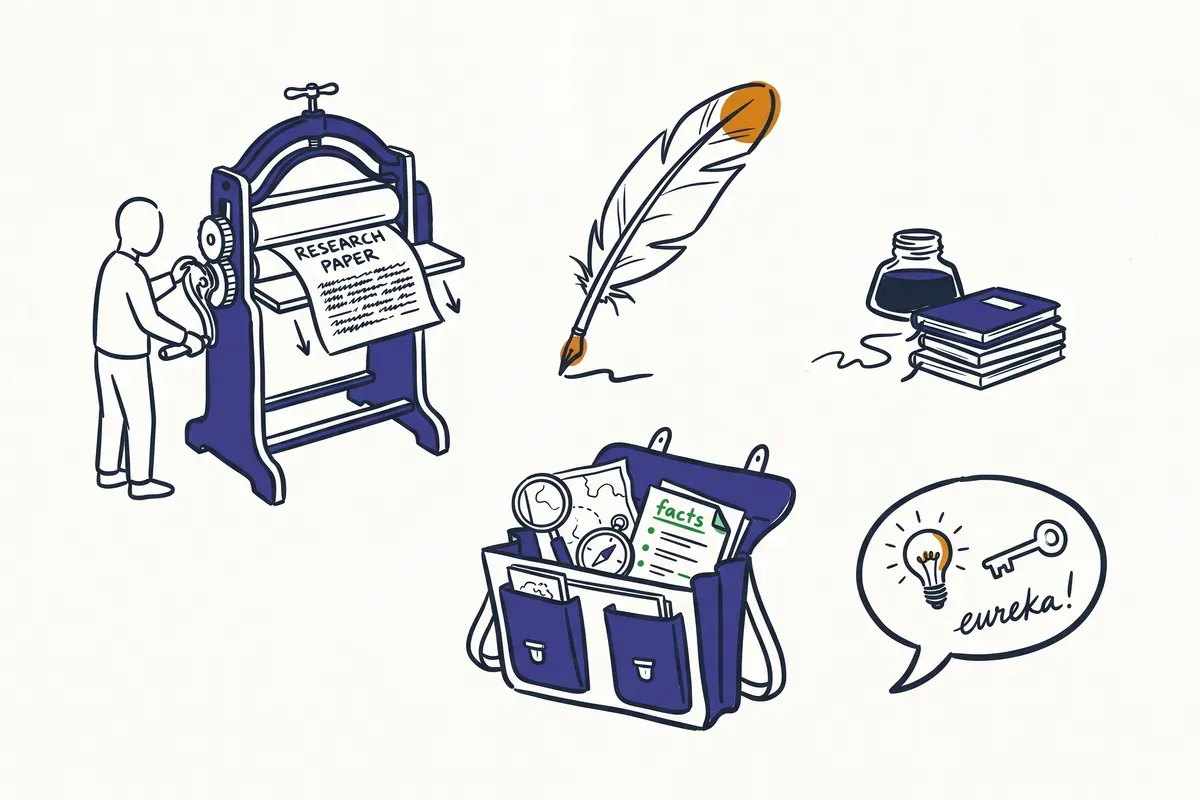
What changes is the surface of the text. Grammarly’s humanizer page says its tool scans for “AI-specific patterns (e.g., overly formal tone or repetitive phrasing)” and then rephrases sentences and adjusts wording and tone. Walter Writes describes “structure-level rewriting” that revises sentence and paragraph flow instead of only swapping in synonyms.
What doesn’t change is the content. Humanizers are designed to keep your meaning, so a draft with no examples, numbers or opinions still has none after the rewrite. The DAMAGE researchers studied 19 humanizer and paraphrasing tools and assessed how faithfully each one kept the original meaning. Read every rewrite against your original before you use it.
Which AI humanizers are worth knowing in 2026?
The tools below make different promises, so match the promise to your goal. Undetectable AI is built to bypass detection. Grammarly frames its tool around readability and disclosure. Walter Writes pairs rewriting with a detector check. mull is included because it takes a different route: it interviews you and writes the draft in your voice from the facts you confirm.
| Feature | Undetectable AI | Grammarly AI Humanizer | Walter Writes AI |
|---|---|---|---|
| Built-in AI detector | Yes | Yes | Yes |
| Free trial or free tier | Yes | Yes | Yes |
| Works inside other apps | Yes | Yes | Yes |
Key: Yes Partly No
Undetectable AI: Source: undetectable.ai, as of Nov 28, 2026
Grammarly AI Humanizer: Source: grammarly.com, as of Nov 28, 2026
Walter Writes AI: Source: walterwrites.ai, as of Nov 28, 2026
What does Undetectable AI do, and what does it cost?
Best for: high-volume users who want detection and humanizing in one account, in settings where a bypass tool is allowed.
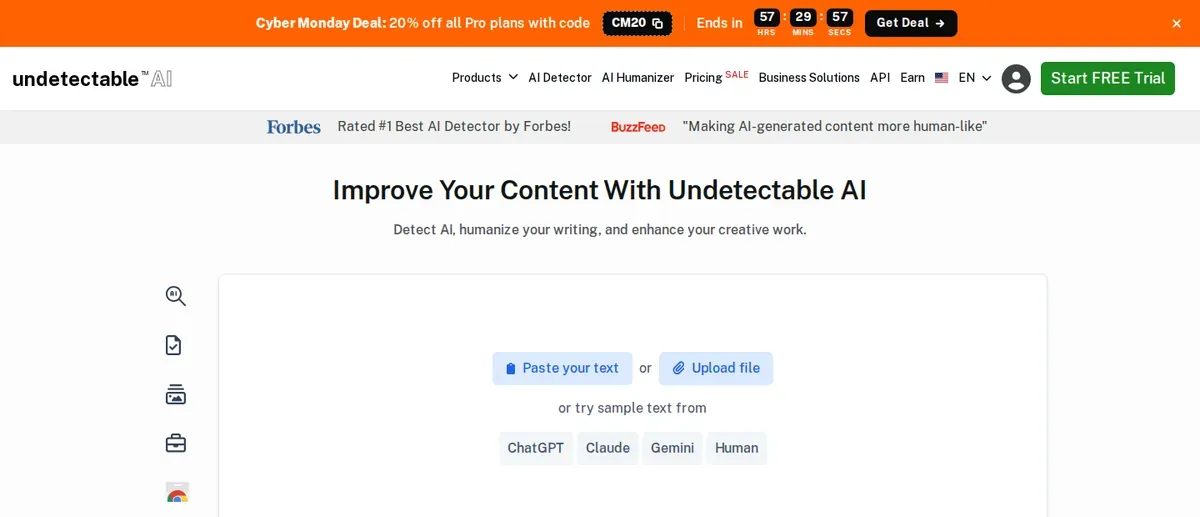
The Undetectable AI homepage offers to “Detect AI, humanize your writing, and enhance your creative work.” Its products page describes the AI Humanizer as turning AI text into “natural, human-like writing that bypasses detection.” Other tools on that page include:
- A Stealth Writer, described as able to “Generate undetectable AI content that reads naturally and passes detection tools”
- A Human Typer that simulates human typing patterns
- An AI Text Watermark Remover
- An Essay Writer
- A Chrome extension for Gmail, Google Docs and other text fields
On the pricing page, plans are sold by monthly word count: 10K, 20K and 35K words a month, plus a top tier that starts at 50K and scales to 380K. The cheapest plan is $9.99 a month billed monthly, or $5.00 a month billed yearly ($60 a year), for 10,000 words. The lower tiers list “Watermark and future proof” and “Unlimited Human Auto Typer.” A business option covers bulk credits, “permanent words with no monthly expiration,” and white labeling.
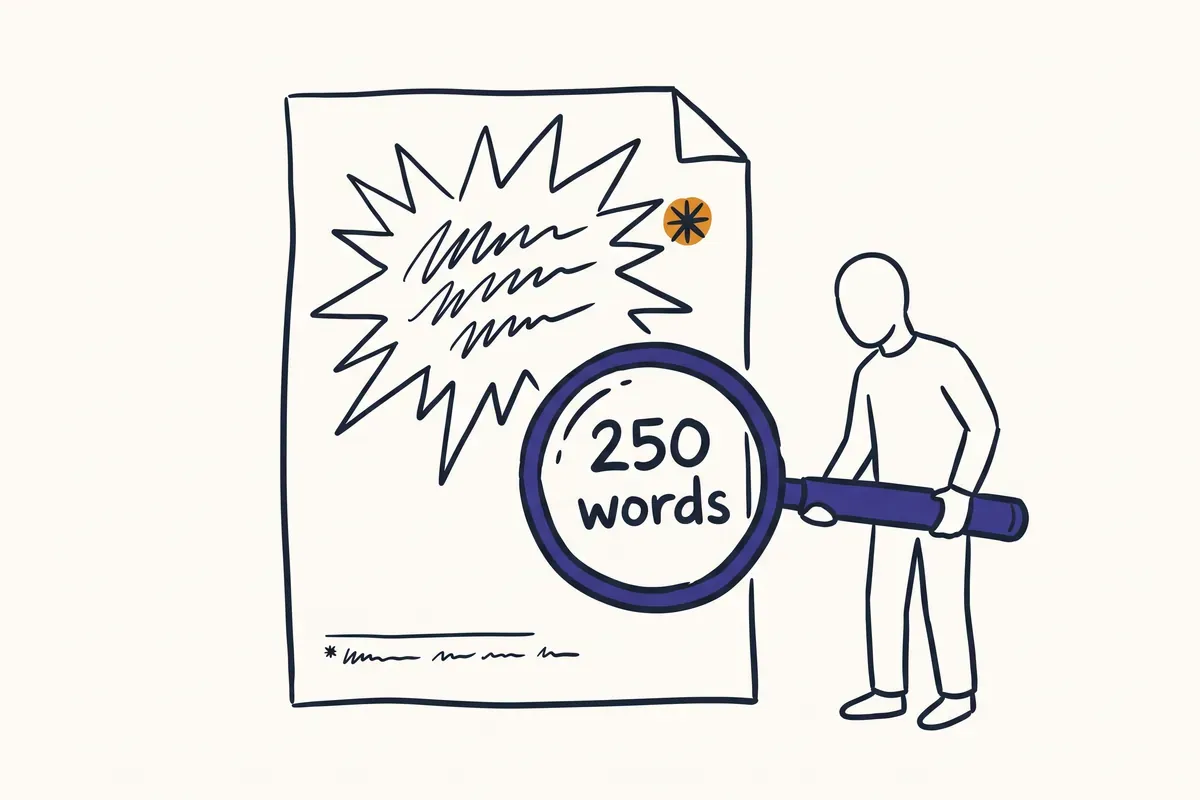
Read the free-trial terms carefully. The homepage’s page title says “Try Unlimited Words Free, No Sign-Up,” but its FAQ says the free, no-signup tool is the AI Detector, and the humanizer can be tried free “for up to 250 words.” The pricing page says the same: “Free Trial is limited to 250 words.” The pricing page also offers a money-back guarantee: “If anything we produce is flagged as not human, we will refund the cost of humanization.”
What does Grammarly AI Humanizer do, and what does it cost?
Best for: people who already use Grammarly and want a humanizer that comes with ways to disclose AI use.
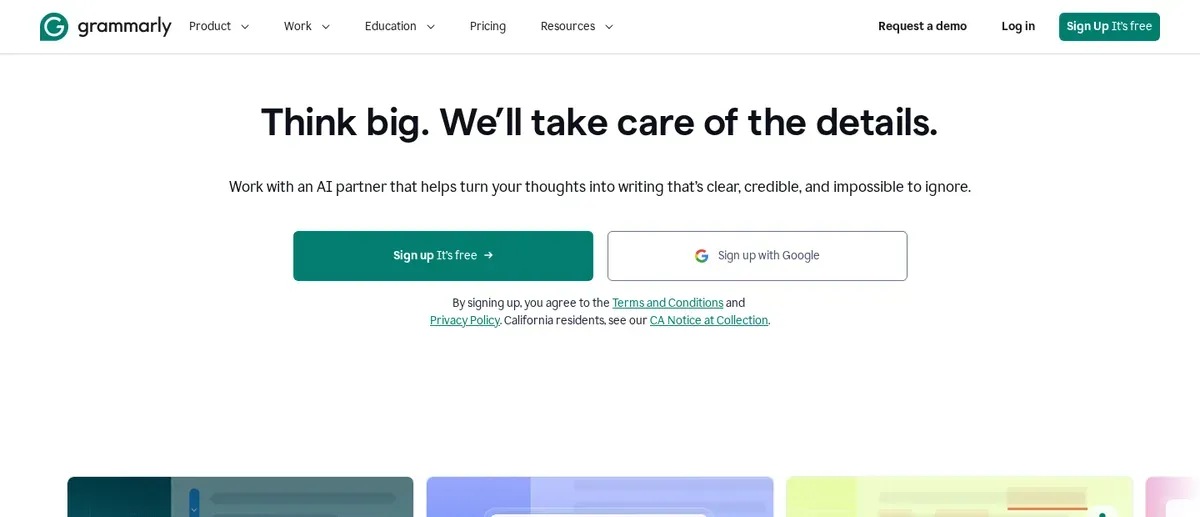
The humanizer on Grammarly’s humanizer page is free and gives “basic humanization.” With a free Grammarly account you also get the Humanizer agent. It offers four preset voices, can build a custom voice from a writing sample you paste in, and works in six languages: English, Spanish, French, German, Portuguese and Italian. Grammarly says upgrading to Pro gives you the full Humanizer experience.
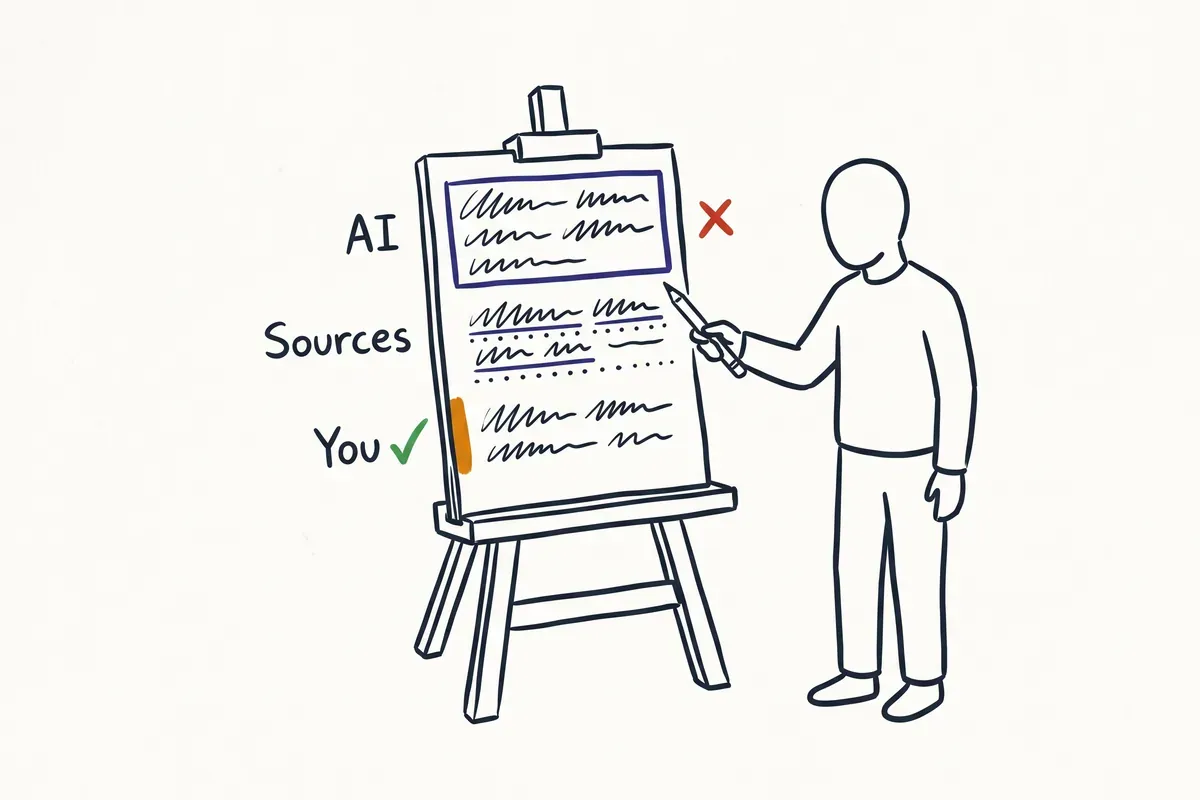
Grammarly is unusually direct about its limits. Its FAQ says: “This tool is not intended to bypass AI detectors.” It pairs the humanizer with Grammarly Authorship, which “shows what came from AI, what came from online sources, and what you wrote yourself.” Grammarly Pro costs $12 per member per month billed annually, or $30 billed monthly, and includes 2,000 AI prompts a month, against 100 on the free plan, according to its Pro page. The plans page lists AI-text and plagiarism detection as paid features the free plan doesn’t include, though Grammarly also offers a free AI Detector web tool. According to its features page, Grammarly works across more than 1 million apps and websites.
A faculty video from the University at Buffalo walks through the tool in a Pro account. The presenter picked a “scholar” style, and the tool read each paragraph and suggested revisions. The video warns that “It’s very easy for the student to just go through and accept these revisions without even having to read them.”
What does Walter Writes AI do, and what does it cost?
Best for: teams and multilingual writers who want a humanizer inside the apps they already use.
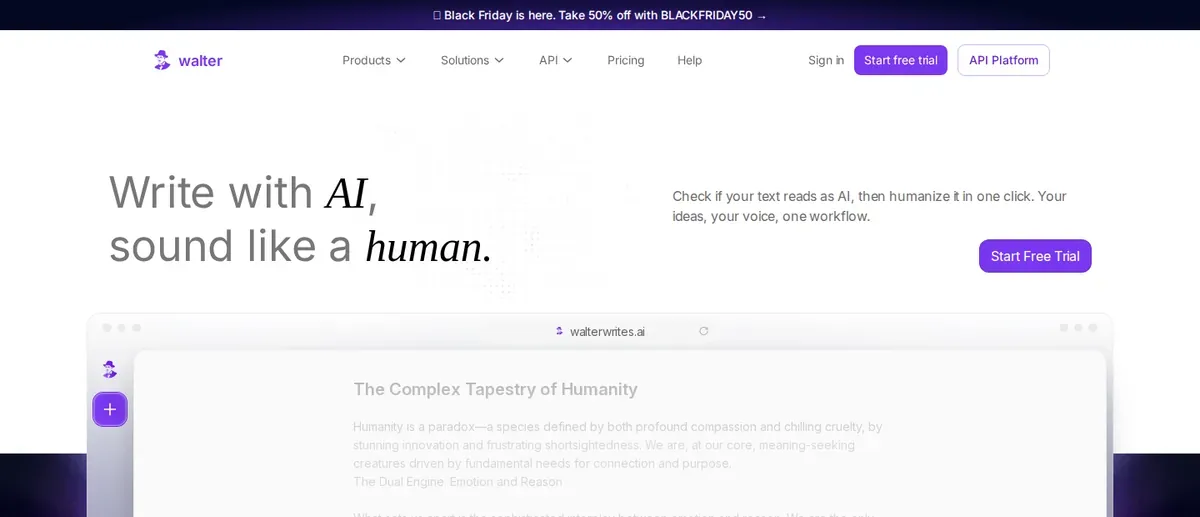
Walter Writes’ homepage lists four tools: an AI Humanizer, an AI Detector, a Grammar Checker and a Plagiarism Checker. The humanizer has adjustable rewrite strength, “from a light pass to a full rework.” Walter Writes says it supports over 80 languages. It runs as a web app, a Chrome extension, a mobile app and a REST API, and it connects to Claude through an MCP connector and to ChatGPT through custom actions.
For pricing, the site offers a free 300-word trial. On the pricing page, Starter costs $12 a month, or $8 a month on annual billing, for 30,000 words a month. A Teams plan “supports up to 10 members with a shared pool of 500,000 words per month,” at $139 a month billed monthly or $99 billed annually. The company says it is SOC 2 Type II certified.
Keep two points from the same page in mind. First, its detector is its own: Walter says “We are not affiliated with other detection services,” so its score is Walter’s own estimate, not a reading from Turnitin or any other service. Second, the site’s blog includes its own “Best AI Humanizers in 2026” ranking, which puts Walter Writes at the top. Treat any vendor’s ranking of itself as marketing.
What does mull do instead of humanizing?
Best for: people writing posts from their own experience who want a first draft in their voice, not a rewrite of an AI draft.
mull isn’t a humanizer. It doesn’t take a chatbot’s text and reword it. You talk or type about something that happened, and it interviews you one question at a time, by voice or by typing. It shows you the facts it heard so you can confirm them, then drafts the post in your voice.
Plans: Free gives 3 posts in total with no card. Starter is 19 US dollars a month for 10 posts. Pro is 39 US dollars a month for 30 posts. Yearly billing gives 2 months free.
The other tools are a better fit in some cases. If you already have AI text that needs fixing, Grammarly, Walter Writes and Undetectable AI are built to rewrite it, and mull isn’t. Grammarly’s six humanizer languages, Undetectable AI’s 50-plus and Walter’s 80-plus give those tools wider language coverage than anything mull describes.
How much do AI humanizers cost, and what do the free tiers include?
Free options range from a 250-word trial to Grammarly’s free basic humanizer, so check each limit before you rely on one. Here is what each vendor’s own pages say:
- Undetectable AI: a free humanizer trial capped at 250 words on the pricing page, then plans from 10K to 380K words a month, starting at $9.99 billed monthly.
- Grammarly: a free basic humanizer on its humanizer page, plus the Humanizer agent with a free account. The full Humanizer experience comes with Pro, at $30 billed monthly or $12 a month billed annually.
- Walter Writes: a free 300-word trial on its homepage, then plans from 30K words a month, starting at $12 billed monthly on its pricing page, and a Teams plan for larger volumes.
On monthly billing, the cheapest paid plans are $9.99 (Undetectable AI, 10K words), $12 (Walter Writes, 30K words) and $30 (Grammarly Pro, which is priced per member, not by word count). Yearly billing cuts each of those prices.
Prices move with promotions. Undetectable AI’s pricing page has carried a Cyber Monday discount code and Walter Writes’ homepage a Black Friday code, so check the vendor’s own checkout page on the day you buy instead of trusting a price quoted elsewhere.
Do humanizers really get past AI detectors?
Research shows humanizers can beat many existing detectors, and one detector team reports a model built to catch them. Two 2025 papers on arXiv cover both sides.
- Fast-DetectGPT, guided attack98.96 %
- Average across detectors87.88 %
- RADAR, guided attack64.49 %
Source: arxiv.org, as of Nov 28, 2026
The DAMAGE paper, posted in January 2025, found that “many existing AI detectors fail to detect humanized text.” The same team then built a detector that they say catches humanized text while keeping false positives low. They attacked it with a model they fine-tuned against its predictions and report that the detector stayed robust to that attack. Those claims come from the team that built the detector, and the abstract doesn’t name the 19 tools they studied.
The Adversarial Paraphrasing paper, submitted in June 2025 and revised in October 2025, tested a stronger attack. Its key measure is how much AI text a detector catches when it’s set to wrongly flag only 1% of human text. The results:
- Plain paraphrasing made detection better. It raised that catch rate by 8.57% on the RADAR detector and 15.03% on Fast-DetectGPT.
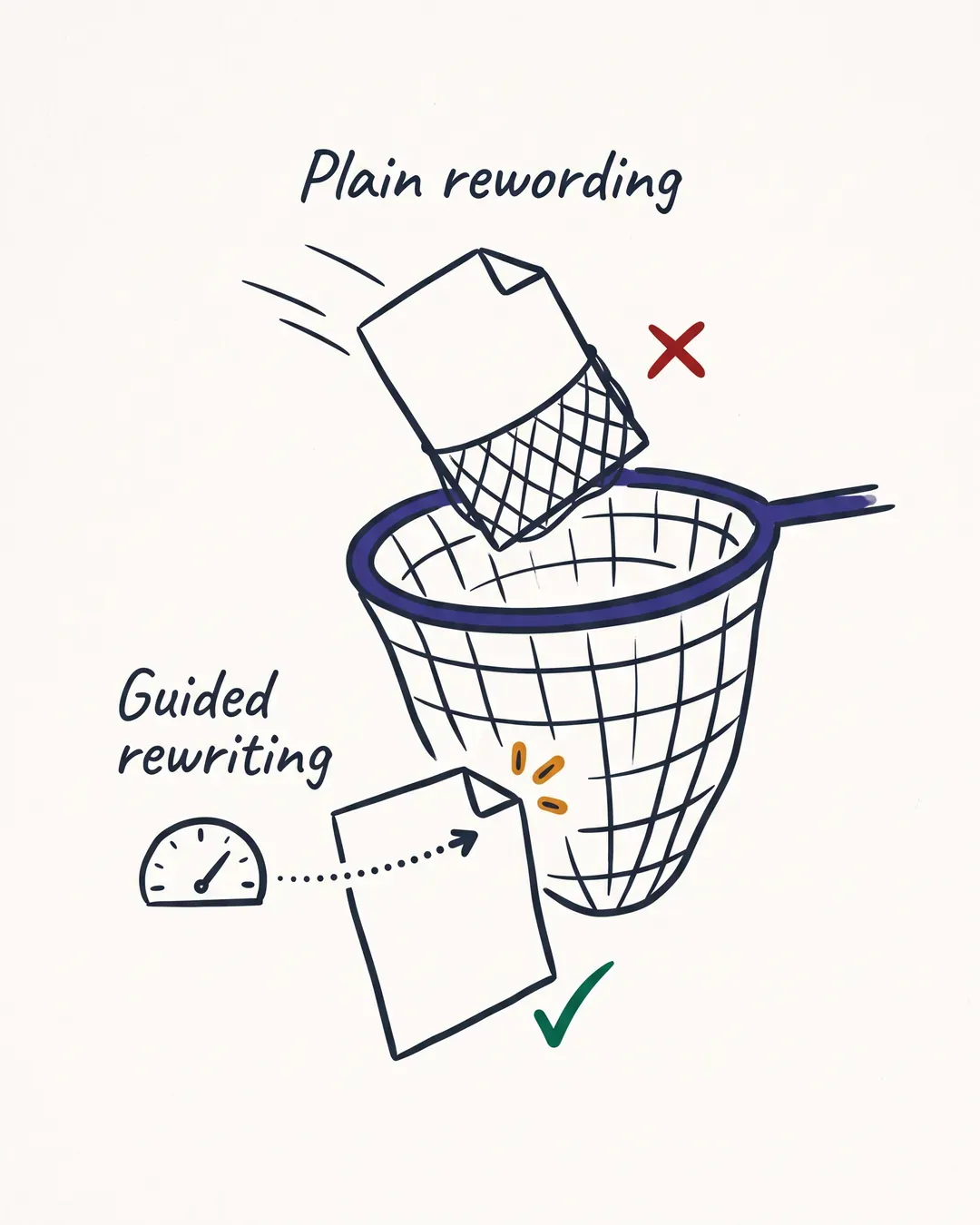
- Paraphrasing guided by a detector’s feedback cut the catch rate by 64.49% on RADAR and 98.96% on Fast-DetectGPT.
- Across detectors of several kinds, including watermark-based ones, the guided attack cut detection by an average of 87.88%, with “mostly a slight degradation in text quality.”
In practice, plain rewording made text easier to catch in the second study, while rewriting guided by a detector cut detection sharply across the detectors tested. The first study, meanwhile, reports a detector trained specifically on humanized text.
Can Turnitin detect humanized text?
According to the University of Bristol, Turnitin now detects the output of humanizers, though the notice gives no accuracy figure. The September 2025 notice from the University of Bristol’s Digital Education Office says Turnitin “has expanded its capabilities to detect the output of AI tools that re-arrange AI-generated text in an attempt to bypass AI-detection tools.” The update is built into Turnitin’s AI writing report. Reports generated before August 27, 2025 have to be resubmitted to use it.
The Bristol notice doesn’t give a detection rate, doesn’t say which humanizers the update catches, and doesn’t say which languages or Turnitin customers it covers.
How accurate are AI detectors in the first place?
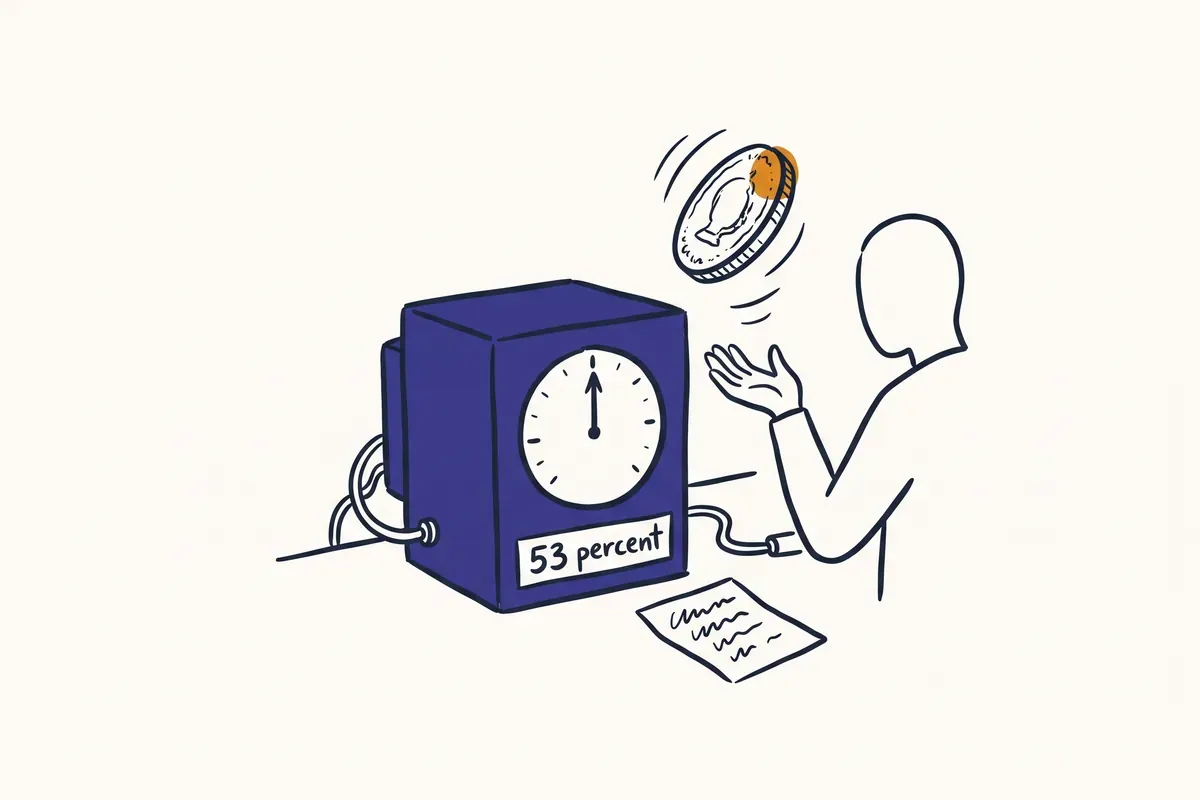
Some AI detectors are far less accurate than their marketing, and the FTC has acted on one. In its case against Workado, the Federal Trade Commission says the company advertised its AI Content Detector as “98 percent” accurate, but independent testing put its accuracy on general-purpose content at 53 percent. Chris Mufarrige, director of the FTC’s Bureau of Consumer Protection, said the product “did no better than a coin toss,” and the FTC alleges that the model was only trained or fine-tuned to classify academic content.
98%
Accuracy Workado advertised for its AI Content Detector
Source: ftc.gov, as of Nov 28, 2026
53%
Accuracy in independent testing on general-purpose content
Source: ftc.gov, as of Nov 28, 2026
Under the proposed order, Workado can’t make claims about how well its products work without “competent and reliable evidence.” Once an FTC consent order is final, each violation can bring a civil penalty of up to $53,088.
For you, this cuts both ways. A “human” score from a humanizer’s built-in detector doesn’t prove another detector will agree. And if a detector flags writing you did yourself, the score alone isn’t proof you used AI.
When is using a humanizer a bad idea?
A humanizer is a bad idea anywhere AI use is banned or has to be disclosed, because hiding it is the problem. Grammarly’s own FAQ says that in “academic settings or any context where AI use is restricted or must be disclosed, using an AI humanizer to disguise the use of AI may be considered unethical and could constitute cheating or plagiarism.”
Schools are paying attention. The University at Buffalo’s faculty video shows instructors how Grammarly features can be chained “from generation to humanization to citation insertion.” It’s meant to help faculty set their classroom policies.
The same logic applies to paid work. If a client contract, a publisher or a platform requires you to disclose AI use, running the text through a humanizer doesn’t meet that requirement. For high-stakes documents, take Walter Writes’ own advice on legal text: “Always review legal text before use.”
How do you make AI writing sound like you without a humanizer?
You make AI writing sound like you by adding what only you know: a moment, a number, a decision, an opinion. A humanizer can change rhythm and word choice, but it can’t add facts it was never given. If you know the common signs of AI writing, you can spot the flat sentences that need a real detail.
250 words
Undetectable AI free trial limit
Source: undetectable.ai, as of Nov 28, 2026
300 words
Walter Writes AI free trial
Source: walterwrites.ai, as of Nov 28, 2026
Checklist
- Check the rules first. If AI use is banned or must be disclosed, skip the humanizer and disclose instead.
- Decide what you need: bypassing detectors and clearer wording with a disclosure trail are different jobs.
- Check language support: six languages for Grammarly's Humanizer agent, over 80 for Walter Writes.
- Estimate your volume against word-based plans, such as Undetectable AI's 10K to 380K tiers or Walter Writes' 30K to 500K.
- Test the free tier on a real paragraph: 250 words on Undetectable AI, 300 on Walter Writes.
- Compare every output sentence with your original for changed meaning before you accept it.
Before
Effective communication is crucial for business success. By leveraging clear messaging, professionals can significantly enhance client relationships and drive meaningful results.
After
Last March I lost a $4,000 client because my proposal ran six pages. The next proposal I sent fit on one page, with three numbers on it. That client signed in two days.
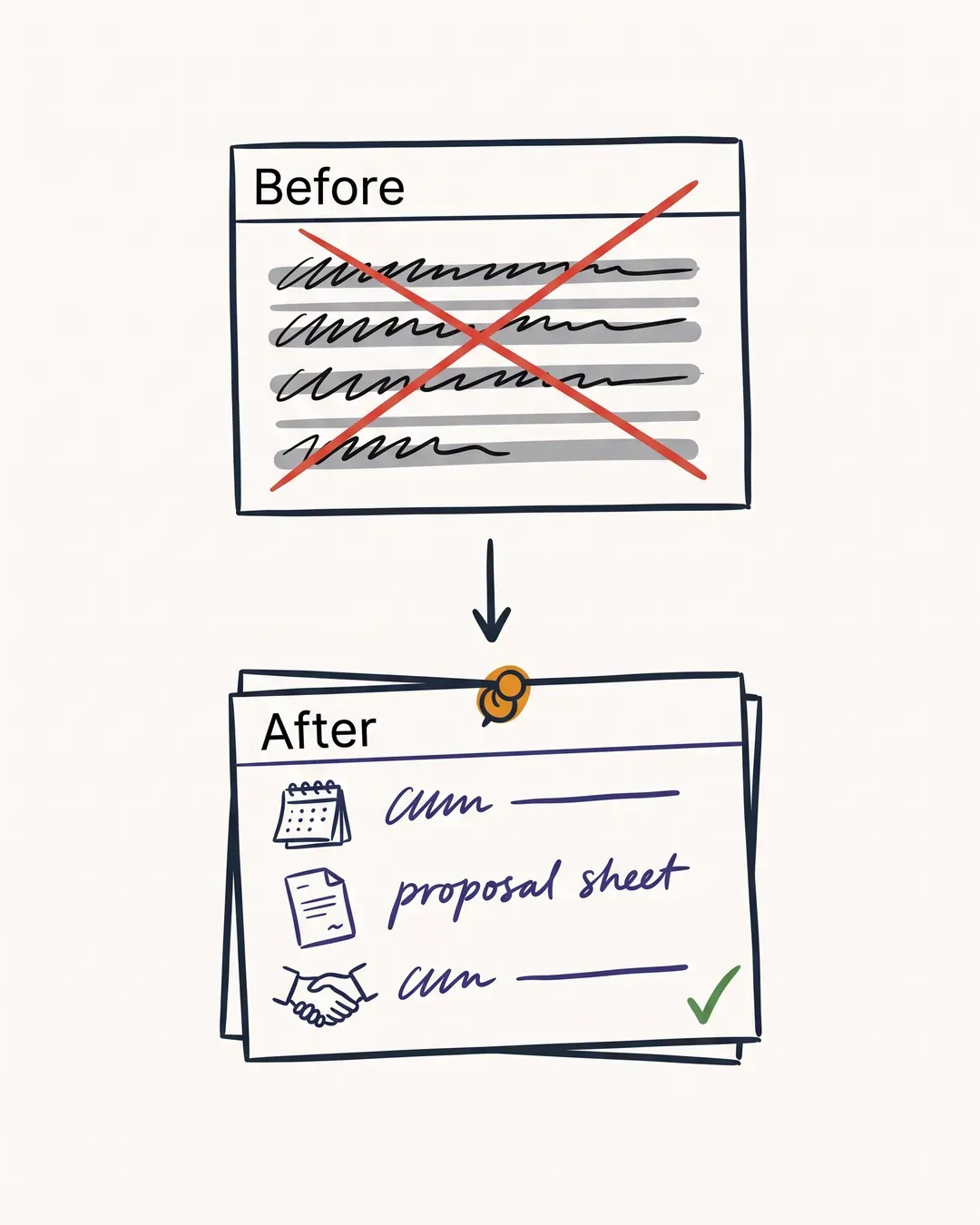
Example: a freelancer’s LinkedIn post about proposals
Before (the AI draft):
Effective communication is crucial for business success. By leveraging clear messaging, professionals can significantly enhance client relationships and drive meaningful results.
A humanizer would reword those sentences. It would still say nothing, because there’s nothing in them to keep.
After (rewritten with your own details):
Last March I lost a $4,000 client because my proposal ran six pages. The next proposal I sent fit on one page, with three numbers on it. That client signed in two days.
None of the “after” text came from a tool. It came from asking yourself what actually happened. The same approach works whether you’re using AI to write a post, an email or a book chapter. If you draft with a chatbot, prompts to make AI write like a human are one place to start.
Example: a checklist for choosing a humanizer, or skipping one
- Check the rules first. If AI use is banned or must be disclosed, skip the humanizer and disclose instead.
- Decide what you need. Bypassing detectors (Undetectable AI’s pitch) and clearer wording with a disclosure trail (Grammarly’s pitch) are different jobs.
- Check language support: six languages for Grammarly’s Humanizer agent, over 80 for Walter Writes.
- Estimate your volume against word-based plans, such as Undetectable AI’s 10K to 380K tiers or Walter Writes’ 30K to 500K.
- Test the free tier on a real paragraph: 250 words on Undetectable AI, 300 on Walter Writes.
- Compare every output sentence with your original for changed meaning before you accept it.
What to do next
Start by checking whether you’re allowed to use a humanizer at all, then test before you pay.
- Write down the rule that applies to your text: course policy, client contract or publisher guideline.
- If a humanizer is allowed, test one short paragraph in a free humanizer and a paid tool's trial.
- Compare both outputs with your original line by line.
- Don't treat a vendor's own detector score as a pass.
- Replace every general sentence with a date, number, name or result, and recheck pricing on the day you subscribe.
- Write down the rule that applies to your text, whether it’s a course policy, a client contract or a publisher’s AI guideline, before you open any tool.
- If a humanizer is allowed, paste the same short paragraph into Grammarly’s free humanizer and one paid tool’s free trial, then compare both outputs with your original line by line.
- Don’t treat a vendor’s own detector score as a pass. Walter Writes, for one, says its detector isn’t affiliated with any other service.
- Take your next AI draft and replace every general sentence with one specific: a date, a number, a name or a result. Then see whether it still needs a humanizer at all.
- Recheck pricing on the vendor’s own pricing page on the day you subscribe, since discounts and plan limits change.
Prices and features as of Nov 29, 2026, from each product's own pages.
Frequently asked questions
What is the best free AI humanizer?
It depends on which free limit matters to you. Grammarly's humanizer page says its tool is free and offers basic humanization, and the free Grammarly plan also includes 100 AI prompts a month. Undetectable AI's homepage is titled 'Try Unlimited Words Free, No Sign-Up,' but its FAQ says the free, no-signup part is the AI Detector, and the humanizer trial covers up to 250 words. Walter Writes offers a free 300-word trial and a built-in free AI detector.
Does an AI humanizer work against Turnitin?
The University of Bristol's notice about Turnitin's update gives no detection rate. It says the check runs inside Turnitin's existing AI writing report, needs no change to assignment settings, and brings no visual changes to the report or its highlighting.
How much does Undetectable AI cost?
Undetectable AI's pricing page sells plans by monthly word count. The cheapest plan, 10,000 words a month, is $9.99 billed monthly or $5.00 a month billed yearly ($60 a year), according to the homepage FAQ. The top tier starts at 50,000 words and scales to 380,000 words a month, 'Includes all features from other plans' and is marked '6 Months Free • Cancel Anytime.' Check the page on the day you buy, because it has run discount codes.
Is using Grammarly's AI humanizer cheating?
It depends on where the text goes. Grammarly's own FAQ says that 'in many professional settings, using AI tools to draft or polish content is appropriate,' and recommends 'citing AI when in doubt.' In school, follow your course's rules first.
How much does Walter Writes AI cost?
Walter Writes' pricing page lists Starter at $12 a month billed monthly, or $8 a month billed annually ($96 a year), for 30,000 words a month. Pro is $23 monthly or $13 a month annually for 70,000 words, Elite is $47 or $26 for 200,000 words, and Teams is $139 or $99 for 500,000 words shared by 10 members. These are web-app plans; the REST API is priced separately.
Are AI detectors accurate?
Some are much less accurate than they claim. According to the FTC, Workado said its detector was built from a wide range of material, including blog posts and Wikipedia entries. The FTC alleges the model was only trained or fine-tuned to classify academic content. The Commission voted 3-0 to issue the complaint and accept the consent agreement.
Sources
- [2501.03437] DAMAGE: Detecting Adversarially Modified AI Generated Text
- [2506.07001] Adversarial Paraphrasing: A Universal Attack for Humanizing AI-Generated Text
- FTC Order Requires Workado to Back Up Artificial Intelligence Detection Claims | Federal Trade Commission
- Turnitin AI detection update – Digital Education Office blog
- Grammarly's New AI Tools: What Faculty Should Know - Office of Curriculum, Assessment and Teaching Transformation - University at Buffalo
- Free AI Humanizer | Humanize AI to Sound Like You, Not AI
- Undetectable AI (Official): Try Unlimited Words Free, No Sign-Up
- Plans & Pricing | UNDETECTABLE AI
- Explore All Undetectable AI Tools | Complete Suite of AI-Powered Solutions
- Grammarly Prices and Plans | Grammarly
- Product Features | Grammarly
- Walter Writes AI | Make AI Text Feel Like You Wrote It
- Walter Writes AI Pricing | Affordable AI Humanization Plans
- Grammarly Pro
- Free AI Detector: #1 AI Checker for ChatGPT, Claude & More