An autobiography ghostwriter interviews you and writes your life story as a manuscript in your voice. Reedsy's 2026 data puts nonfiction ghostwriting at $18,000 to $50,000. The Copyright Office's Circular 30 explains who counts as author and owner of a work made for hire. The Office can't give legal advice, so have a lawyer review your contract.
Key takeaways
- Reedsy's 2026 data puts a professional ghostwriter at $18,000 to $50,000 for a nonfiction book. If a publisher has already signed you, the publisher pays.
- One ghostwriter quoted by Reedsy captures a client's voice by recording and transcribing every interview, then editing large portions of the transcripts into the manuscript.
- Plan on regular calls. One working rhythm in Reedsy's guide sends you 3,000 to 5,000 words at a time, with a call a couple of days later.
- The U.S. Copyright Office explains works made for hire in Circular 30, but it can't give legal advice. Have an attorney review the copyright terms before you sign.
- Reedsy's guide tells ghostwriters there is no obligation to credit them and that they will never receive royalties.
A ghostwriter for autobiography projects interviews you about your life and then writes the book in your voice. Reedsy’s 2026 data puts a professional ghostwriter at $18,000 to $50,000 for a nonfiction book, and a ghostwriter’s quote covers the work from interviews to edited chapters.
Before you pay a deposit, have a lawyer read the copyright clause. The U.S. Copyright Office explains who counts as the author and owner of a work made for hire in Circular 30, but it can’t give legal advice on your contract.
| Question | Short answer |
|---|---|
| What does it cost? | $18,000 to $50,000 for nonfiction, per Reedsy’s 2026 rate data |
| Who pays if a publisher has signed you? | The publisher covers the cost of the collaboration |
| How can a writer capture your voice? | In one writer’s method, interviews are recorded and transcribed, then edited into chapters |
| How much of your time does it take? | One rhythm: you review 3,000 to 5,000 words, then talk it through a couple of days later |
| Who owns the copyright? | A question for your lawyer. The Copyright Office’s Circular 30 explains works made for hire |
| Does the ghostwriter get credit? | Not necessarily. Reedsy tells ghostwriters there is no obligation to credit them |
| Is proofreading included? | Don’t expect it. Reedsy advises having someone else polish it for publication |
What does a ghostwriter for autobiography projects actually do?
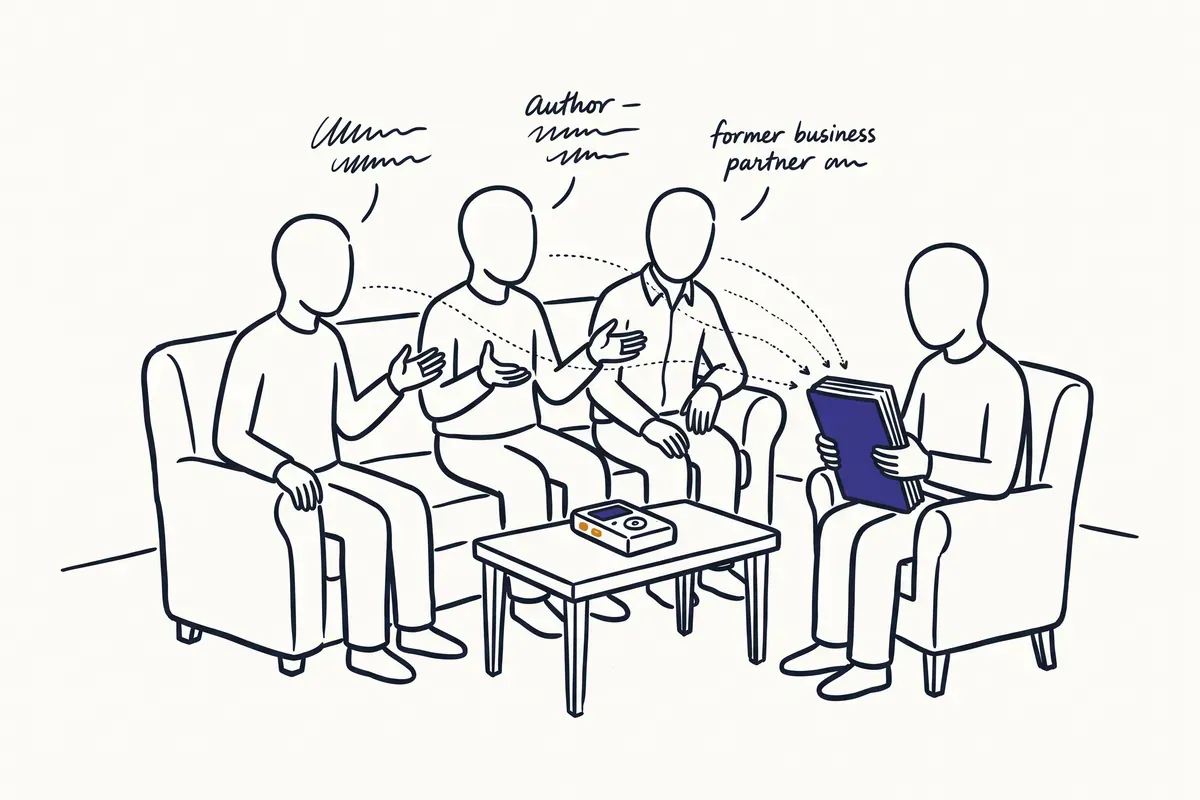
An autobiography ghostwriter turns hours of conversation into a manuscript. Reedsy says a ghostwriter’s quote covers the work to gather background information, interview the author and related characters, draft chapters, and then edit the chapters for hand-off to the publisher. In a life story, “related characters” are the people who were there: a sibling, a former business partner, the coach who cut you from the team.
The work often starts before any chapter is drafted. Reedsy’s homepage says its ghostwriters can help you shape your concept, craft a compelling proposal, and capture your voice. A writer quoted in Reedsy’s ghostwriting guide also treats introducing the client to the publishing landscape as part of the job.
The final proofread is usually not part of the job. Reedsy points out that ghostwriters are too close to the work to notice every little mistake and typo, so set aside money for a separate proofreader. For how ghostwriters work on things other than books, see what ghostwriters do on other kinds of projects.
Is it still your autobiography if a ghostwriter writes it?
Yes, a ghostwritten autobiography is still yours, because the memories and the decisions come from you. Reedsy’s guide quotes a ghostwriter whose first rule is that the book isn’t my book. It’s the author’s. That writer explains the drawbacks of an approach, but if the author still wants it their way, the author’s way is what goes in the book.
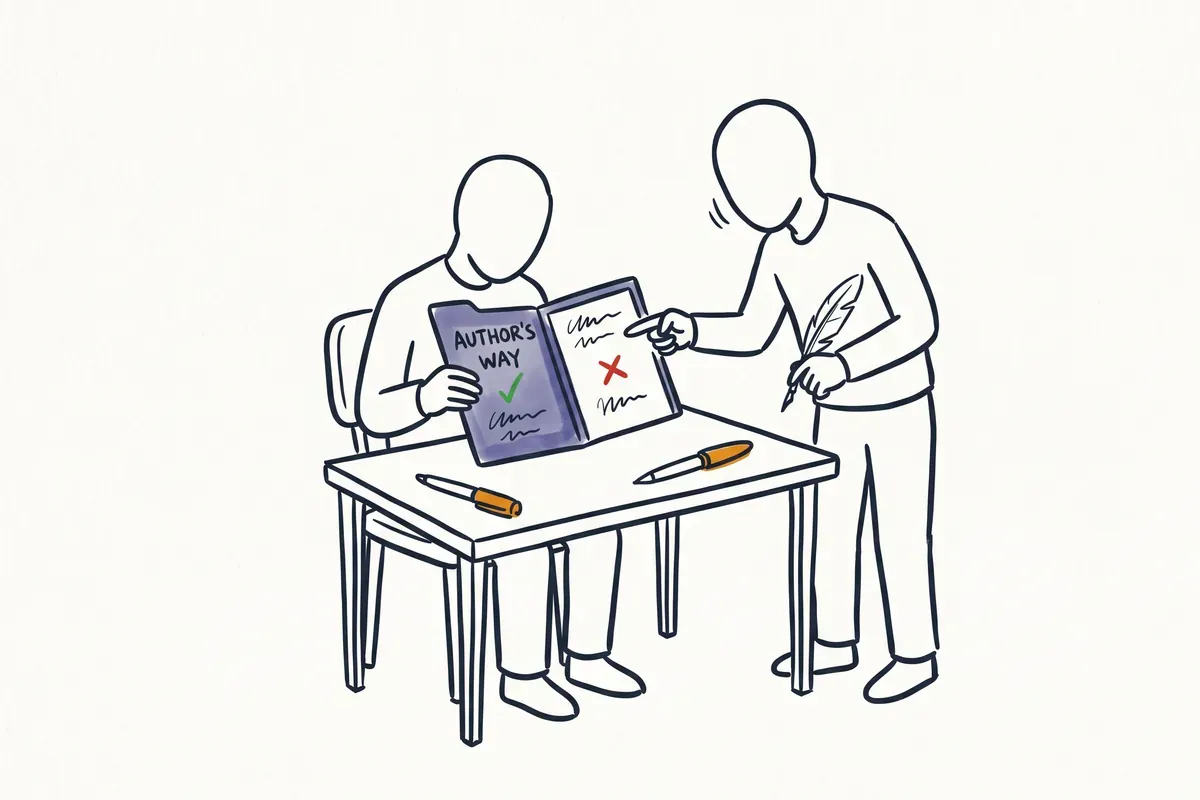
In one ghostwriter’s method, the voice comes from your own speech. Reedsy’s cost guide quotes a writer who records and transcribes every interview, then copies large portions of the transcripts into the manuscript and edits or rewrites them. The idea is that the book sounds like you because much of it is you, answering questions and telling stories.
How does the process work, from interviews to revisions?
Ghostwriters quoted in Reedsy’s guide describe a sequence: a fit call, a long stretch of interviews, then drafts you review in batches.
- Chemistry callA video call before either side agrees to work together, often opening with "Why do you want to write this book?"
- InterviewsA long stretch of recorded, transcribed interviews that supply much of the book's content.
- Drafts and revisionsDrafts arrive in batches of 3,000 to 5,000 words, followed by a call a couple of days later.
The chemistry call
One writer Reedsy quotes insists on a Zoom call before either side agrees to collaborate, and usually opens with “Why do you want to write this book?” The answer shows how likely the author is to give the project the time it needs. That writer also describes a would-be author whose book turned out to be a revenge project. The writer didn’t want to be part of it, and the author decided on his own that this wasn’t the writer for him.
The interviews
Interviews supply much of the book’s content. A ghostwriter in Reedsy’s guide expects to spend as much time, or more, planning interviews and crafting questions as writing the book itself. Another uses AI to transcribe, notes that AI can’t manage every accent, and checks each transcript a second time.
Drafts and revisions
In one working pattern, drafts arrive in batches of 3000 to 5000 words, followed by a call a couple of days later about what you liked, what you didn’t and what needs to change. The same writer says the most common reason ghostwriting projects fail is that the author didn’t understand how much time they would have to give. If one or two calls a week sounds hard, sort that out before you sign.
Before
So my dad had the hardware store, right, and one Saturday he just, he handed me the keys and said open up, I'll be back by noon. And he wasn't back by noon. That whole day it was just me behind the counter.
After
One Saturday morning my father handed me the keys to the hardware store and said he'd be back by noon. He wasn't. Until closing, it was just me behind the counter.
3,000–5,000
words in each draft batch, followed by a call a couple of days later about what to change

Example: turning an interview answer into a paragraph
Before (what you might say on a recorded call):
“So my dad had the hardware store, right, and one Saturday he just, he handed me the keys and said open up, I’ll be back by noon. And he wasn’t back by noon. That whole day it was just me behind the counter.”
After (what a ghostwriter might draft from the transcript):
“One Saturday morning my father handed me the keys to the hardware store and said he’d be back by noon. He wasn’t. Until closing, it was just me behind the counter.”
The draft keeps your phrases (“handed me the keys,” “back by noon,” “just me behind the counter”) and cuts the filler. That is the transcript-first method at work.
How much does a ghostwriter cost for an autobiography?
Reedsy’s 2026 data puts nonfiction ghostwriting at $18,000 to $50,000, and the price depends on the ghostwriter’s experience and your genre. Who pays depends on where you are with publishing:
18,000 USD
Low end for a professional ghostwriter on a nonfiction book, Reedsy 2026 data
Source: reedsy.com, as of Nov 29, 2026
50,000 USD
High end for a professional ghostwriter on a nonfiction book, Reedsy 2026 data
Source: reedsy.com, as of Nov 29, 2026
76,910 USD
Median annual wage for writers and authors, May 2025, Bureau of Labor Statistics
Source: bls.gov, as of Nov 29, 2026
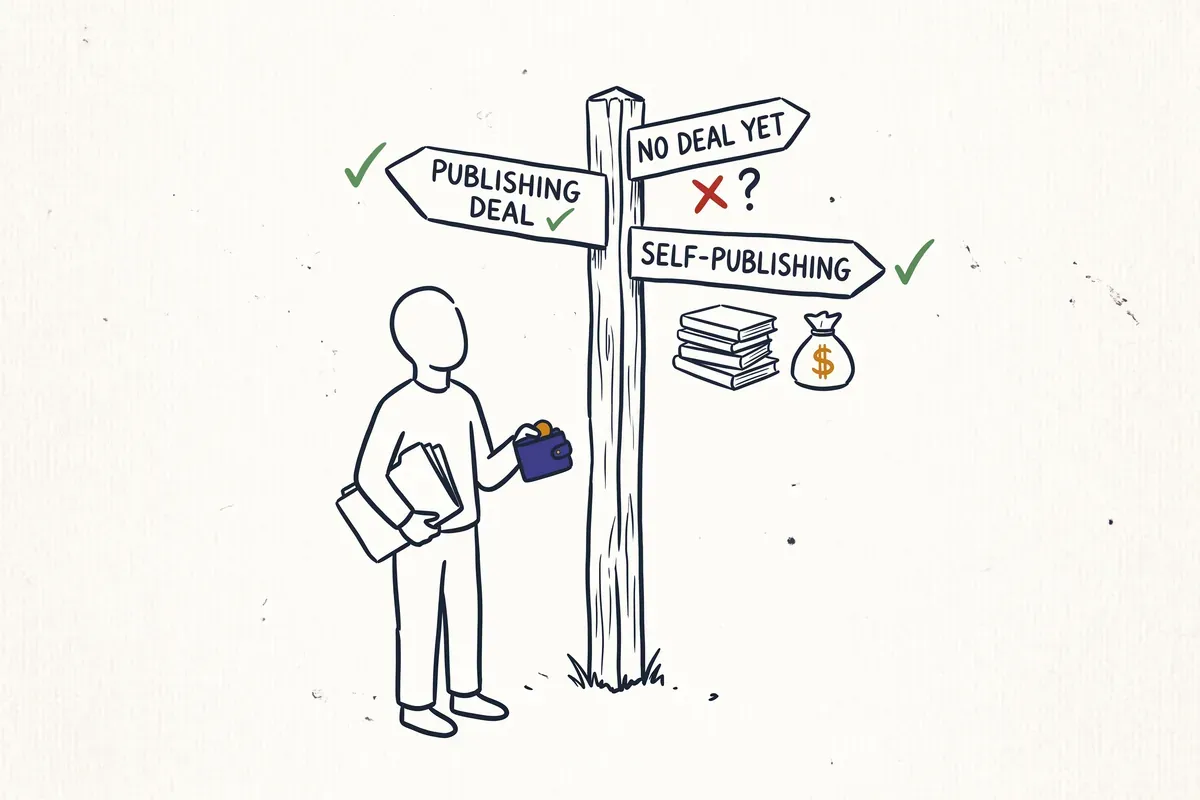
- You have a publishing deal: the publisher covers the cost of the collaboration.
- You want a traditional publisher but have no deal yet: you may have to pay for some of the writer’s services yourself, such as a proposal.
- You’re self-publishing: you get complete creative control, and you find, negotiate with and pay the writer yourself.
Payment usually comes in stages. Reedsy notes that a memoir might have different milestones than a novel. You might pay by chapter, after the first half of the draft, or once a complete first draft is in. For context on what writers earn, the Bureau of Labor Statistics reports a median annual wage of $76,910 for writers and authors in May 2025 and notes that many of them are self-employed.
For a full breakdown of rates and pricing models, see how much it costs to hire a ghostwriter.
Where can you find a memoir ghostwriter?
A freelance marketplace and a publisher’s list of writers are two places to look for a memoir or autobiography ghostwriter. If you’re weighing a firm against an independent writer, the comparison of a ghostwriting agency vs freelancer covers the trade-offs.
Marketplaces
Reedsy is a marketplace for publishing freelancers, ghostwriters included. Each professional has a profile that shows their experience and past projects. You can request free quotes, then message, share files and pay through the platform. Reedsy says projects on the site are covered by a project protection guarantee. That is protection you give up when you hire a writer directly, so a direct hire needs a tighter contract. For more on how the platform works, see the review of Reedsy ghostwriting.
Publishers
If a publisher has signed you, ask whether it can suggest a writer. Reedsy notes that traditional publishers would have a list of vetted writers and samples. If you self-publish, the vetting is up to you.
How do you vet a ghostwriter before you hire?
Pay for a small piece of real work and hold one honest conversation before you commit to a full book. Check these points:
Checklist
- Ask how they capture a voice, for example by recording and transcribing every interview
- Pay for a test, such as an outline or a sample chapter
- Notice whether you feel heard and understood on the first call
- Agree on how often you'll meet; calls once or twice a week should feel doable
- Pay in installments so you can walk away if it doesn't work out
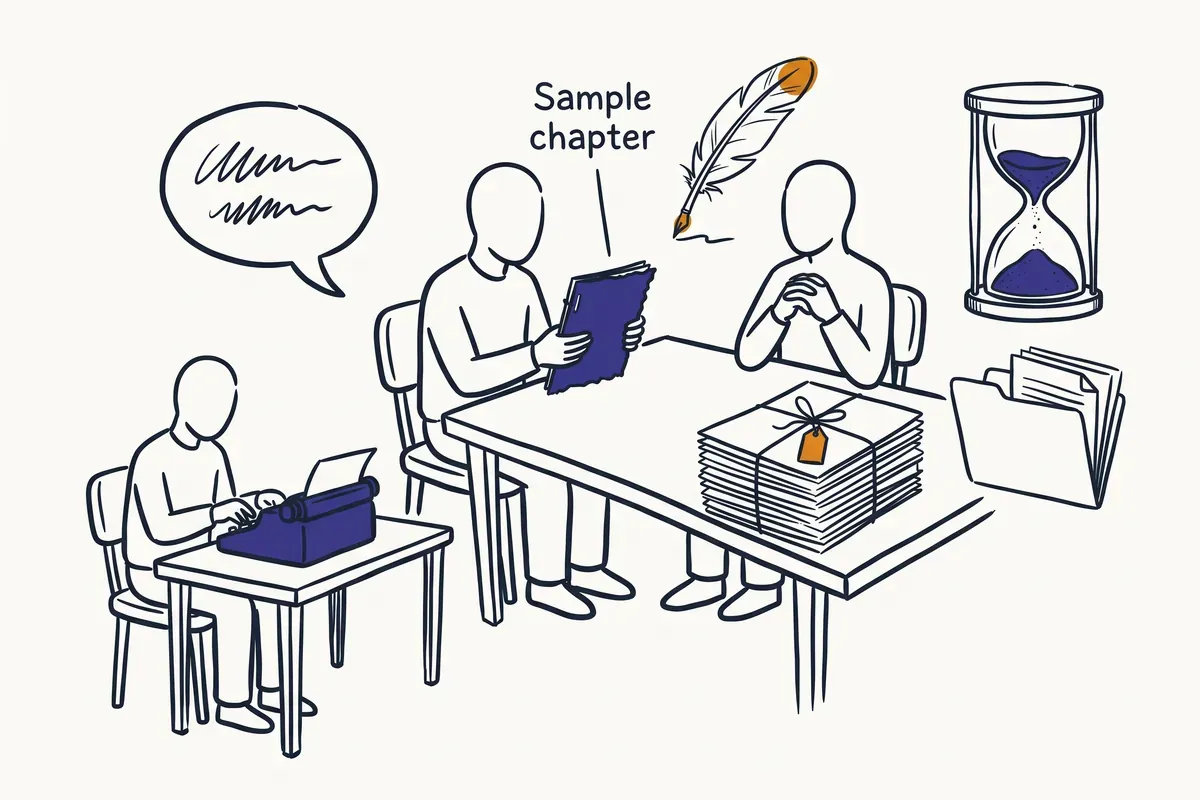
- Ask how they capture a voice, and compare the answer with the process in Reedsy’s guide, where one writer records and transcribes every interview.
- Pay for a test. For nonfiction, a proposal often includes one sample chapter. Reedsy says even novelists commonly hire a ghost to work on a book outline and sample chapter to test their skills first.
- Notice how the first call feels. Reedsy’s advice: if you feel heard and understood, that usually carries over into the editing process.
- Agree on how often you’ll meet. The writer who sends drafts in batches suggests not going ahead if calls once or twice a week would be difficult.
- Pay in installments. Staged payments allow you to walk away if the relationship doesn’t work out.
Who owns the copyright: work made for hire or assignment?
Who owns the copyright in a ghostwritten autobiography is a legal question, and the Copyright Office’s circulars are a good place to start reading before you talk to a lawyer.
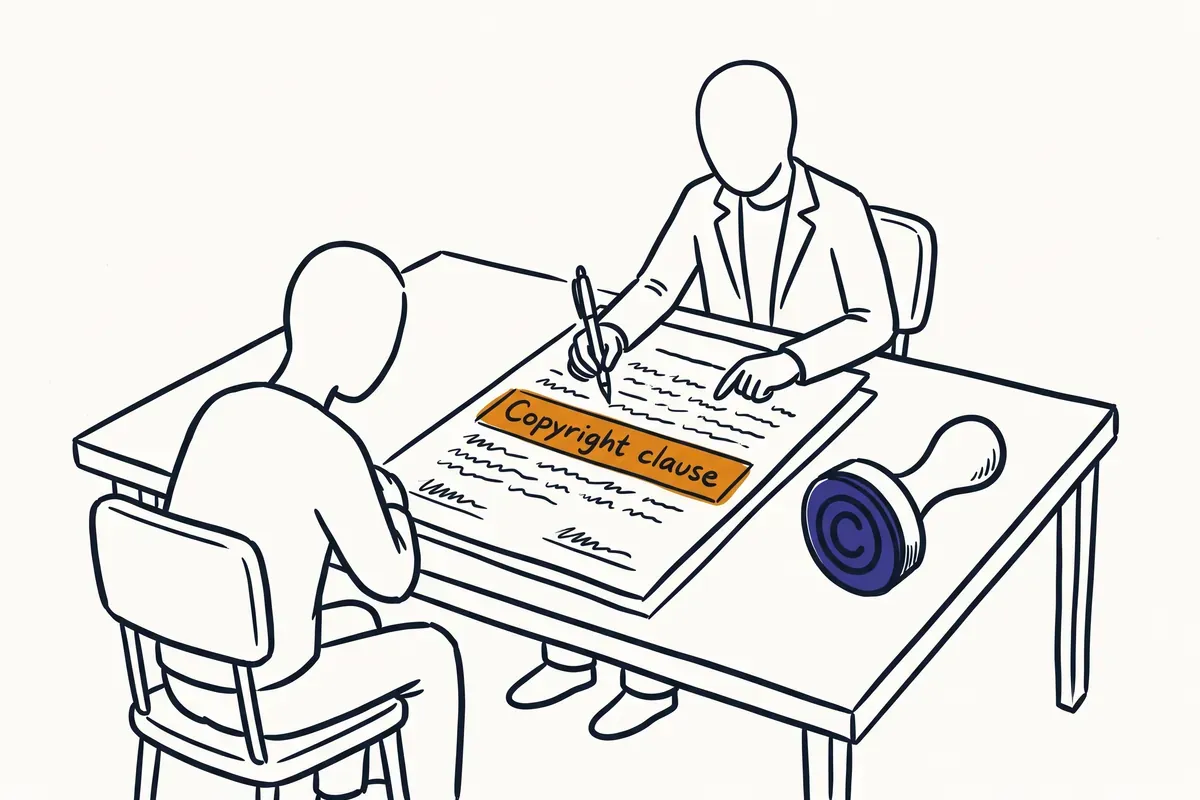
The Office’s Circular 30 covers the legal requirements for a work made for hire, and who is considered the author and the copyright owner. Its Circular 12 covers recording transfers of copyright ownership with the Office. The Office notes that the recordation procedures in that circular have been superseded, and points to its Recordation page for current practices.
Ghostwriters already expect to hand over the rights. Reedsy’s pricing advice tells them to factor in that someone else will hold the copyright. The Copyright Office itself cannot provide legal advice, and this article isn’t legal advice either. A publishing or intellectual property lawyer is the right person to review the wording.
Credit, confidentiality and royalties: what should the contract say?
A ghostwriting contract should spell out credit, confidentiality, royalties, payment and scope.
- Credit. Nothing requires you to name the writer. Reedsy tells ghostwriters they may be credited but there’s no obligation. If you agree to credit them, write the wording into the contract.
- Confidentiality. Agree on whether the writer can say they worked on your book or show it in a portfolio. If you register the copyright, keep in mind that, per Circular 18, the information on your application is public. The circular explains how to substitute information and, in limited cases, remove it.
- Royalties. Reedsy’s advice to ghostwriters says You will never receive royalties. This rate is IT. If you agree to anything else, put the percentage in writing.
- Payments and exit. List each milestone and what happens to work already paid for if either of you ends the project.
- Scope. Name who will be interviewed, how many rounds of revisions are included, and that proofreading is not included.
What are the alternatives if a full ghostwriter is out of budget?
You can still get help with an autobiography without paying for a full ghostwritten manuscript:
- Buy a blueprint. A novelist’s ghostwriter quoted by Reedsy offers a synopsis of around 35 pages, built on the 15 beats of storytelling, that the client can write from or hand to a ghostwriter. That offer is for fiction, so ask autobiography writers whether they sell an outline on its own.
- Write it yourself and hire an editor. Editors on Reedsy offer big-picture guidance, a writing coach, or a final proofread.
- Interview yourself. An interview question generator can build memoir questions in the order an interview runs. Record your answers, then use a story structure such as the story spine to put them in order. Memoir writing prompts help on days when nothing comes.
For lower-cost hiring options, see what affordable ghostwriting services usually include.
What to do next
You can start your autobiography this week by writing down why you want the book and choosing a publishing route, then lining up writers to compare.
- Write one paragraph answering "Why do you want to write this book?"
- Choose a traditional deal or self-publishing, since that decides who pays
- Request quotes from several writers, on a marketplace or through your publisher
- Book a video call with each and ask how they turn interviews into chapters
- Pay for a sample chapter or an outline before committing to the full book
- Block a weekly slot on your calendar for interviews and reviews
- Read Circular 30, then have an attorney review copyright, credit, confidentiality and royalty clauses
Prices and features as of Nov 28, 2026, from each product's own pages.
Frequently asked questions
How much does a ghostwriter cost for an autobiography?
Reedsy's 2026 data puts nonfiction books at $18,000 to $50,000. The same data puts novels at $3,500 to $18,000, so a life story falls in the more expensive nonfiction bracket. Reedsy says there is no set price and suggests requesting quotes from ghostwriters to get an estimate for your project.
Is it still an autobiography if a ghostwriter writes it?
Yes. The story and the decisions are yours, and the writer's job is to sound like you. One ghostwriter in Reedsy's guide warns that the first chapter or two may be written 3 or 4 times before the voice is right, and says the rest of the book usually goes a lot faster after that.
Who owns the copyright when a ghostwriter writes your book?
That is a legal question about your specific agreement. The Copyright Office's Circular 1 covers who can claim copyright and what rights a copyright owner has, and Circular 15A covers how long copyright lasts. The Office cannot provide legal advice, so have an attorney read the contract.
What does a work-made-for-hire clause do in a ghostwriting contract?
Circular 30 sets out the legal requirements for a work made for hire and who is considered the author and the copyright owner. Whether your book meets those requirements is a question for an attorney. If rights are transferred instead, the Copyright Office notes that its Circular 12 recordation procedures have been superseded, and points to its Recordation page for current practices.
Where can I find a memoir ghostwriter?
Freelance marketplaces are one option. Reedsy says it accepts only around 1% of the freelancers who apply to be listed, and it offers mediation if a collaboration goes off track. If you hire a writer directly, you don't get that protection, so the contract has to cover disputes.
Do I need a publishing deal before I hire a ghostwriter?
No, but a deal changes who pays. For nonfiction, a ghostwriter can help you write a proposal. If a publisher commissions the book, the publisher usually pays for the full manuscript. If no deal comes, Reedsy says what you already paid for the proposal is deducted from the final fee when you continue with the same writer.
Will the ghostwriter take a share of my book's royalties?
Reedsy's advice to ghostwriters assumes not, and the sales may not be worth splitting anyway. Reedsy notes that very few books make much money from sales, and that you are unlikely to earn back a ghostwriter's fee from sales alone. It suggests treating the fee as an investment in getting the book done.
Sources
- How Much Does It Cost to Hire a Ghostwriter? [Rates and Fees]
- How Much Does It Cost to Hire a Ghostwriter? [Rates and Fees]
- Reedsy: Find the perfect editor, designer or marketer | Reedsy
- Circulars | U.S. Copyright Office
- Writers and Authors : Occupational Outlook Handbook: : U.S. Bureau of Labor Statistics