No AI is best for every kind of writing. Grammarly suits editing, and its $0 plan includes 100 AI prompts. Chatbots such as ChatGPT suit first drafts: in an MIT study, workers given ChatGPT cut task time by 40%. mull drafts posts in your voice from an interview. For books, the Authors Guild says the words should stay yours.
| Product |  Grammarly | mull |
|---|---|---|
| Best for | People and teams who want AI help to proofread, rewrite and adjust the tone of their writing across apps, browsers and devices. | People who want posts drafted from their own spoken or typed answers to a short interview. |
| Price from | $30.00 a month | $19.00 a month |
| Free plan | Yes | Yes |
| Mobile app | Yes | No |
Key takeaways
- Grammarly's Free plan costs $0 and includes 100 AI prompts. Pro adds full-sentence rewrites, tone adjustment and plagiarism and AI-text detection.
- In an MIT study of 453 professionals published in Science, access to ChatGPT cut the time workers took to complete the tasks by 40%, and quality ratings rose 18%.
- The MIT study tested only ChatGPT-3.5, so compare ChatGPT, Claude and Gemini yourself on one of your own real tasks.
- The Authors Guild counts AI proofreading for spelling and grammar as ethical, but warns that AI-generated text is not copyrightable and may breach a book contract.
- mull interviews you and drafts posts from your confirmed facts. It has a free plan of 3 posts and paid plans from $19 a month.
The best AI for writing in 2026 depends on what you’re writing. To edit and proofread text you’ve already written, use Grammarly. Its Free plan costs $0 and includes 100 AI prompts, and it works inside the apps you already use. For first drafts from a prompt, try a general chatbot such as ChatGPT, the tool a controlled MIT experiment tested on workplace writing tasks. For posts in your own voice, mull interviews you and drafts from your answers.
If you plan to publish a book or story under your name, the Authors Guild’s AI best practices treat AI proofreading for spelling and grammar as ethical. They treat copying AI-generated text into work presented as human-written as the riskiest use.
What is the best AI for writing in 2026?
The best AI for writing in 2026 depends on the job, so the picks below match a tool to each kind of writing. The quick picks by use case:
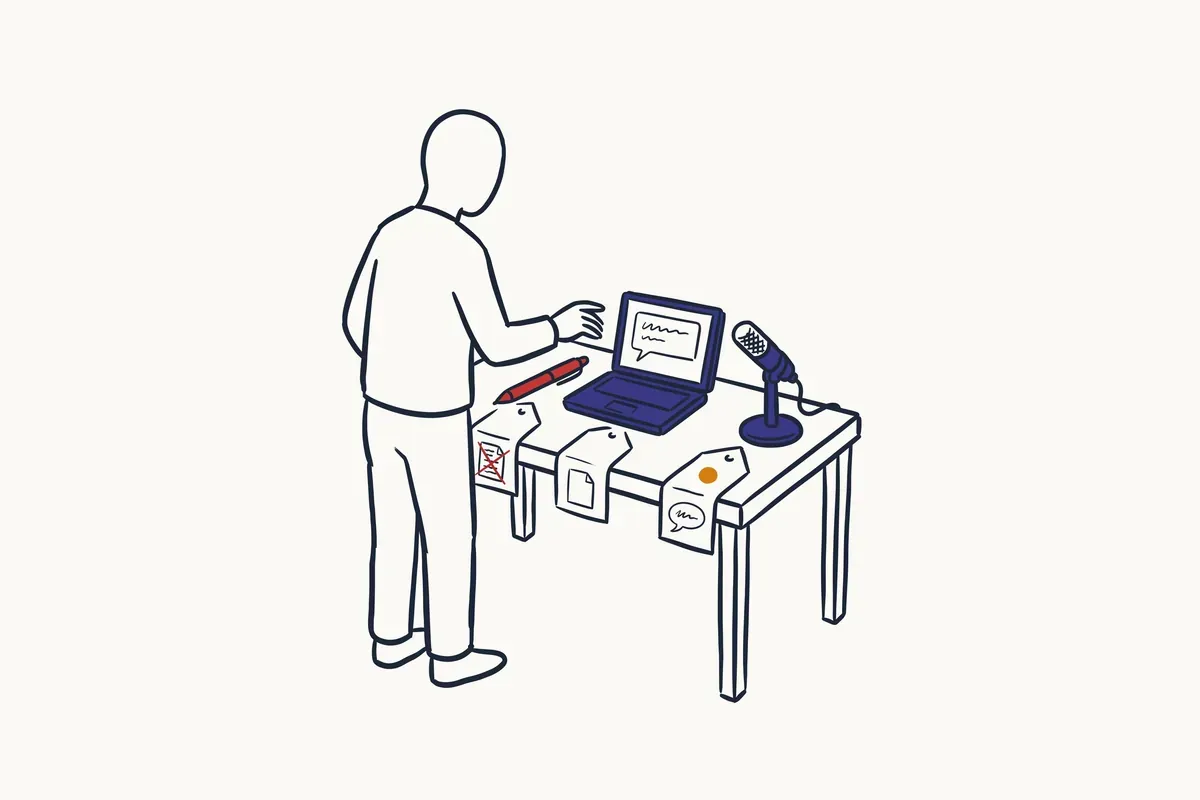
- Editing and proofreading: Grammarly. Its Free plan covers spelling and grammar mistakes plus 100 AI prompts, and Pro adds full-sentence rewrites and tone adjustment.
- First drafts from a prompt: a general chatbot. ChatGPT is the one tested in a controlled MIT experiment published in Science.
- Posts in your own voice: mull, which asks you questions first and drafts afterward. Its free plan covers 3 posts.
- Essays: Grammarly Pro, which can detect plagiarism and AI-generated text. Check your instructor’s AI policy first.
- Fiction you plan to publish: AI mainly for spelling, grammar and background research, which the Authors Guild’s guidance treats as the lowest-risk uses.
How were these AI writing tools chosen?
The tools here were weighed on criteria, not hands-on testing. These are the questions each pick was judged on:
- Does it suit a distinct writing job, such as drafting, editing or turning your own words into a post?
- What do the vendor’s own pages say it does and costs? Every price and feature below comes from those pages.
- What happens to the text you type in? The Authors Guild warns that by default, material you enter into almost all public chatbots can be used to train those models.
- Can it be used without crossing the lines professional writers’ groups draw around authorship?
Prices change, so check the vendor’s page before you pay.
Which general AI assistant is best for drafting: ChatGPT, Claude or Gemini?
The MIT controlled study of AI drafting tested only ChatGPT-3.5, so it can’t tell you whether Claude or Gemini writes better. In the MIT experiment, participants used ChatGPT on work-style tasks such as grant cover letters and emails about a company restructuring.
ChatGPT now comes in several versions. The OpenAI Help Center has separate sections for ChatGPT, ChatGPT Business, and ChatGPT Enterprise and Edu. If your employer already pays for one of these workspaces, start there before you buy your own plan.
Is Claude or ChatGPT better for writing?
The MIT study can’t settle this because it tested only ChatGPT, so run your own comparison. Give each chatbot the same brief and the same notes, then compare the results on two things:
Before
Write a cover letter for our grant application.
After
Write a cover letter for a grant application to [funder name]. Our program: [one sentence]. Last year's result: (your number). Tone: plain, first person plural. Don't add any facts I haven't given you.
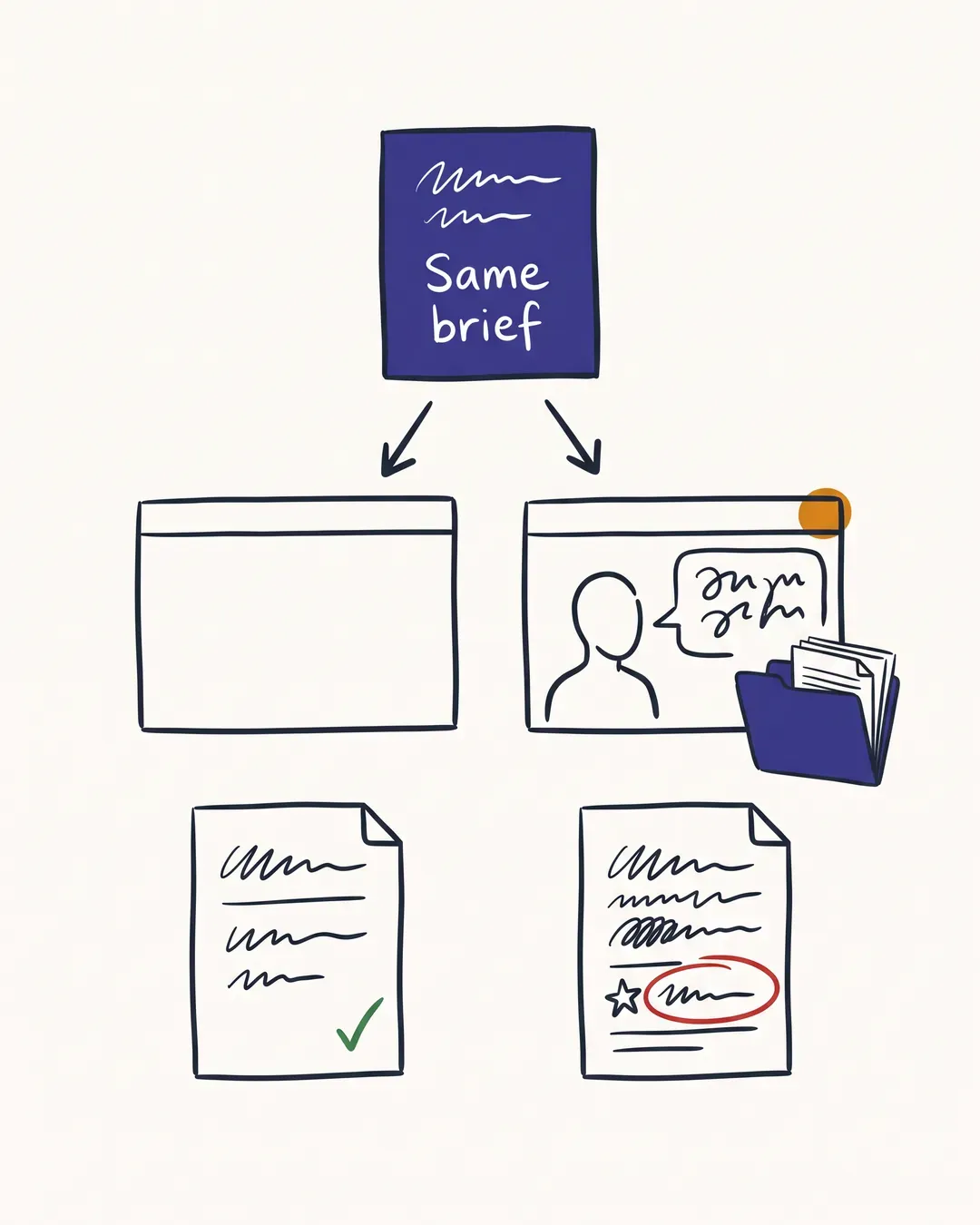
- Did it keep every fact you gave it, without adding facts of its own?
- How many sentences did you have to rewrite before the draft sounded like you?
Write the brief with care. The MIT researchers gave explicit instructions for each assignment and noted that real-world tasks may be more open-ended.
Example: rewriting a vague prompt. Say you run a small nonprofit and need a grant cover letter.
- Before: “Write a cover letter for our grant application.”
- After: “Write a cover letter for a grant application to [funder name]. Our program: [one sentence]. Last year’s result: (your number). Tone: plain, first person plural. Don’t add any facts I haven’t given you.”
The second version gives the chatbot your facts and your limits, so you have less to correct afterward. For more ways to keep chatbot drafts from sounding generic, see the guide to prompts to make AI write like a human.
Is Grammarly the best AI tool for editing and proofreading?
Grammarly fits the job of polishing text you’ve already written, because it works where you write. Best for: fixing and tightening emails, documents and papers inside the apps you already use.
Pros
- Works across 1 million+ apps and websites
- Real-time writing support in more than 20 languages
- Free plan at $0 with 100 AI prompts
- Pro adds full-sentence rewrites, tone adjustment and 2,000 AI prompts a month
Cons
- Pro is $12 per member per month only when billed annually; billed monthly it's $30
- The features page FAQ still lists 1,000 AI prompts for Pro, the old Premium allowance
Source: grammarly.com, as of Nov 29, 2026
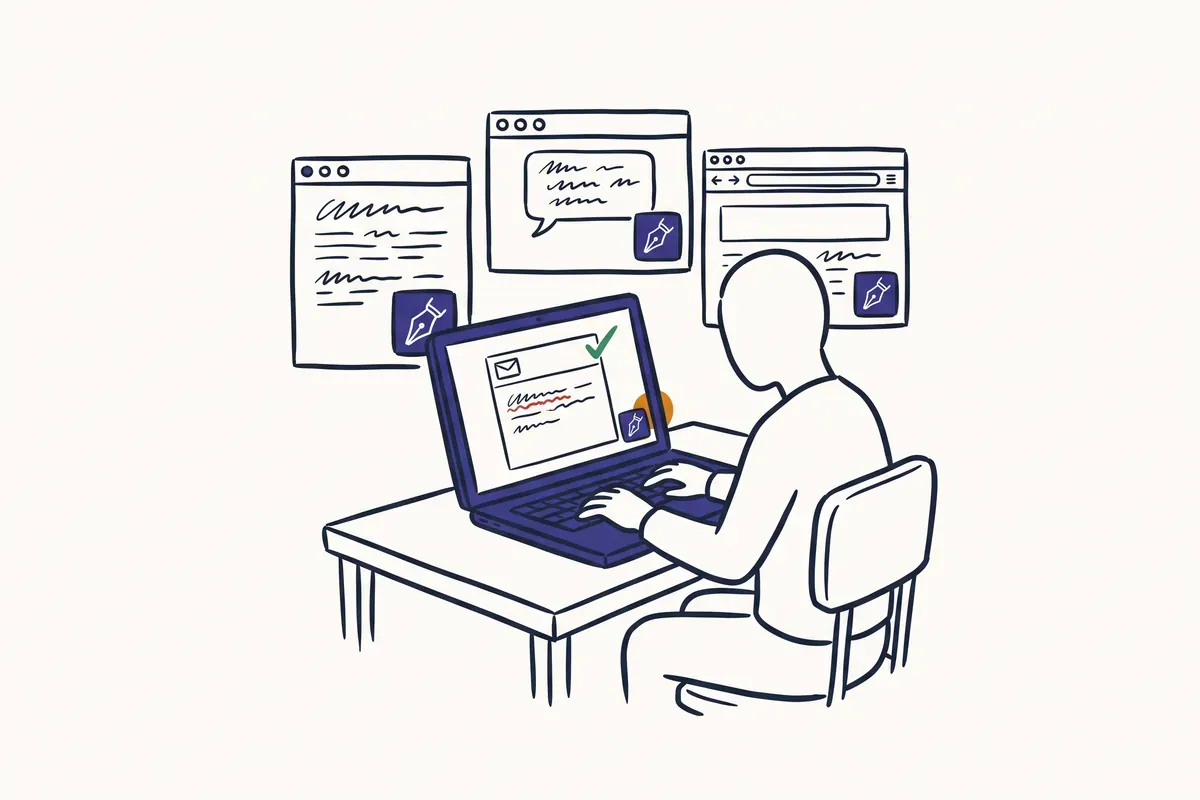
Grammarly’s features page says it works across 1 million+ apps and websites and gives real-time writing support in more than 20 languages. Its tools include:
- a Paraphraser that adjusts your writing to sound “more creative, professional, or simply more you”
- a Proofreader
- Reader Reactions, which gives feedback for a target reader you set, “from teammate to teacher”
There’s also Docs, which Grammarly calls an AI-native document editor for drafting from brainstorm to feedback.
On price, the plans page lists these tiers:
- Free: $0, for writing without spelling and grammar mistakes, with 100 AI prompts.
- Pro: $12 per member per month billed annually, or $30 billed monthly, for full-sentence rewrites, tone adjustment and 2,000 AI prompts a month. The plans page also lists unlimited personalized suggestions and plagiarism and AI-text detection on the paid plan, which is called Plus in some countries.
- Enterprise: unlimited prompts, custom roles and permissions, and enterprise-grade security, available through Superhuman Go. Grammarly says it is now a part of Superhuman.
Grammarly’s own pages disagree on Pro’s prompt limit. An FAQ on the features page still says Pro includes 1,000 AI prompts per month. The Pro page explains that 1,000 was the allowance of the older Premium plan and that Pro raises it to 2,000, which matches the plans page.
Is Grammarly good for writing essays?
Grammarly has checks aimed at papers. Its features page says it offers plagiarism detection and citation support so papers stay original, and its AI agents include grade predictions. On the plans page, plagiarism and AI-text detection are listed on the paid plan, not on Free, and the comparison table also lists a feature to keep your citations consistent. Grammarly for Education is a separate license that a school buys for all of its students and staff.
What is the best AI for fiction and creative writing?
If you plan to publish your fiction, the safest AI is one that checks your prose without writing it. The Authors Guild calls AI-powered spelling and grammar checks “uniformly considered ethical and professional.” It says that mimicking another writer’s voice or style is generally considered unethical and possibly plagiarism.
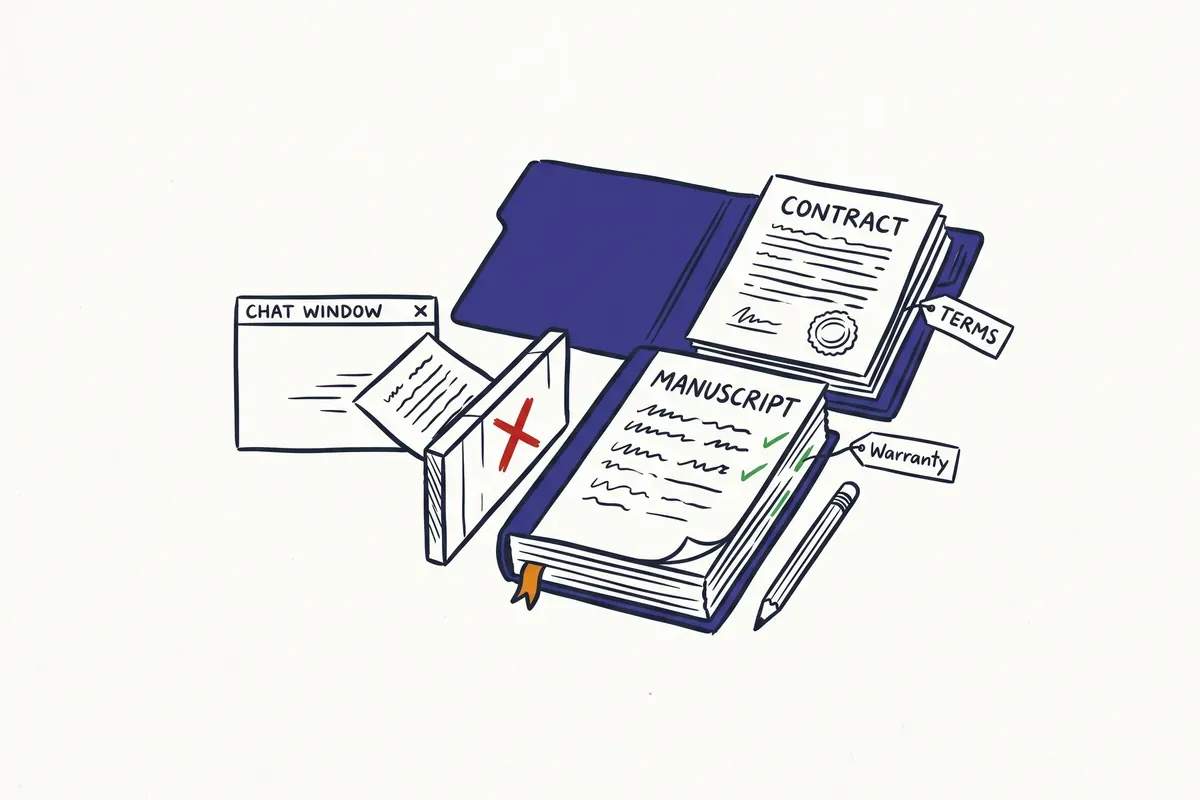
The Guild also flags a contract risk. Book contracts include a warranty that the manuscript is original to the author, and AI-generated text in the final manuscript may breach that warranty. In some cases that lets the publisher terminate the agreement. If you’re unsure, ask your editor whether your publisher has its own AI guidelines, as the Guild recommends.
That leaves an editor like Grammarly for line-level checks, and a chatbot used only as a sounding board for research. Don’t copy AI output into your manuscript, whether word for word or as a close paraphrase.
Is mull the best AI for writing in your own voice?
mull fits one specific job: turning what you say into a post that sounds like you. It doesn’t write from a prompt. Best for: getting a post out of what you say aloud or type, without starting from a prompt.
- You talk or type. Your words appear while you speak, and the recording is kept on your phone first.
- It asks follow-up questions, one at a time, each quoting your own words and asking for what's missing.
- It suggests ideas, each an angle a post could take. You choose one, and the others are saved for later.
- You confirm the facts: every name, number, date and quote it heard. Correct, drop or add any of them.
- You pick a starting point from three opening lines, then the format and the length.
- It writes the draft in your voice and checks it against your confirmed facts, marking any unsupported sentence.
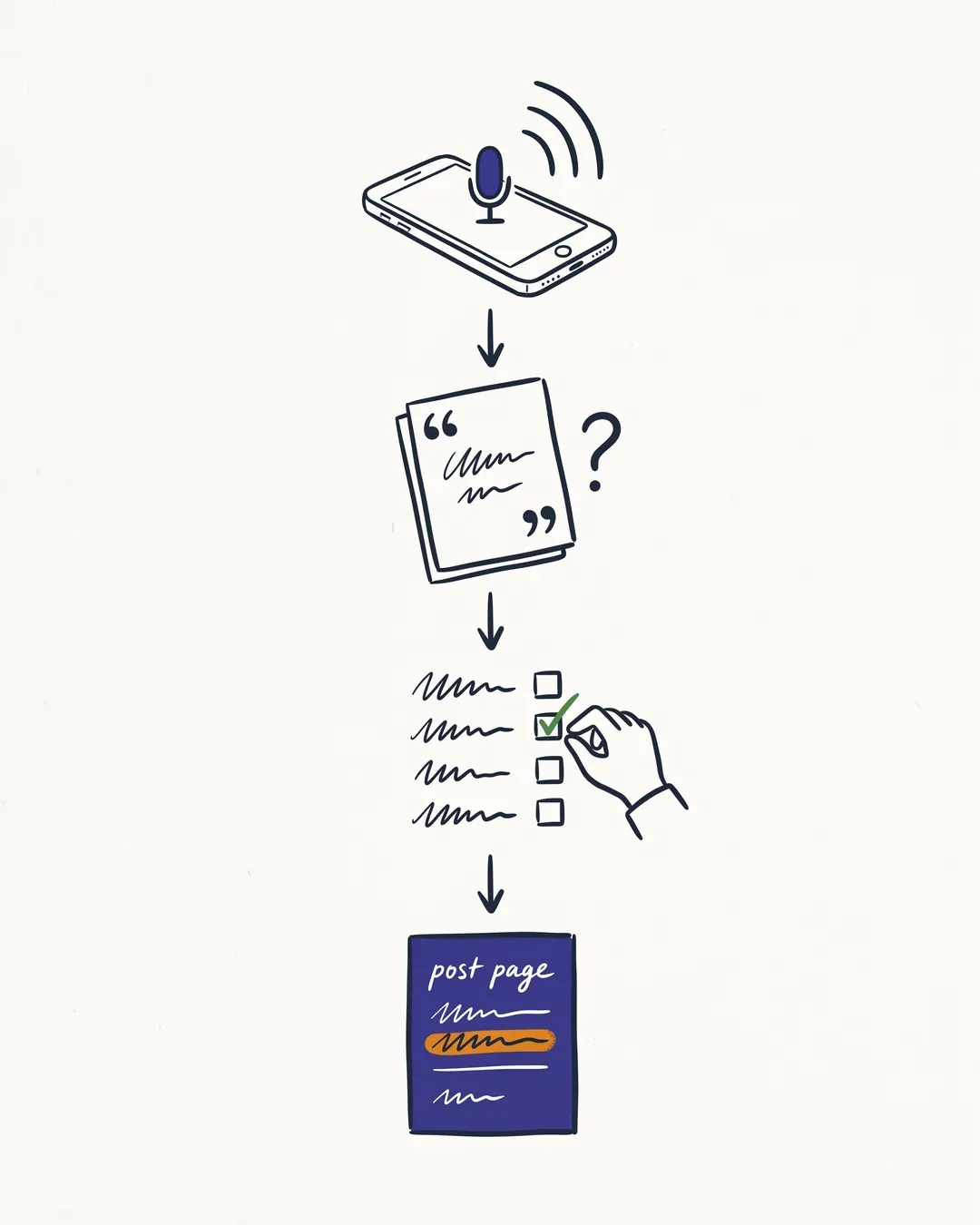
Here’s how it works:
Pricing: the Free plan covers 3 posts in total and needs no card. Starter costs $19 a month for 10 posts, and Pro costs $39 a month for 30 posts. Yearly billing gives you 2 months free. Every plan includes interviews with no session count, within mull’s published fair-use limits, and feedback on a post you wrote.
Grammarly is the better choice for some jobs. It proofreads inline across browsers and apps and supports more than 20 languages, and its paid plan adds plagiarism detection. mull’s pages list neither inline proofreading nor plagiarism detection. Use mull to get a first draft of a post out of your head, and use an editor to polish everything else you write. For a wider look at working this way, see the guide to AI assisted writing.
Is there a good free AI for writing?
Grammarly’s Free plan is one free option for editing, at $0 for writing without mistakes in spelling and grammar, plus 100 AI prompts. Upgrading to Pro, at $12 per member per month billed annually or $30 billed monthly, adds full-sentence rewrites, tone adjustment and 2,000 AI prompts instead of 100, and the plans page lists unlimited personalized suggestions and plagiarism and AI-text detection on the paid plan.
mull’s Free plan gives you 3 posts in total with no card.
Does AI actually make writing faster or better?
For short, clearly defined tasks, a controlled study says yes. MIT researchers gave 453 college-educated professionals two writing tasks from their own fields, each taking 20 to 30 minutes. The participants included marketers, grant writers, consultants and managers.
453 professionals
College-educated professionals given two writing tasks from their own fields
Source: news.mit.edu, as of Nov 28, 2026
11 minutes
How much faster ChatGPT-3.5 users finished the second task than the control group
Source: news.mit.edu, as of Nov 28, 2026
40%
Drop in the time workers took to complete the tasks with access to ChatGPT
Source: news.mit.edu, as of Nov 28, 2026
18%
Rise in average quality ratings from graders who didn't know which work used AI
Source: news.mit.edu, as of Nov 28, 2026
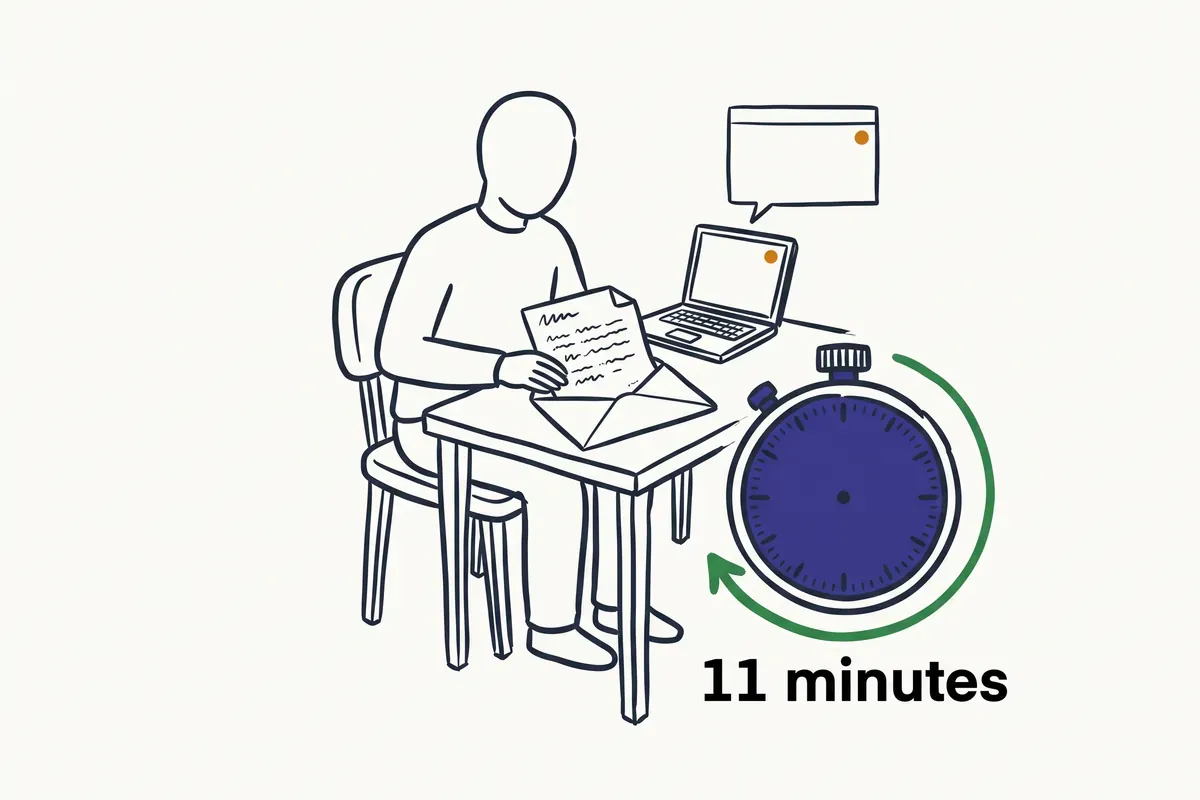
Half of them used ChatGPT-3.5 on the second task, and those users finished 11 minutes faster than the control group. MIT News also reports that access to ChatGPT decreased the time it took workers to complete the tasks by 40 percent. Average quality ratings, given by professionals who didn’t know which submissions used AI, rose by 18%. Workers who scored lower on the first task benefited more from using ChatGPT on the second. Two weeks later, the people who had used ChatGPT in the experiment were twice as likely to report using it in their real jobs.
The study has limits. The tasks didn’t require precise factual accuracy or knowledge of a specific company, and no one fact-checked the outputs. The researchers said these limits could reduce the gains in real work.
What should you watch out for: accuracy, disclosure and copyright?
The Authors Guild lists several risks of writing with AI, and each one below has a concrete fix.
Accuracy
The Authors Guild warns that AI tools often generate incorrect or fabricated information and present it as factual, and that they can repeat biases from their training data. Check every name, number and quote against a source you trust before you publish.
Disclosure
The Guild recommends that you publicly disclose any substantial use of AI to generate text. You can do this in a book’s front matter or at the bottom of an article.
Before
No note at all.
After
I wrote this article. I used an AI chatbot to brainstorm title options and Grammarly to check spelling and grammar.
Example: a disclosure line for an article. Say you drafted a newsletter yourself, then asked a chatbot to suggest a title and used an editor for grammar.
- Before: no note at all.
- After: “I wrote this article. I used an AI chatbot to brainstorm title options and Grammarly to check spelling and grammar.”
Copyright
The U.S. Copyright Office published Part 2 of its AI report, on the copyrightability of outputs created using generative AI, on January 29, 2025. The Authors Guild sums up the practical effect: AI-generated text is not copyrightable, and it has to be disclaimed when you register a work. If your publisher files the registration, tell them which parts came from AI.
Hiring a ghostwriter or editor
If someone else works on your manuscript, the Guild advises a written contract that prohibits adding more than de minimis AI-generated text without your written approval and requires them to disclose any AI use.
Privacy
Before you paste in a draft, interview transcript or client notes, look for the training opt-out in your tool’s settings. The Guild notes that most consumer AI tools include a setting to opt out of training on your inputs, but some make it hard to find. Grammarly’s homepage says it does not allow its third-party service providers to train their models on user content, and its features page points to a Product Improvement and Training Control page where you can review its own training settings.
What to do next
Pick one real piece of writing you need to finish this week and use it to test the tools above, in this order:
- Write down your main writing job and match it to a pick in the quick list.
- Install Grammarly's Free plan and run it on something you're writing today.
- Give two chatbots the same detailed brief and keep the one that changes fewer of your facts.
- Find the setting that stops each tool training on what you type and switch it on.
- Writing a book? Read the Authors Guild's best practices and ask your editor about your publisher's AI rules.
- Run your next draft against the signs of AI writing checklist before you publish.
Prices and features as of Nov 29, 2026, from each product's own pages.
Frequently asked questions
What is the best AI tool for writing if you write in many different apps?
Grammarly is built for that. Its suggestions appear in Chrome, Firefox, Edge and Safari, in desktop apps for Windows and Mac, and in apps for Android, iOS and iPad. Grammarly also says it is trusted by over 40 million people and 50,000 organizations, and its Enterprise plan with unlimited prompts is available through Superhuman Go.
Is Claude or ChatGPT better for writing?
The MIT experiment tested only ChatGPT-3.5, so it doesn't compare chatbots. One of its authors said real-world speed gains could be smaller than in the experiment, because you need to spend time fact-checking and writing the prompts. Whichever chatbot you choose, budget time for both.
Does AI writing sound human?
The Authors Guild calls AI outputs generic mashups of pre-existing works ingested during training. Grammarly's homepage lists a Humanizer agent to give your writing personality and an AI Detector agent to spot AI-generated text and areas to revise.
Is it OK to use AI to write essays?
That depends on your school's rules, so check them first. The Authors Guild says that generating text and claiming it as your own writing without substantial revision is generally considered unethical and possibly plagiarism. It considers AI research acceptable as long as you don't copy from what the AI produces.
Can I copyright a book written with AI?
The AI-generated text itself isn't protected. The Authors Guild says that, assuming there is sufficient human authorship for the work as a whole to be copyrightable, AI-generated text must be disclosed and disclaimed in the copyright application, and knowingly failing to disclose it may be deemed fraud on the Copyright Office. The U.S. Copyright Office has published registration guidance for works containing AI-generated material and a registration decision on Zarya of the Dawn (Feb. 21, 2023).
Does Grammarly use my writing to train AI?
Grammarly's homepage says it does not sell or monetize user content or allow its third-party service providers to train their models on user content. That statement covers third parties; for Grammarly's own use, its features page points to a Product Improvement and Training Control page, so check your settings there. When tailored assistance features are on, Grammarly stores data tied to your account to personalize suggestions; you can opt out, and the stored data for that feature is then deleted.
Sources
- Study finds ChatGPT boosts worker productivity for some writing tasks | MIT News | Massachusetts Institute of Technology
- Grammarly Prices and Plans | Grammarly
- Grammarly: Free AI Writing Assistance
- Product Features | Grammarly
- Grammarly Pro: The Best Plan for Individuals & Teams
- AI Best Practices for Authors - The Authors Guild
- Copyright and Artificial Intelligence | U.S. Copyright Office
- OpenAI Help Center