Northeastern's career guide describes a software developer known for sharing knowledge online and a designer who shows their range in a portfolio. Job seekers lean on LinkedIn, which more than 90% of recruiters use to find candidates. To build your own brand, learn your strengths first, choose a focus, then tell one consistent story everywhere.
Key takeaways
- Babson's guide defines a personal brand as "what people ask of you, what people depend on you for."
- Northeastern's guide stresses proof other people can see: quantified results, recommendations and, for designers, a portfolio.
- Northeastern reports that more than 90% of recruiters use LinkedIn to find candidates, so keywords and numbers in your profile matter.
- When a ghostwriter or AI drafts for you, supply your own stories and numbers. The FTC's influencer guide covers brand relationships, not who drafted a post.
- Babson puts the average half-life of a skill at 4.5 years and ties a strong brand to being trusted to learn and upskill.
Northeastern’s guide to building a personal brand offers two short personal branding examples. One is a software developer whose brand rests on “a strong online presence and a commitment to knowledge-sharing within the developer community.” The other is a graphic designer who tells their story through a personal website or portfolio.
Below are more examples sorted by career type, a brand statement template you can fill in, and what changes when a ghostwriter or AI drafts the words.
| Type of brand | What the brand rests on | Where it shows up |
|---|---|---|
| Job seeker or professional | Industry keywords and numbers for your results | LinkedIn, which more than 90% of recruiters use to find candidates |
| Software developer | Online presence and sharing what they know | The developer community |
| Graphic designer | The range of their work | A personal website or portfolio |
| Leader or manager | How they behave and treat people | Projects, the office and volunteering to lead |
| Anyone telling their career story | A “best narrative” built from real successes | Interviews, introductions and networking |
| Founder who uses their own name | The name on the business | Properties such as Trump Tower |
| Social media creator | Marketing themselves on one platform | Tila Tequila, who rose to prominence on Myspace in 2006 and gained more than 1.5 million friends |
What is personal branding, and what makes a personal brand example work?
Personal branding is the deliberate work of shaping how people see you. Wikipedia’s entry on personal branding calls it “a strategic process aimed at creating, positioning, and maintaining a positive public perception of oneself.” It does this by drawing on your own traits and “presenting a differentiated narrative to a target audience.”
The idea is older than social media. The same entry traces career positioning back to Chapter 20 of Al Ries and Jack Trout’s 1981 book Positioning: The Battle for Your Mind. It credits business writer Tom Peters with coining the phrase “personal branding” as part of his “Brand You” philosophy, introduced in his 1999 book The Brand You 50, which expanded on his 1997 article “The Brand Called You.”
For judging whether an example works, Babson College’s guide to building a personal brand gives a useful test: “Your personal brand is what people ask of you, what people depend on you for.” The guide calls the familiar line that your brand is “what people say about you when you’re not in the room” too narrow, because a brand is as much about action as about words. The same guide puts the average half-life of a skill at 4.5 years and says a strong brand means being trusted to learn and upskill.
By that test, a personal brand works when people act on it and come to you for the thing you’re known for. Hiring is one place this shows up: Northeastern’s guide says hiring managers often report that a candidate’s personal brand plays a role in their decisions.
What do successful personal branding examples have in common?
Babson’s and Northeastern’s guides both start with self-knowledge and then move to choosing a focus. Babson’s framework ends with delivery, and Northeastern’s tips add proof other people can see, such as recommendations and quantified results. The headings below sort that advice into inputs, processes and outputs; neither guide uses those terms.
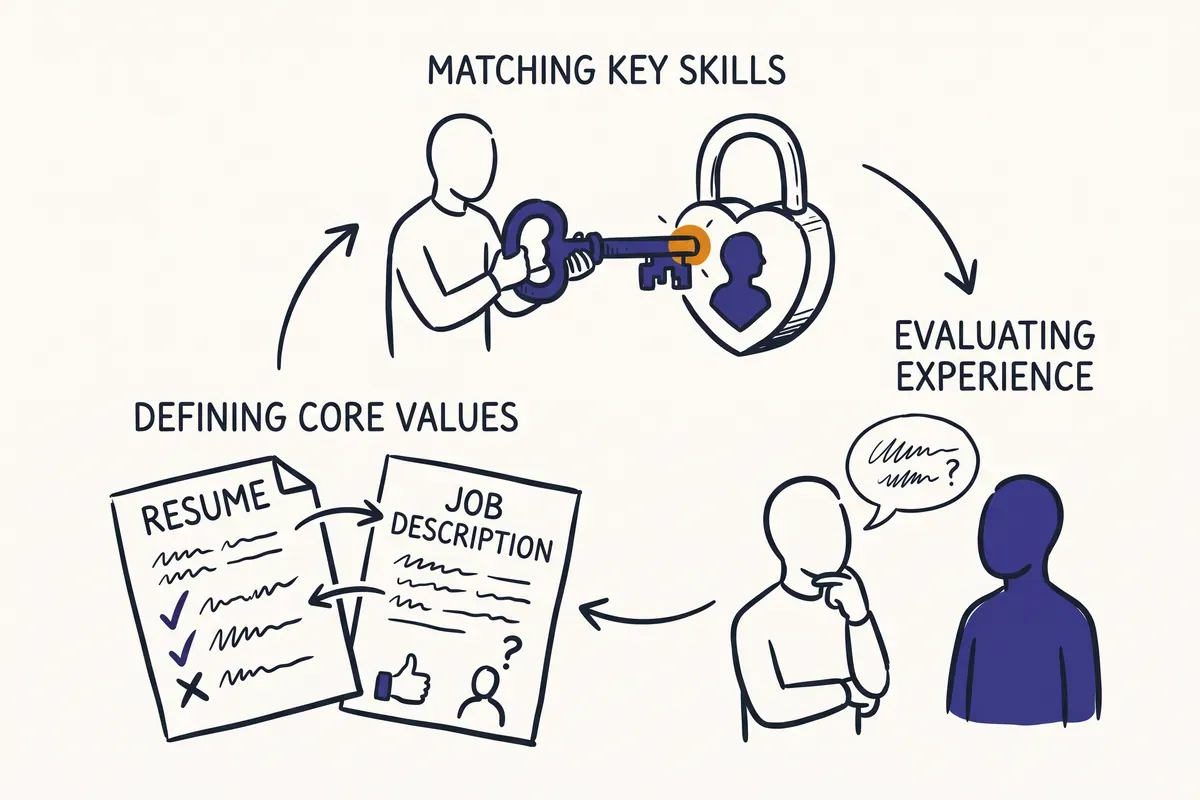
A 2026 study in the AMTP Proceedings analyzed 250 public LinkedIn posts from 50 professionals in five occupational categories. It coded each post’s visual elements, language, content themes and engagement tactics. It describes personal branding as a balance of “authenticity, visibility, and strategic positioning.” The abstract explains how the study was done but doesn’t say which tactics worked best.
Inputs: what you know about yourself
Babson’s framework starts with discovery, not delivery. The guide suggests coaching, mentorship, journaling, self-assessments and annual work reviews, and then reading them side by side: “Don’t look at them as individual pieces of data; find the trends.”
If the answers don’t come easily, Northeastern suggests asking friends, family and co-workers how they would describe you.
Processes: choosing a focus
Babson’s second phase is differentiation, and its bar for “unique” is low: “Unique is contextual. Something that hasn’t been done in your context, in your company, your team.” Northeastern advises picking one area to focus on and letting it change over time, since your brand will shift as your career grows.
Outputs: proof other people can see
The output is what people actually see, such as a profile, a post or a recommendation. Northeastern compares recommendations from colleagues and managers to customer reviews, because they let others “communicate your value for you.” Wikipedia notes that presenting yourself the same way across professional and personal platforms keeps the image coherent. Unprofessional behavior on any platform can hurt your career prospects.
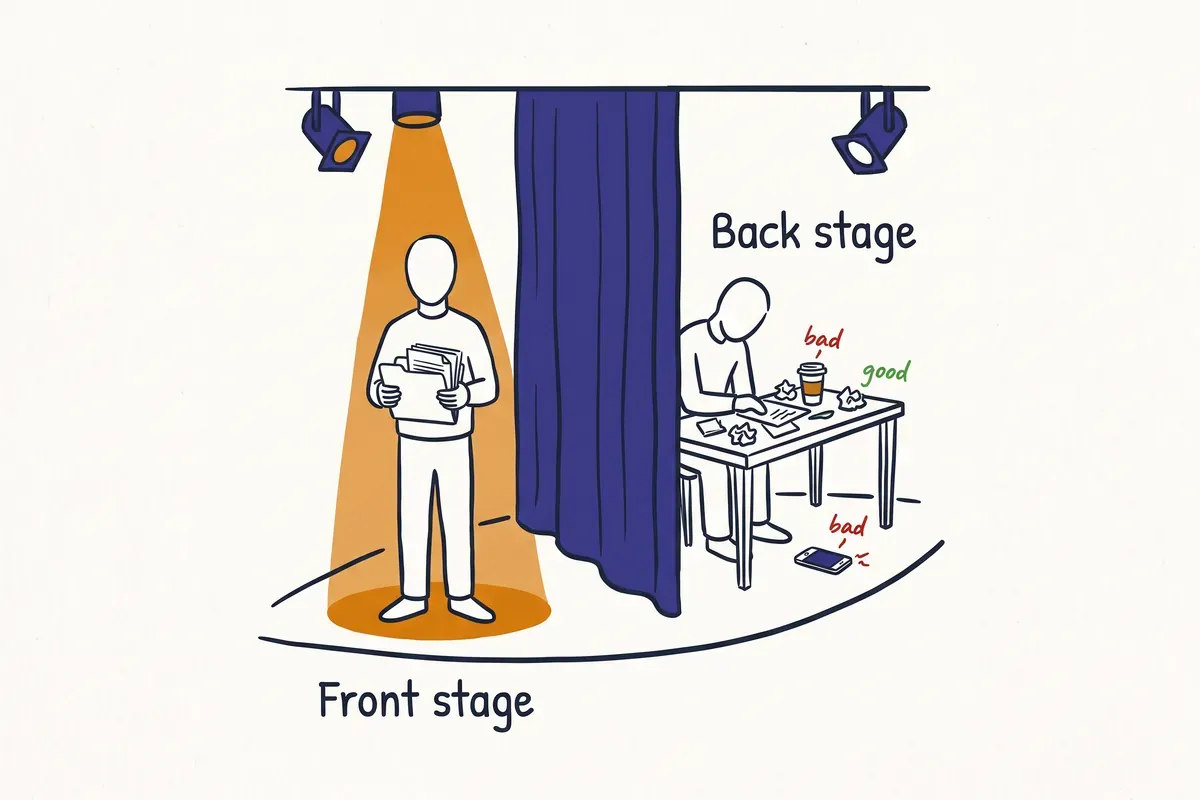
Wikipedia’s entry and the AMTP study both draw on Erving Goffman’s idea of a front stage and a back stage. Your front stage is the version of yourself you choose to show, and your back stage is what you keep out of public view. Wikipedia cites former Los Angeles Clippers owner Donald Sterling as a case where private comments became public and damaged a carefully managed brand.
What do personal branding examples look like by career type?
Each type below starts with a pattern taken from a guide, and most add a labeled example you can adapt to your own situation. The brackets mark where your own facts go.
Professionals and job seekers
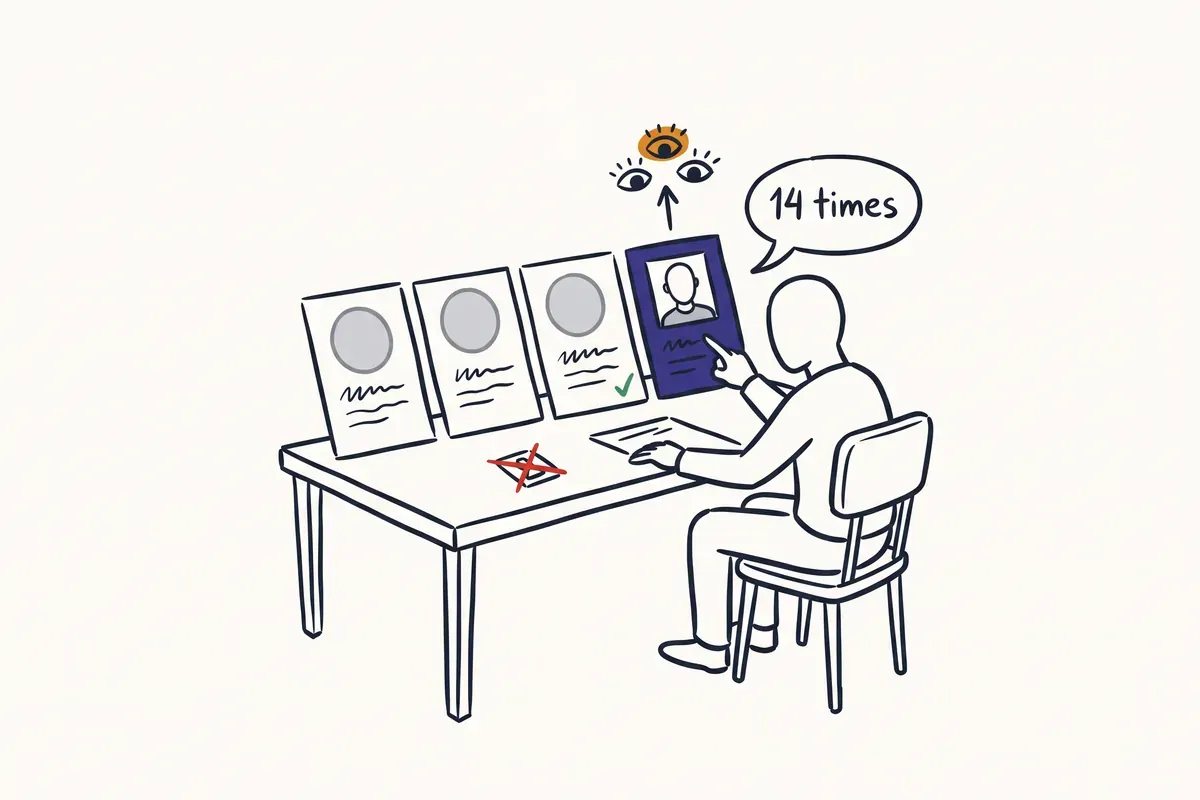
For professionals, LinkedIn is the main stage, and recruiters often search it by keyword. Northeastern’s LinkedIn advice is to put industry terms in your headline, summary and job descriptions. For a communications role, those might be public relations, social media or crisis communication. Swap phrases like “results-oriented” for your actual results. Northeastern also reports that profiles with a professional headshot get 14 times more views than profiles without one.
90%
More than 90% of recruiters use LinkedIn to find candidates
Source: graduate.northeastern.edu, as of Nov 29, 2026
14 times
More views for profiles with a professional headshot
Source: graduate.northeastern.edu, as of Nov 29, 2026
85%
Of all jobs are filled through networking
Source: graduate.northeastern.edu, as of Nov 29, 2026
Example: a LinkedIn headline for your own profile.
- Before: “Marketing professional | Results-oriented team player”
- After: “Communications manager | Public relations and crisis communication | [number] media placements in [year]”
Executives and leaders
For executives and leaders, Northeastern’s guide places the brand in behavior: leadership comes from “how you behave, how you act, and how you inherently interact with people.” It urges you to take chances to work with others, volunteer for projects and assert yourself as a leader. Neither guide gives separate advice for executives. Babson’s best narrative, written for anyone, goes into more detail than an elevator pitch, includes concrete examples, and becomes a go-to story for interviews, introductions and networking.
Example: a best-narrative opener for your next introduction: “When (your division) faced [specific problem], I [the decision you made], and within [time period] we [measurable result].”
Designers and marketers
For designers and marketers, the portfolio shows the work. Northeastern says a personal website or portfolio is especially important in marketing or design fields, and that a graphic designer trying to impress existing clients and attract new ones might tell their story there. It names Squarespace, Wix and WordPress as ways to build one.
Writers and authors
For writers, the published work is the proof. Northeastern lists “the number of articles you’ve written” as one way to put a number on what you’ve done. If you need a bio that carries that number, a bio generator can draft first-person and third-person versions in three lengths from your answers.
Example: a writer’s bio line.
- Before: “Passionate writer who loves words.”
- After: “Freelance writer covering [industry] for [type of publication], with [number] published articles on [topic].”
Students
Northeastern’s guide doesn’t address students specifically, so the advice here comes from its general tips. It points out that informational interviews let you learn about a profession while sharing a little about yourself. It also suggests preparing a 30- to 60-second elevator pitch. Clean up what’s public, too. Wikipedia notes that employers search applicants’ histories on sites such as Facebook and Twitter before offering interviews.
Example: a student pitch: “I’m a [year] [major] at [school], focused on [area]. I’ve [project or internship with one number], and I’m looking for [type of role] where I can [skill].”
Creators and founders who use their own name
Some people put their name on the business itself. Wikipedia gives Donald Trump, who uses his name on properties and enterprises like Trump Tower, and Kim Kardashian, who endorses brands and products through her media influence. Once you endorse products, the FTC’s guide for influencers asks you to disclose any financial, employment, personal or family relationship with the brand. Plain wording like “Thanks to Acme brand for the free product” is often enough. Vague tags like “sp,” “spon” or “collab” are not.
How do you write a personal brand statement?
You write a personal brand statement by starting from your proof points and working backward, the method Babson’s guide gives for a best narrative. One format you can use, offered here as a suggestion rather than a standard, is one or two sentences naming who you serve, what you do differently and your proof:
Before
I'm a hardworking, results-driven operations professional passionate about efficiency.
After
I help mid-size warehouses cut picking errors by redesigning workflows together with the people on the floor. At [site] last year, that meant [X]% fewer errors.
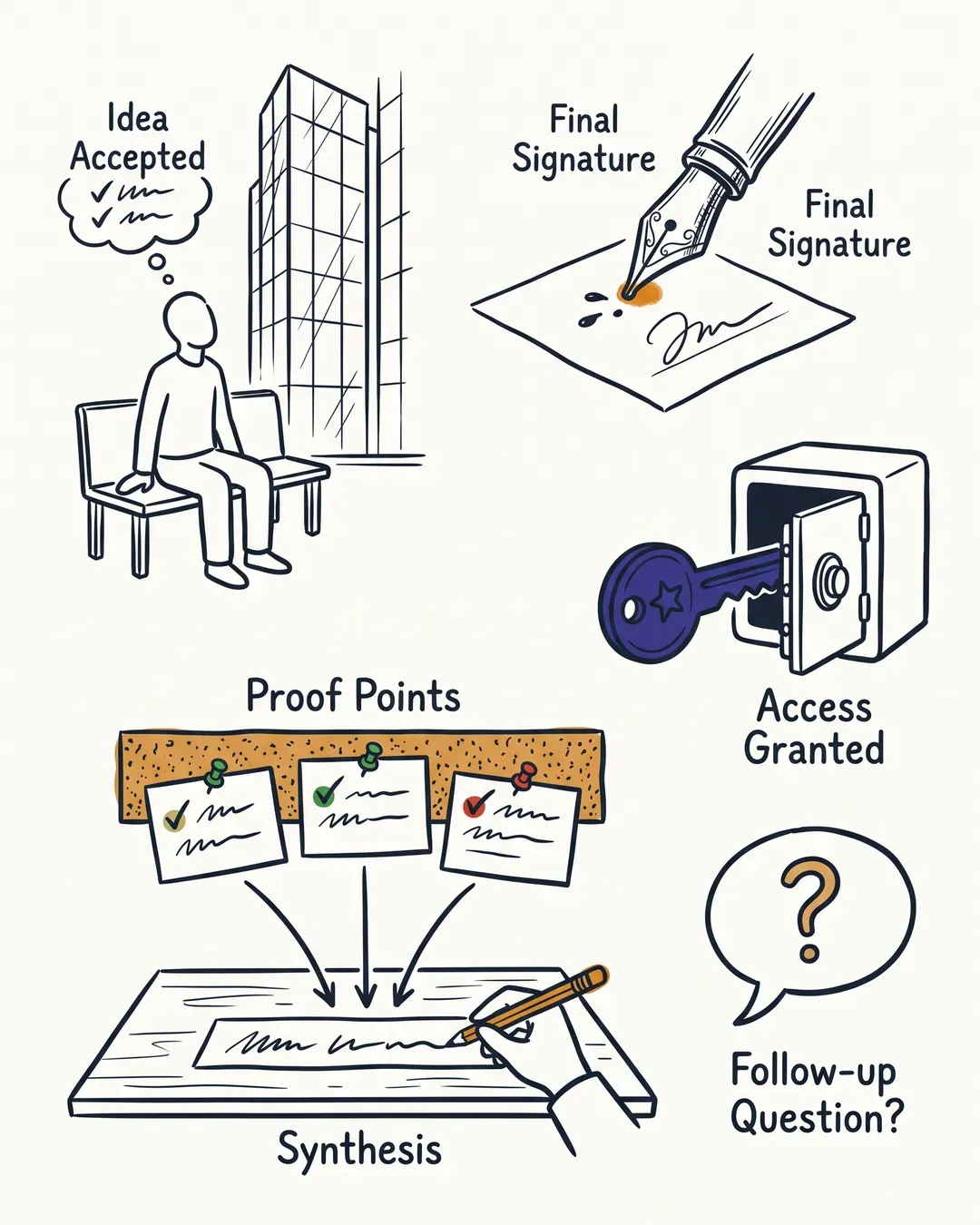
I help [audience] [get a specific result] by [what you do differently in your workplace or field]. Proof: [a number, a result or a recommendation].
To fill it in, list your great successes, break down what you did in each one, start from the proof points, then revise until the statement sounds like no one else’s. When you turn it into a spoken pitch, Northeastern suggests focusing on a few key points. That might be the role you’re looking for, your strength in a niche, or the value you recently added to your department.
Example: a statement for your own situation as an operations manager.
- Before: “I’m a hardworking, results-driven operations professional passionate about efficiency.”
- After: “I help mid-size warehouses cut picking errors by redesigning workflows together with the people on the floor. At [site] last year, that meant [X]% fewer errors.”
Once the statement works on paper, an elevator pitch generator can stretch it into 15-, 30- and 60-second spoken versions.
Personal branding tips: how do you build your own brand step by step?
You build a personal brand by learning about yourself first and talking about yourself second. Each step below comes from the Babson or Northeastern guide.
- Interview yourself: discovery comes first.
- Decide where you want to be in five or 10 years and what you want to be known for.
- Name your audience: thought leaders, a particular company or recruiters.
- Find what's different about you in your setting and write your best narrative from your proof points.
- Practice delivery: storytelling, public speaking and feedback.
- Pick one main channel and keep your story the same everywhere.
- Study people in your field, collect recommendations and network on a schedule.
- Act the same way offline, at home, in the office and on your commute.
- Interview yourself. Babson puts discovery first. An interview question generator can write questions about you, in the order an interview would run.
- Decide where you’re headed. Northeastern suggests forecasting where you want to be in five or 10 years and the attributes you want to be known for, then working out the steps to get there.
- Name your audience. Northeastern asks whether you’re trying to reach industry thought leaders, someone at a particular company, or recruiters. The sooner you know, the easier the story is to write.
- Find what’s different about you in your setting. Look for an idea or skill that hasn’t been tried on your team or at your company.
- Write your best narrative. Start from the proof points in your biggest successes.
- Practice delivery. Babson’s final phase is delivery: study storytelling and influence, practice public speaking, seek feedback, and volunteer for opportunities that put you front and center.
- Pick one main channel. LinkedIn suits recruiters, and a portfolio site suits designers. Northeastern says your story should match across all platforms, with the most effort going where your audience is.
- Study people in your field. Northeastern suggests finding out where thought leaders publish, looking at what successful people do, then asking some of them for informational interviews.
- Collect recommendations. Ask current and former managers, and write recommendations for others.
- Network on a schedule. Northeastern says 85% of all jobs are filled through networking.
- Act the same way offline. Northeastern’s guide says your brand includes how you carry yourself at home, in the office and on your commute.
How do you build a personal brand on LinkedIn?
On LinkedIn, you build a brand by filling in every section and then taking part. Northeastern recommends joining groups, introducing yourself to people who interest you, and asking for and giving recommendations. Recruiters want to see your work experience, education and a detailed list of accomplishments, and blank sections leave that picture incomplete. The AMTP study of LinkedIn posts coded four parts of each post: visuals, language, themes and engagement tactics.
How do you keep a personal brand authentic when a ghostwriter or AI helps write it?
Babson’s and Northeastern’s guides don’t mention ghostwriters or AI, so the closest advice for keeping a ghostwritten brand authentic is Babson’s instruction to build your narrative from your own list of successes. Wikipedia summarizes critics who argue that personal branding turns the self into a product, and that efforts to look authentic can become artificial when they’re shaped by audience expectations and how a platform works.
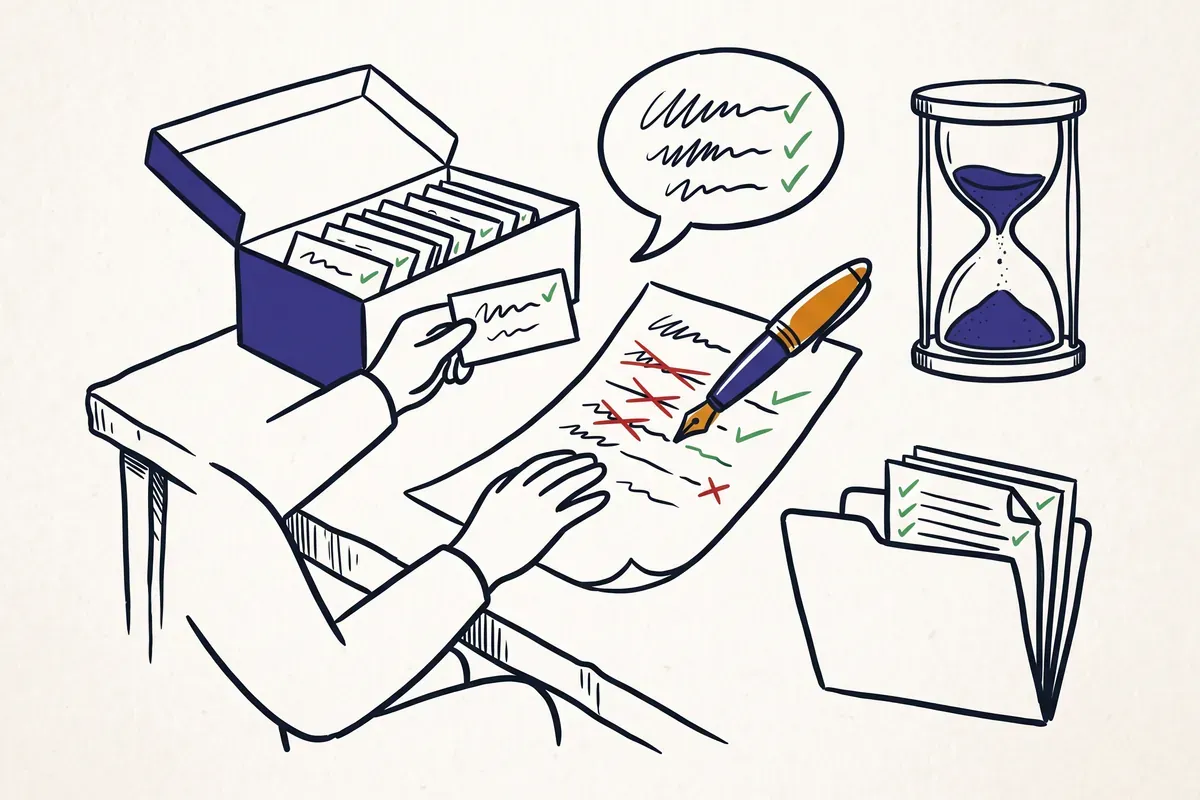
Before handing anything over, learn the ghostwriting meaning and what a writer needs from you. Then use these checks:
- Give the writer your raw material. Babson’s best narrative starts from proof points, and only you have those. Record or write down your successes before any drafting starts.
- Cut any claim you can’t back. The FTC’s guide says you can’t talk about your experience with a product you haven’t tried. It also says that if you’re paid to talk about a product you thought was terrible, you can’t call it terrific.
- Put brand disclosures in the post itself. The FTC says disclosures are likely to be missed if they appear only on an ABOUT ME page, at the end of a post, or behind a MORE link.
- Read the draft aloud against your own past writing. Look for signs of AI writing and phrases you would never say.
The FTC’s influencer guide covers relationships with brands, such as payment or free products. It doesn’t address whether a post’s author drafted it alone.
How often should you audit your personal brand?
Neither Babson’s nor Northeastern’s guide sets a fixed schedule for auditing a personal brand. Northeastern says to adjust as you meet new people, find networking opportunities and grow in your career. Babson already lists annual work reviews among the inputs for discovery, which makes your yearly review a natural moment to check your brand too.
Checklist
- Search your name and look at what an employer would find.
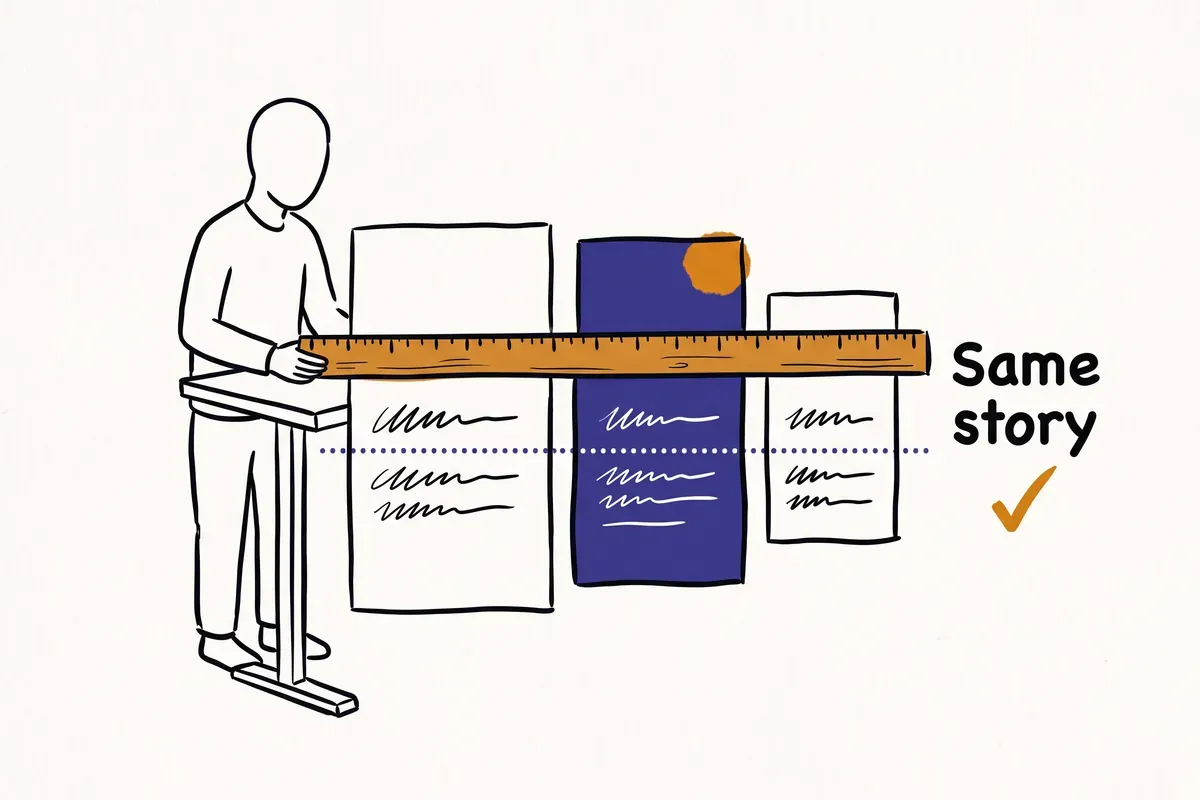
- Put your LinkedIn headline, website bio and other profiles side by side and make sure they tell the same story.
- Check privacy settings on any profile meant for friends and family only.
- Ask for one new recommendation from someone you've worked with recently.
A quick audit checklist:
- Search your name and look at what an employer would find, since employers vet applicants on social media.
- Put your LinkedIn headline, website bio and other profiles side by side, and make sure they tell the same story.
- Check privacy settings on any profile meant for friends and family only.
- Ask for one new recommendation from someone you’ve worked with recently.
What to do next
Start with your own successes, since Babson’s method builds the rest of your brand from them.
- Write down three successes from the last two years, each with one number attached.
- Fill in the brand statement template using the strongest of the three.
- Rewrite your LinkedIn headline with two industry keywords and that number.
- Message one former manager or colleague today and ask for a recommendation.
- Add a calendar reminder for your next work review that says “audit personal brand.”
- If someone else will draft your posts, send them your three successes and your statement before they write a word.
Frequently asked questions
What is personal branding, in one sentence?
In their 2003 book Be Your Own Brand, marketers David McNally and Karl Speak describe a personal brand as "a perception or emotion, maintained by somebody other than you, that describes the total experience of having a relationship with you." That definition puts the brand in other people's heads. So what you do and what you can prove count for more than any slogan you write about yourself.
What are some personal branding tips beyond LinkedIn?
Northeastern's guide suggests putting niche hashtags in your Twitter bio, following leaders in your field and sharing top industry stories. It says Reddit has over 73.1 million daily users, organized into topic communities called subreddits, and that TikTok is popular with Gen Z and Millennials. Pick the platform where your audience already spends its time.
How can students build a personal brand with little work experience?
Northeastern's guide calls a personal brand "a roadmap of where you want to go," so it doesn't have to rest only on work you've already done. The guide suggests weighing your strengths and weaknesses against the industry you want to enter. For career changers, it says a personal brand helps explain how your skills carry over from one industry to another.
Can a ghostwriter build my personal brand?
Babson's guide doesn't mention ghostwriters. It defines a brand by "what people depend on you for," which comes from your own work, so no writer can supply it for you. If you hire one, a practical rule is to hand over your own stories and numbers and approve each draft before it goes out under your name.
Do I need to disclose that a ghostwriter or AI wrote my posts?
The FTC's guide for influencers covers disclosing relationships with brands, such as being paid or getting free products. It doesn't say anything about who drafted your words. It does say that tags, likes and pins can count as endorsements, and that disclosure is your own job: "Don't rely on others to do it for you."
How is personal branding for executives different?
Neither Babson's nor Northeastern's guide gives separate advice for executives. Babson's guide says "people with strong professional brands are more noticeable, trusted, more prepared." Wikipedia notes that building a presence on internal corporate networks lets employees build a personal brand relative to other employees and helps colleagues learn from one another.
Sources
- How to Build a Personal Brand | Babson Thought & Action
- Boosting Your Career with Personal Branding: 10 Tips
- Personal branding - Wikipedia
- 'Selling the Self: Personal Branding and Impression Management on Linke' by Matthew A. Gilbert
- Disclosures 101 for Social Media Influencers | Federal Trade Commission