The right ghostwriting app depends on what you write. mull interviews you and drafts posts from facts you confirm. Jasper serves marketing teams with one brand voice; its single-user Pro plan costs $59 to $69 a month. Grammarly and Wordtune polish your drafts and can generate text. A 2026 study found edited AI drafts felt personal yet kept AI style.
| Product | Jasper |  Grammarly | Wordtune | mull |
|---|---|---|---|---|
| Best for | Marketing teams, especially at larger companies, that want AI agents and workflows to produce on-brand content and campaigns at scale. | People and teams who want AI help to proofread, rewrite and adjust the tone of their writing across apps, browsers and devices. | Students, professionals and non-native speakers who write in English and want AI help with rewriting, tone, grammar checks and summaries. | People who want posts drafted from their own spoken or typed answers to a short interview. |
| Price from | $69.00 a month | $30.00 a month | $6.99 a month | $19.00 a month |
| Free plan | No | Yes | Yes | Yes |
| Languages | Not stated | Not stated | English | Not stated |
| Mobile app | Not stated | Yes | Yes | No |
Key takeaways
- mull asks you questions and drafts posts from your answers. Its Free plan covers 3 posts in total, and Starter costs $19 a month for 10 posts.
- Jasper Pro costs $59 a month billed yearly or $69 billed monthly for one user. Teams that share a brand voice need the custom-priced Business plan.
- Grammarly's Free plan costs $0 and includes 100 AI prompts. Wordtune has a free plan with no credit card required.
- In a University of Maryland study of 81 volunteers, edited AI drafts felt personal to the writers. Measured by style, they still sat closer to AI-generated text.
- The US Copyright Office covers whether generative AI output can be copyrighted in Part 2 of its AI report, published January 29, 2025.
A ghostwriting app is software that drafts or rewrites text you publish under your own name. The right one depends on what you write. mull interviews you and drafts posts from your answers. Jasper is built for marketing teams that need one consistent brand voice. Grammarly and Wordtune polish text you’ve drafted, and both can also generate new text.
In a University of Maryland study of 81 volunteers, people felt their edited AI drafts reflected who they were. Computer analysis still found the final pieces stylistically closer to AI-generated writing than to what the volunteers wrote on their own.
What is a ghostwriting app, and how is ghostwriting software different from a human ghostwriter?
Ghostwriting software turns your input (notes, a voice memo, a writing sample or a rough draft) into text. For how working with a human ghostwriter compares, see the guide to what is ghostwriting.
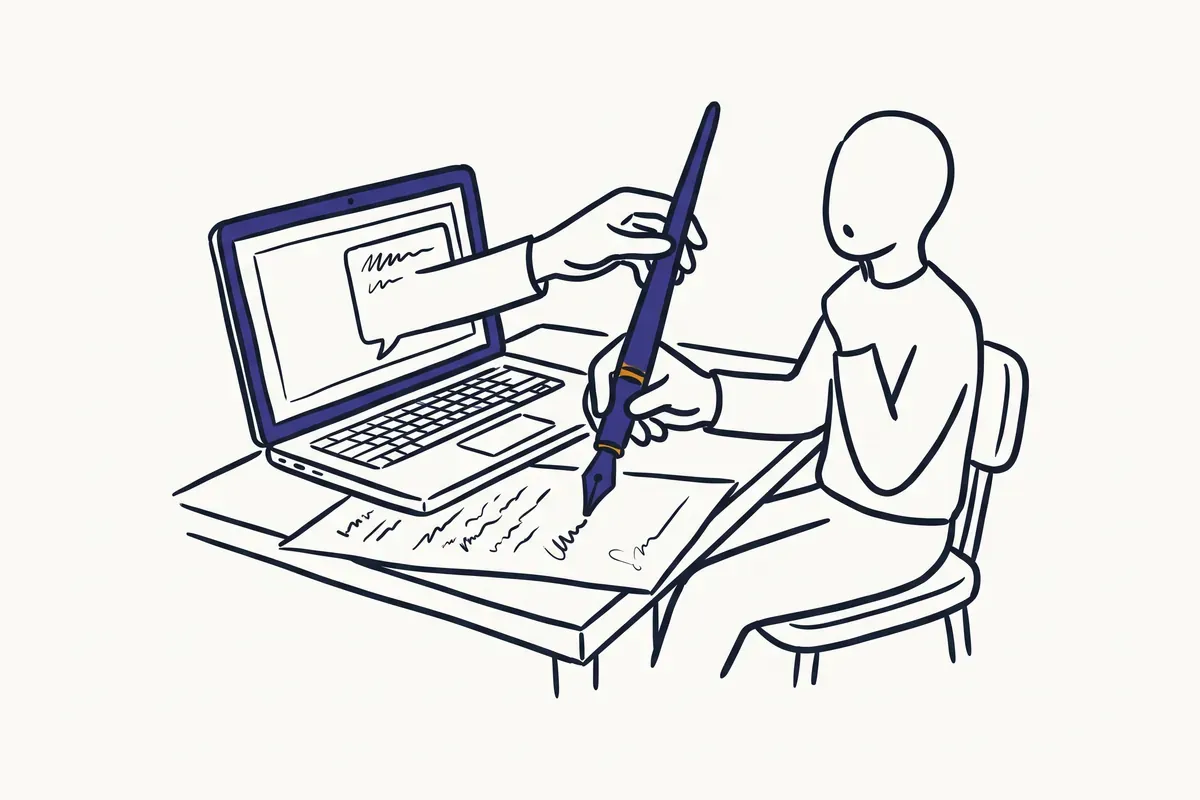
The software can have a side effect. A 2026 paper on authorship in AI-assisted writing warns that even when a tool makes writing more fluent, it may produce a “ghostwriter” effect in which the text feels authored by the system rather than by the user. The same paper notes that prior studies show co-writing with AI can reduce psychological ownership, meaning how strongly you feel the text is yours.
What should you look for in ghostwriting software?
Before you pay, look at how the tool learns your voice, how much control you keep, what happens to your writing, and the price.
Voice
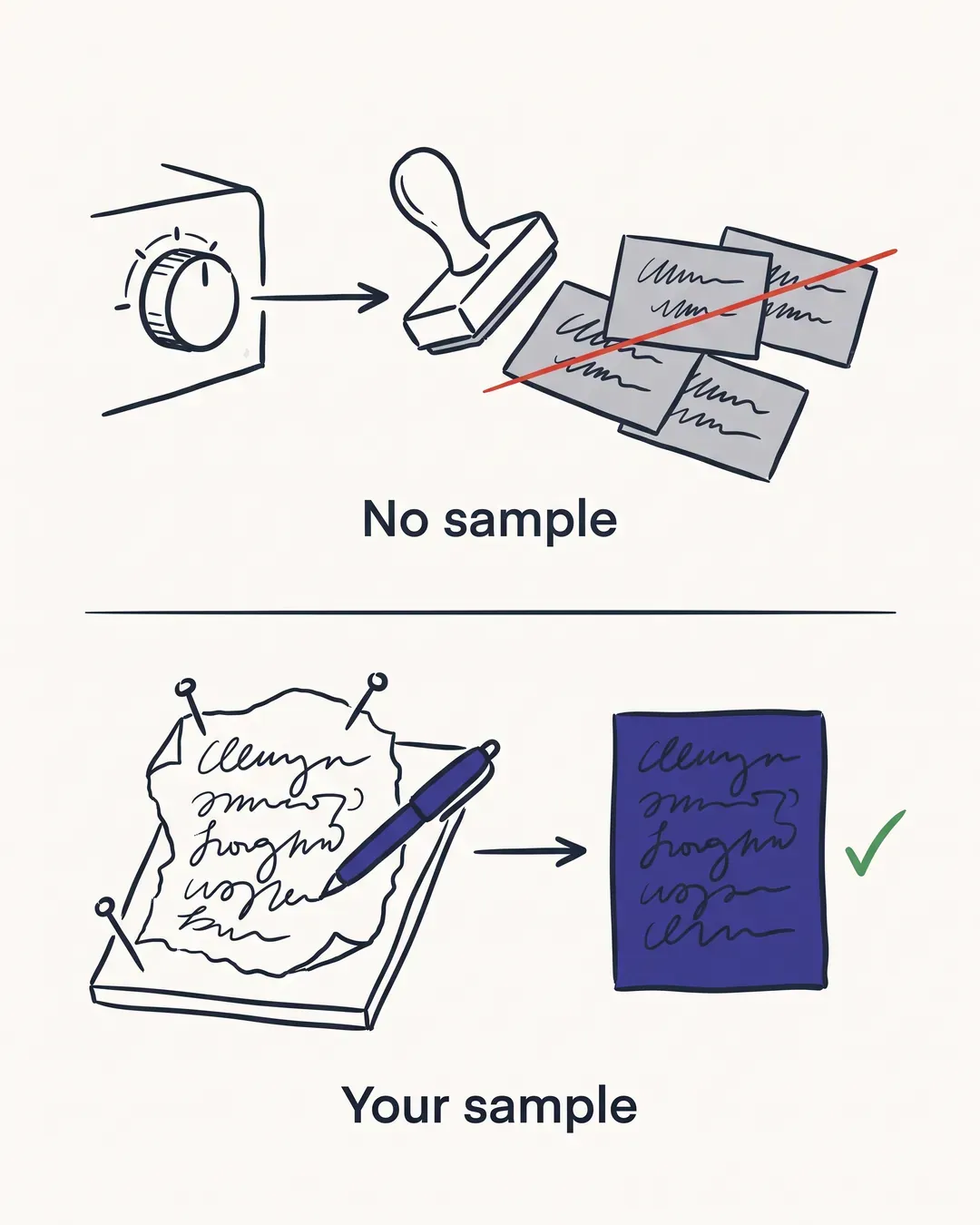
Check whether the tool learns from a sample of your own writing or only from a style setting. In one study, suggestions written without a writing sample leaned on generic words like “leverage” and “paving” and on stock closing lines. Suggestions tuned to a writer’s sample matched that writer’s style more closely.
Control
Check whether you can accept, reject or rewrite each suggestion. Guidelines cited in the 2026 authorship paper call for interactions where users can accept, reject, or revise system output in ways that preserve autonomy. The paper also notes that prior studies found increasing writer investment, such as requiring longer prompts, can partially mitigate ownership loss.
Privacy
A tool that learns your voice needs your writing. Researchers flag that personalization raises privacy concerns because it requires collecting writing samples. Read each tool’s data and training policy before you upload anything private, such as a draft memoir.
Price
Most of these tools offer a free tier or a trial. Check what the free tier actually caps: number of posts, number of AI prompts or days of use.
What does mull do and cost?
Best for: drafting posts from what you say or type, with your names and numbers confirmed before anything is written.
mull doesn’t write from a prompt. It interviews you, one question at a time, and you answer by voice or by typing. You talk about a win, a mistake or a conversation that stuck with you.
Before it drafts, mull shows you the facts it heard, such as names and numbers, so you can confirm them. It then drafts the post in your voice from those answers.
Price: Free gives you 3 posts in total and doesn’t ask for a card. Starter costs $19 a month for 10 posts, and Pro costs $39 a month for 30. Paying yearly gets you 2 months free.
Where others fit better: mull is built around posts. If you want writing help across the apps and websites you already use, Grammarly fits better. If a whole marketing team needs one shared brand voice, Jasper does. If you draft in another language and need English, Wordtune does.
What does Jasper do and cost?
Best for: marketing teams where many people need to write in one brand voice.
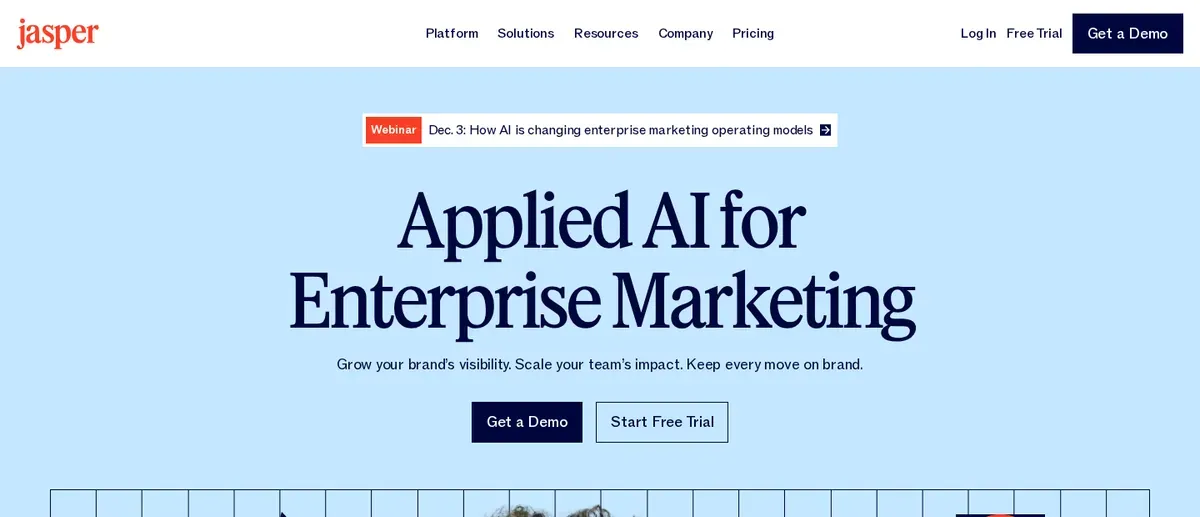
Jasper describes itself as Applied AI for Enterprise Marketing. Its Jasper IQ feature stores your brand voice, style guides, audience profiles and product knowledge, then applies that context to every output across your team. Admins set the rules once, and you can keep several brand voices for different audiences or regions. The pricing page says you can upload a style guide or feed Jasper a piece of content, and it will analyze that style to copy your tone of voice.
Its homepage lists articles, emails, ads and social posts among the content it writes. It also says Jasper can adapt campaigns in 27 languages.
Price: Pro costs $59 a month billed yearly or $69 a month billed monthly. If you need more than one user on Pro, Jasper points you to its sales team for the Business plan, which uses custom pricing and starts with a 12-month commitment. There’s a 7-day free trial of Pro, and nonprofits get a 20% discount.
Privacy: Jasper says it is SOC 2 Type II certified, does not use your data to train AI models, and lets you keep full ownership of your content. Single sign-on is available on the Business plan.
What does Grammarly do and cost?
Best for: polishing, rewriting and drafting text inside the apps you already write in.
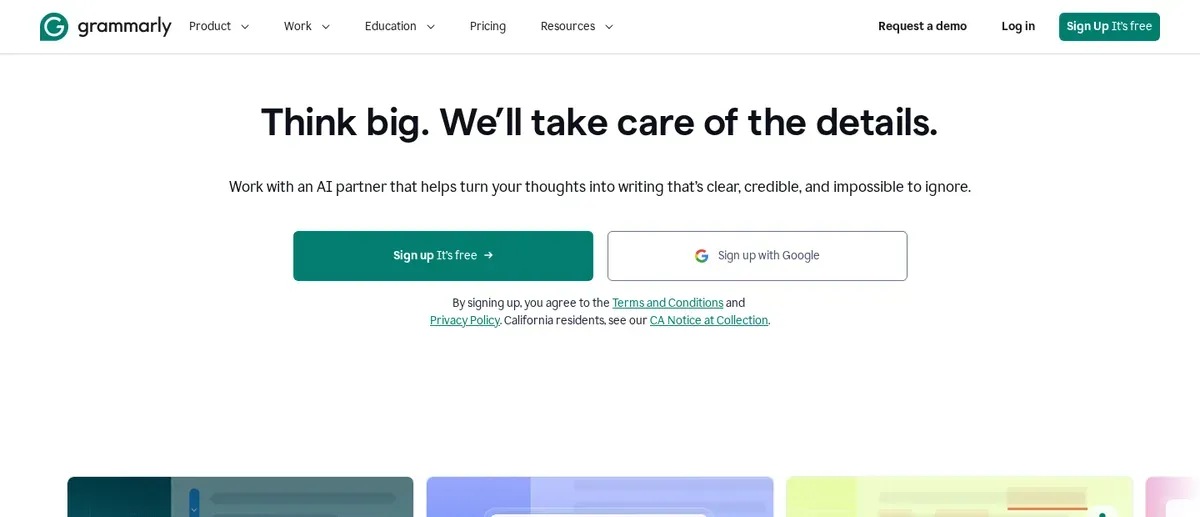
Grammarly’s homepage lists paragraph rewrites, tone suggestions, proofreading, a Humanizer agent and an AI Detector agent. Its FAQ says it helps from outlining and drafting with generative AI prompts through to proofreading. It promises suggestions that help you strike the right tone without losing your authentic voice. Its Paraphraser agent adjusts your writing to sound more creative, professional, or simply more you. Grammarly says it works across 1 million+ apps and websites and supports more than 20 languages.
Price: the Free plan costs $0 and includes 100 AI prompts a month. Grammarly’s features FAQ says Pro adds tone adjustments, strategic suggestions, full-sentence rewrites and 1,000 AI prompts per month. The plans page shows different paid plans by country (in some countries a Plus plan with 2,000 AI prompts per member each month), so check the plan, price and prompt limit shown to you when you sign up. Enterprise is sold through Superhuman Go with unlimited prompts.
Privacy: Grammarly says it does not sell or monetize user content or allow third-party service providers to train their models on it. Its FAQ states plainly: You own what you write.
What does Wordtune do and cost?
Best for: rewording your own sentences, and writers who draft in another language but publish in English.
| Feature | Jasper | Grammarly | Wordtune |
|---|---|---|---|
| Free plan or free version | No | Yes | Yes |
| Generates new text | Yes | Yes | Yes |
| Adapts to your own writing style | Yes | Partly | Yes |
| Writes in languages other than English | Yes | Yes | No |
Key: Yes Partly No
Jasper: Source: jasper.ai, as of Nov 29, 2026
Grammarly: Source: grammarly.com, as of Nov 29, 2026
Wordtune: Source: wordtune.com, as of Nov 29, 2026
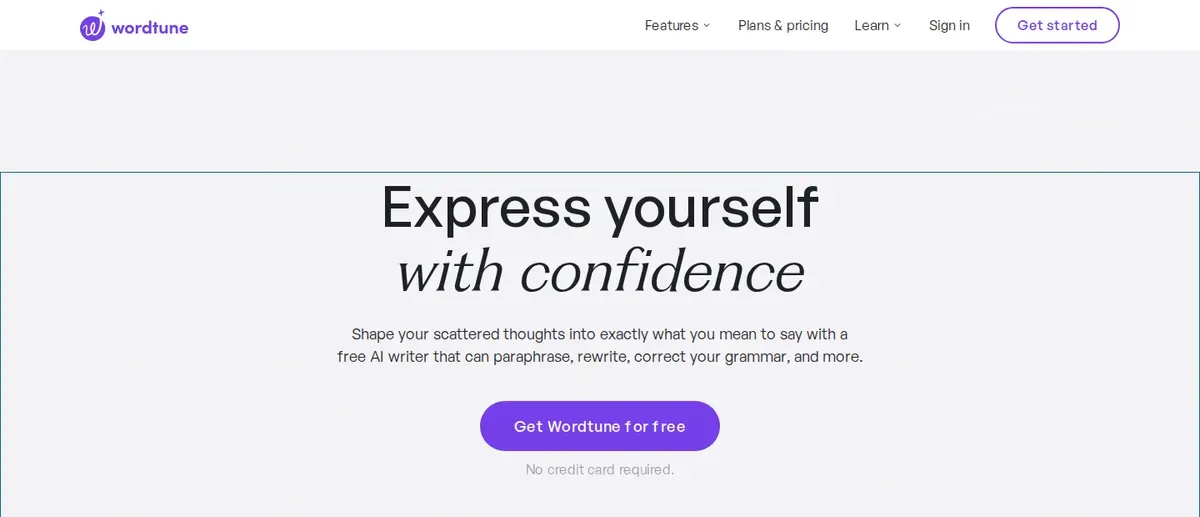
Wordtune offers rewrite suggestions that fit your writing style, a one-click switch between formal and casual tones, and a “Continue writing” feature that picks up where you left off. Its FAQ says it can generate text based on your writing style and summarize documents, webpages and YouTube videos. Wordtune writes only in English. It translates into English from languages including Spanish, Mandarin, Arabic, Hindi and Korean. Wordtune also says it checks at least 5 sources before deeming a fact credible.
Price: you can use Wordtune free with no credit card. Its plans page lists Basic, Advanced and Unlimited tiers, and its FAQ mentions both annual and monthly plans. The free trial lasts 3 days: you enter payment details, but you aren’t charged until the trial ends. Wordtune doesn’t offer refunds. Students, educators and nonprofits can get a 30% discount.
Can an AI app really write in your voice?
Two recent studies give partial answers to whether an AI app can write in your voice, and they measured different things. A 2026 study used style metrics and found edited AI drafts felt personal but kept AI style, while a 2024 study asked readers and found they couldn’t tell AI-assisted work from solo work. Treat both as limited findings, not settled answers.
Before
We're excited to leverage this opportunity to share an important update. This change will pave the way for a sustainable future for our community. Thank you for your continued support!
After
Butter costs us [X]% more than it did last year. On (date), the croissant goes from [old price] to [new price]. Here's exactly where the extra money goes.
81 volunteers
edited AI drafts of their own key ideas in the University of Maryland study; the results stayed closer to AI style
Source: umiacs.umd.edu, as of Nov 29, 2026
4 of 6 writers
for whom readers judged the non-personalized AI piece more likely to be solo human work than the personalized one
Source: arxiv.org, as of Nov 29, 2026
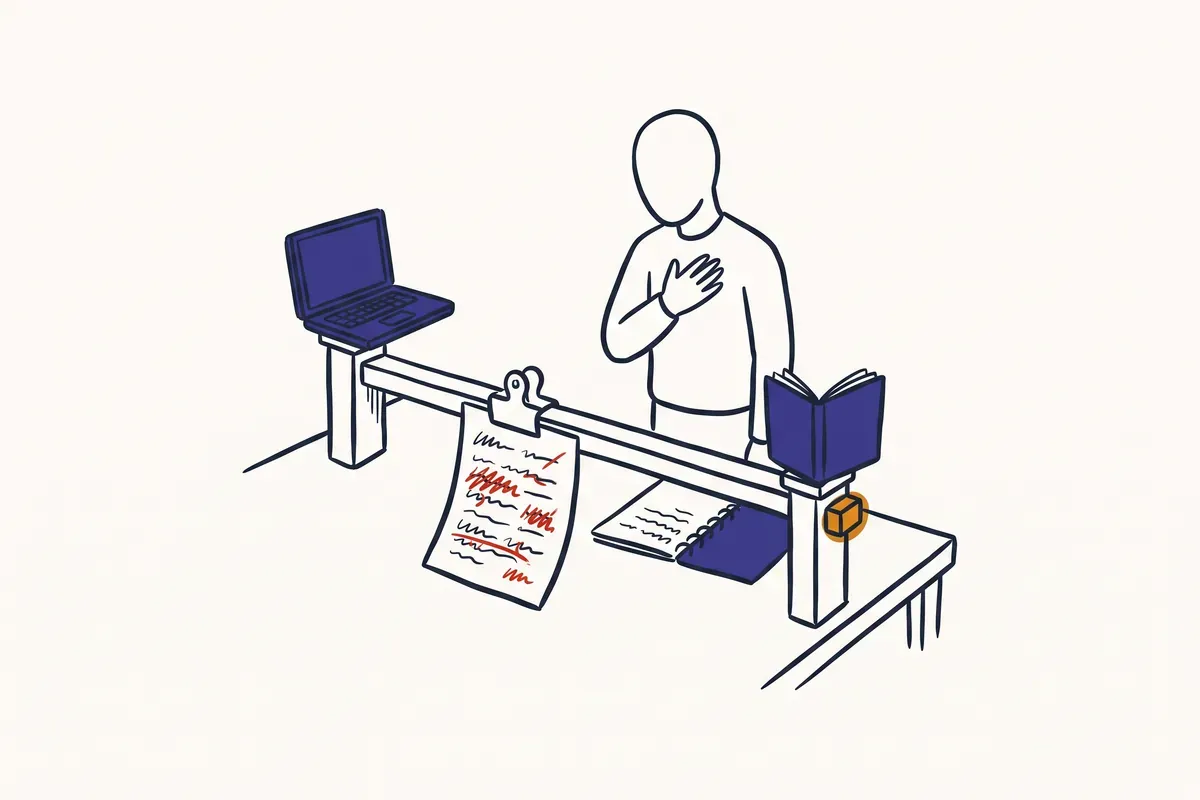
- The University of Maryland study gave 81 volunteers drafts generated from their key ideas and asked them to edit those drafts toward their own style. The volunteers felt the revised drafts fit them. Yet even after substantial editing, the pieces stayed stylistically closer to AI-generated writing than to their solo work. The lead researcher cautioned that automated metrics may miss what a person thinks matters about their style. The work was presented at ACL 2026 in San Diego.
- A 2024 co-writing study found that readers could not tell AI-assisted work, personalized or not, from writers’ solo work. When the researchers looked closely at reader ratings for six writers, for 4 out of the 6 writers readers judged the piece written with non-personalized AI as more likely to be solo human work than the personalized one.
- The 2026 authorship study found that style-tuned suggestions aligned more with the style of the writer’s sample. Its creative-story example produced many metaphors, and its grant-proposal example focused on algorithms.
Two practical points follow. Give the tool a real sample of your writing, since style-tuned suggestions matched writers’ samples more closely. Then cut the generic words and stock closers that showed up when there was no sample. The guide to signs of AI writing lists more of these tells.
Example: a LinkedIn post about raising prices at your bakery.
Before (generic AI draft): “We’re excited to leverage this opportunity to share an important update. This change will pave the way for a sustainable future for our community. Thank you for your continued support!”
After (your facts, your phrasing): “Butter costs us [X]% more than it did last year. On (date), the croissant goes from [old price] to [new price]. Here’s exactly where the extra money goes.”
The second version uses details only you know. It also drops the generic words like “leverage” and “paving” that the 2026 study saw in suggestions written without a writing sample.
Should you use a ghostwriting app or hire a human ghostwriter?
The choice between a ghostwriting app and a human ghostwriter comes down to price, which some app pages state, and voice, where research suggests editing an AI draft may not fully bring back your style.
Pro
$69.00 a month
Included
- $59 a month billed yearly
- 7-day free trial
Limits
- More users need the custom-priced Business plan
Source: jasper.ai, as of Nov 29, 2026
Free
Free
Included
- 100 AI prompts
Source: grammarly.com, as of Nov 29, 2026
On price, Jasper’s Pro plan for one user costs $59 a month billed yearly or $69 billed monthly, while teams that need more seats move to the custom-priced Business plan. Grammarly’s Free plan costs $0. A human ghostwriter’s fee isn’t on any of these product pages. The separate guide to ghostwriter cost breaks down project fees, and the step-by-step guide on how to hire a ghostwriter covers contracts and vetting. The Bureau of Labor Statistics notes that many writers and authors are self-employed.
On voice, weigh the University of Maryland result before you rely on an app for personal writing such as a memoir. Volunteers who heavily edited AI drafts still ended up with pieces that measured nearer to AI style than to their own solo writing, even though they felt the drafts reflected them.
Who owns text written with an AI app?
Ownership has two layers: what the tool’s terms promise, and what US copyright law protects.
On the terms side, Jasper says you keep full ownership of your content, and Grammarly says you own what you write. Those are promises between you and the company.
On the law side, the US Copyright Office has studied AI since launching an initiative in early 2023. Part 2 of its report, published January 29, 2025, addresses the copyrightability of outputs created using generative AI. The Office also publishes registration guidance for works containing AI-generated material (88 Fed. Reg. 16,190, March 16, 2023) and individual decisions such as Zarya of the Dawn (February 21, 2023). If you plan to register a book written with AI help, read Part 2 and that guidance before you file.
A separate fight concerns the books used to train the models. The Authors Guild says a summary judgment decision in its case against OpenAI and Microsoft will likely follow in early 2027.
What to do next
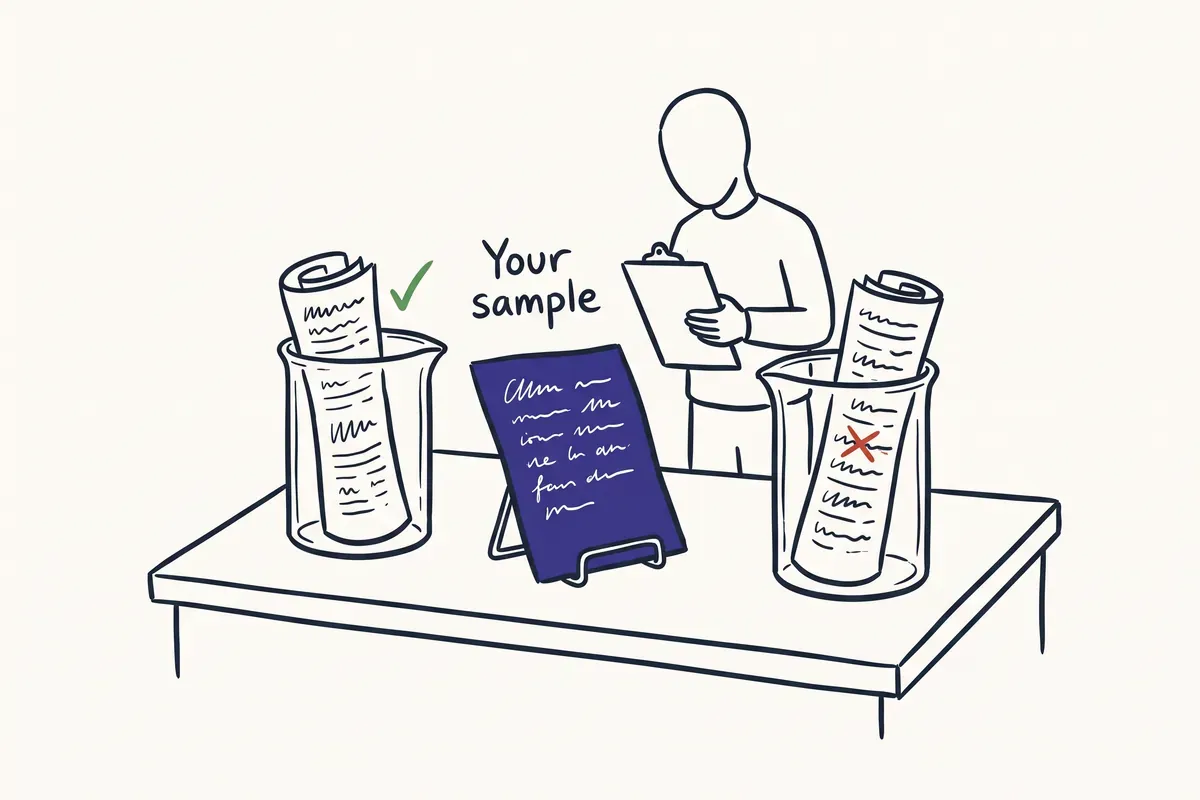
You can pick a ghostwriting app today by testing two of them on a sample of your own writing.
- Name what you're writing: short posts, marketing copy, edits to your own drafts, or a book.
- Pull about 200 words of your own writing that sounds most like you.
- Try a free option or trial before paying.
- Run one real piece through two tools and read both results next to your sample.
- Cut every generic phrase you'd never say out loud.
- Read each tool's privacy policy and turn off any setting you don't want.
- Name what you’re writing: short posts, marketing copy, edits to your own drafts, or a book. Match it to the “best for” line in each section above.
- Pull about 200 words of your own writing that sounds most like you. The 2024 co-writing study asked writers for a short piece of text (about 200 words) that represents their voice.
- Try a free option before paying: Grammarly’s free plan, Wordtune’s free version or Jasper’s 7-day trial.
- Run one real piece through two tools and read both results next to your sample. Cut every generic phrase you’d never say out loud.
- Read each tool’s privacy policy and turn off any setting you don’t want. In Grammarly, you can opt out of tailored assistance on the Feature customization page.
- For a wider comparison that includes general chat assistants, see the guide to the best ai for writing.
Prices and features as of Nov 28, 2026, from each product's own pages.
Frequently asked questions
Is there a free ghostwriting app?
Yes, a few have free tiers. mull's Free plan gives you 3 posts in total and doesn't ask for a card. Grammarly's Free plan includes 100 AI prompts, and Wordtune can be used free without a credit card. Jasper has no free plan, but it does offer a 7-day free trial of Pro.
What is the best AI writing tool for books?
None of the apps covered here sells itself mainly as a book tool. Grammarly's features page describes its Editor as made for accessing and editing long-form documents. If you'll self-publish on Amazon, the Authors Guild reports that Amazon requires KDP publishers to disclose AI-generated content, including text, images and translations.
How does an AI tool learn my writing style?
Some tools read a sample of your writing, and others work from a style guide or brand settings. In one 2026 research system, GPT-4o pulled five style descriptors from a short sample: tone, formality, sentence structure, word choice and rhetorical habits. Those descriptors were then added to every suggestion prompt. Jasper says you can upload a style guide or a piece of content and it analyzes the style to copy your tone.
Is using AI the same as ghostwriting?
In one sense, yes: the text goes out under your name but was partly drafted by something else. Researchers describe a "ghostwriter" effect, where AI-assisted text can feel written by the system rather than by you. Readers may be more relaxed about it than writers are. In one study, readers showed positive attitudes toward writers experimenting with AI for creative writing.
Do I have to disclose that I used an AI app?
That depends on where you publish. Amazon KDP requires you to tell Amazon if a book contains AI-generated content. The Authors Guild also runs a Human Authored certification that writers can use to mark their work as written by a human.
Do ghostwriting apps train AI on my writing?
Check each tool's policy. Jasper says it does not use your data to train AI models. Grammarly says it does not allow its third-party service providers to train their models on user content. Grammarly also lets you opt out of tailored assistance, and the data stored for that feature is then deleted.
Sources
- Who Owns the Text? Design Patterns for Preserving Authorship in AI-Assisted Writing
- 'It was 80% me, 20% AI':Seeking Authenticity in Co-Writing with Large Language Models
- When AI Writes for You, Can It Still Sound Like You? | University of Maryland Institute for Advanced Computer Studies
- Copyright and Artificial Intelligence | U.S. Copyright Office
- Writers and Authors : Occupational Outlook Handbook: : U.S. Bureau of Labor Statistics
- Artificial Intelligence - The Authors Guild
- Put AI agents to work for marketing | Jasper
- Plans & Pricing | Jasper
- Grammarly: Free AI Writing Assistance
- Grammarly Prices and Plans | Grammarly
- Product Features | Grammarly
- Wordtune — Express yourself with confidence
- Wordtune Pricing and Plans | Choose Your Plan