To become a music ghostwriter, learn to write lyrics in another artist's voice and agree pay and credit in writing before you start. Pay can be a flat fee, a royalty percentage or a mix. ASCAP pays performance royalties only to writers linked to a registered work, so write every split down and register your share.
Key takeaways
- Music ghostwriters write songs, lyrics or instrumental pieces for an artist who takes the credit, often under a confidentiality clause.
- Ghostwriters can be paid per hour, word or page, by flat fee, by royalty percentage or a mix; ASCAP pays performance royalties only to writers linked to a registered work.
- ASCAP is free to join for writers, but you still have to register each song with the right shares and metadata.
- The BLS median for writers and authors was $76,910 in May 2025; that page doesn't break pay out for songwriters.
- In hip-hop, ghostwriting is openly debated: Ice Cube says MCs should write their own lyrics, while Chuck D says not everyone is equipped to be a lyricist.
Learning how to become a music ghostwriter starts with one skill: writing lyrics, hooks or whole songs in another artist’s voice. The artist releases the work as their own, and your name is often left off. Pay is whatever your contract sets, from a flat fee to a share of the royalties, so agree on pay, credit and confidentiality in writing before you write for anyone.
Whether you see performance royalties depends on what you sign. It also depends on whether you are registered as a writer of the song with a performing rights organization such as ASCAP.
| Question | Short answer |
|---|---|
| What do music ghostwriters write? | Songs, lyrics and instrumental pieces, according to Wikipedia’s entry on ghostwriters |
| Do they get credit? | It varies. Some sign confidentiality clauses, some appear in liner notes, some talk openly |
| How are they paid? | For ghostwriters in general, per hour, per word or per page, a flat fee, a percentage of royalties, or a combination |
| Do they get ASCAP royalties? | Only when properly linked to the work in ASCAP’s database |
| Does joining a PRO cost money? | ASCAP is free to join for writers |
| What does the BLS report? | A median of $76,910 in May 2025 for all writers and authors, with no separate songwriter figure on that page |
| Is it accepted in rap? | It’s disputed. Ice Cube respects rappers more when they write their own lyrics, while Chuck D defends ghostwriting |
What does a music ghostwriter actually do?
A music ghostwriter writes material that another artist releases as their own. In music, ghostwriters are often used to write songs, lyrics, and instrumental pieces. In pop, a ghostwriter writes lyrics and a melody in the style of the credited musician.
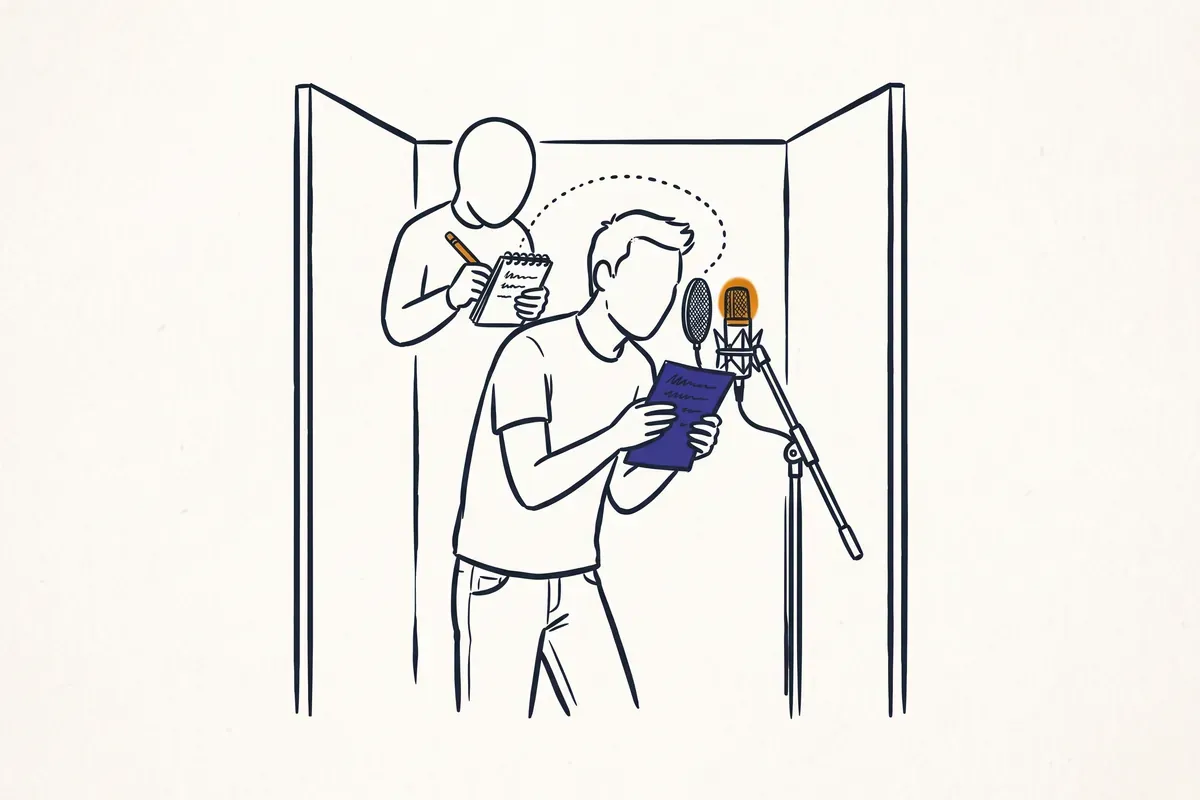
Wikipedia’s entry describes a record company discreetly bringing in an experienced songwriter. It may do this to market an inexperienced young singer as a singer-songwriter, or to help a veteran bandleader coping with writer’s block. In other cases, the ghostwriter writes the song with little or no input from the credited musician.
Credited vs. uncredited work
How much credit you get depends on the deal. Contracts usually include a confidentiality clause that requires the ghostwriter to stay anonymous. A music ghostwriter may be thanked in the album credits without any mention of the service, or may get no acknowledgement at all.
Ghostwriter vs. co-writer in songwriting: what’s the difference?
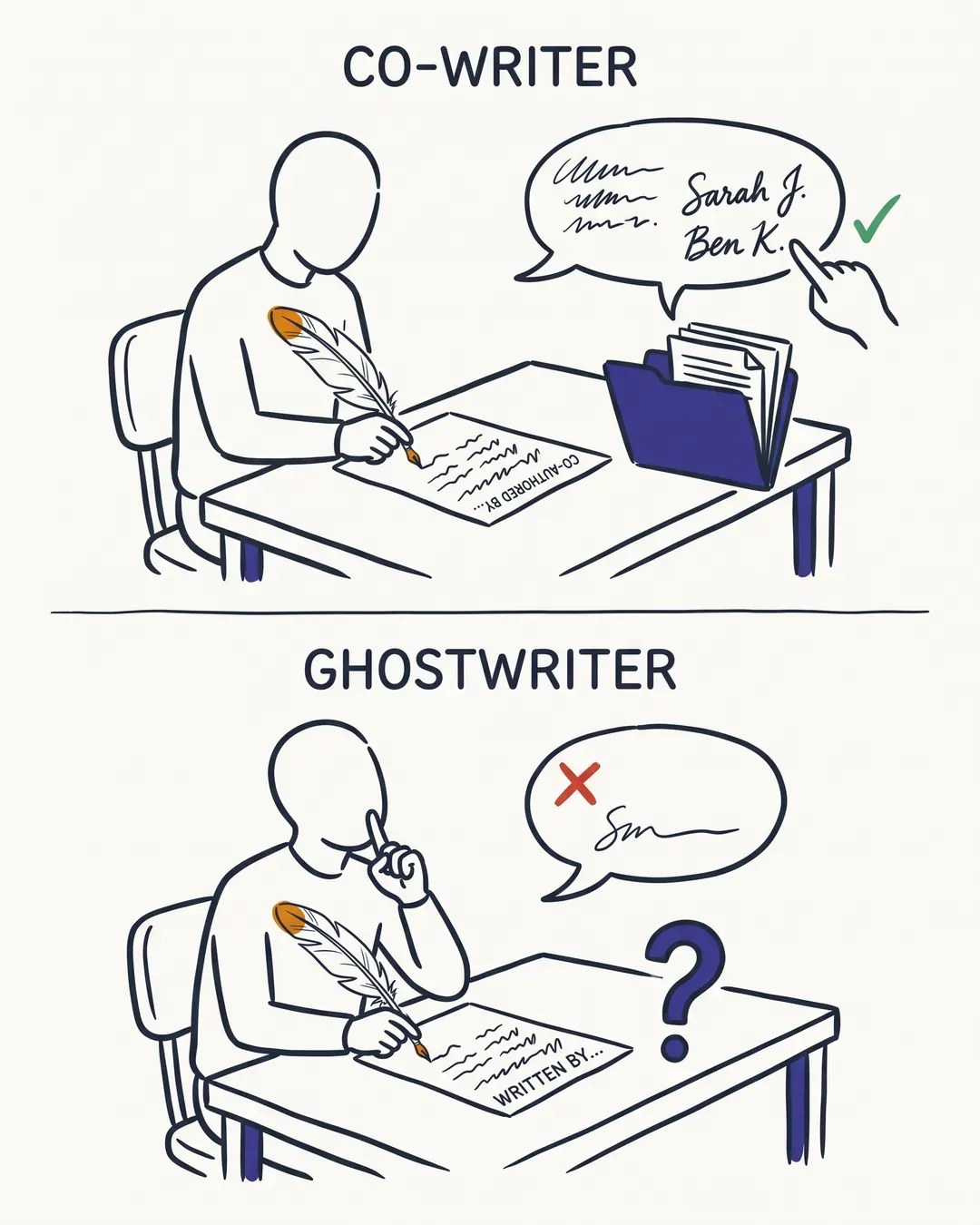
The difference between a ghostwriter and a co-writer is public credit. Wikipedia’s entry puts it plainly: once credit is established for a writer, that writer would not be considered a ghostwriter.
20 %
Low end of the writing income superstar artists may demand on songs they didn't help compose, per publishing executives
Source: rollingstone.com, as of Nov 29, 2026
35 %
High end of that range, per publishing executives quoted by Rolling Stone
Source: rollingstone.com, as of Nov 29, 2026
50 %
The largest request one songwriter says she has seen
Source: rollingstone.com, as of Nov 29, 2026
Credit and money don’t always line up. Rolling Stone reports that, according to publishing executives, superstar artists may demand between 20% and 35% of writing income on songs they didn’t help compose. One songwriter says she has seen requests for as much as 50%. A song’s credits can list someone who wrote nothing and leave out someone who wrote most of it.
What is ghostwriting lyrics, and is it accepted in hip-hop and pop?
Ghostwriting lyrics means writing the words an artist performs as their own. It happens in popular music, and it’s openly argued over in hip-hop. In rap, Wikipedia notes, the growing use of ghostwriters by high-profile stars has led to controversy.
The case against
Critics call it the “perversion of hip-hop by commerce,” because they define rapping as “expressing yourself through your own words, not someone else’s,” as Wikipedia’s ghostwriter entry summarizes. Ice Cube, who has written lyrics for others, including Eazy-E, told MTV: “As far as making music and making records, it don’t matter who write it. As far as emceeing and being a rapper, you should write your own stuff,” as quoted by Billboard.
The case for
Chuck D of Public Enemy thinks that view is mistaken, because “not everyone is equipped to be a lyricist and not everyone is equipped to be a vocalist.” His point is that creating a rap song may require multiple talents. For one artist’s version of this debate, see our post on Drake ghostwriting.
If you plan to write for rappers, expect some clients to want total secrecy and others to credit you. Agree on which one it is before you start.
How to become a music ghostwriter: what skills do you need?
The core skill is writing in someone else’s voice. A ghostwriter is expected to closely replicate the writing style and voice of an author’s previous works while still providing new literary content. For songs, that means matching an artist’s vocabulary, flow and subject matter.
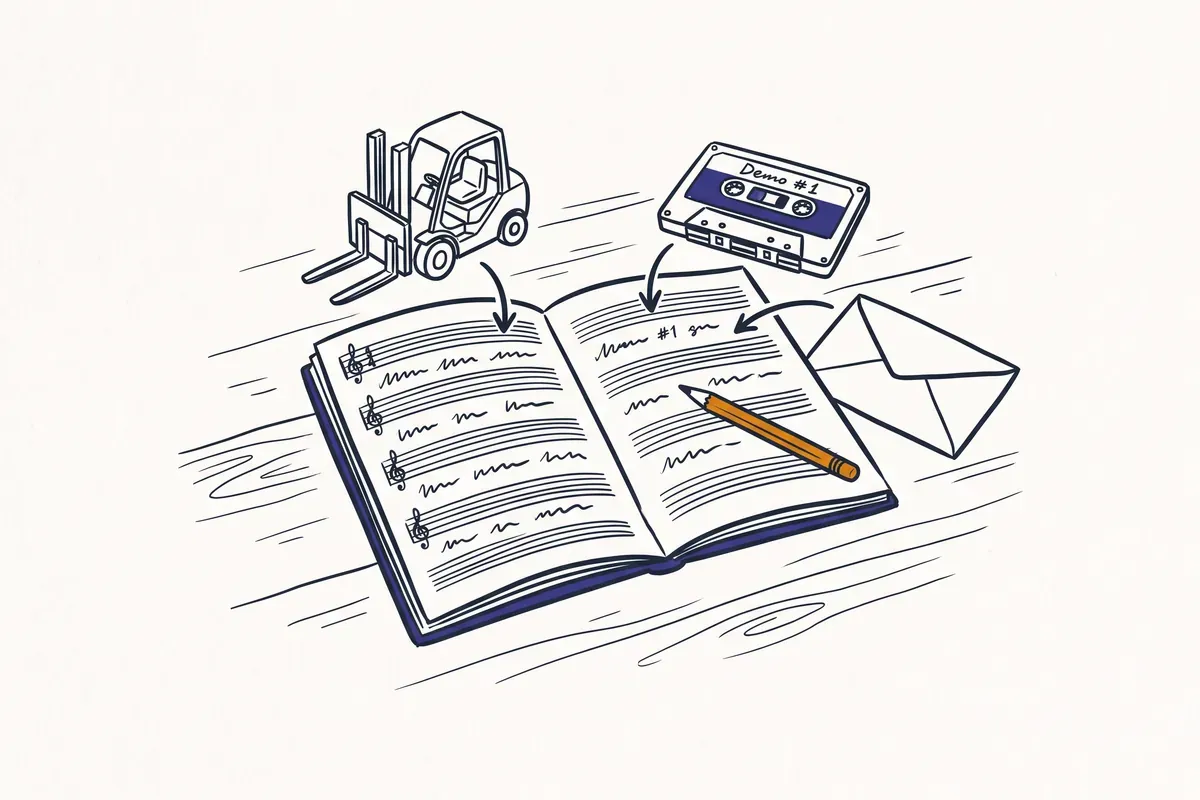
Before
I came from nothing, now I'm on top / Grinding every day and I'll never stop
After
Forklift at midnight, bars in my locker / Mama kept the first tape next to the rent check
For writing jobs in general, the BLS says a college degree in English, communications, or journalism is generally required for a full-time position, and that experience from any writing that improves skill, such as blogging, is beneficial.
To learn an artist’s voice, paste three to ten samples of their lyrics into a writing style analyzer to measure their sentence length, openings and repeated phrases. Then interview them. An interview question generator can give you client interview questions that pull out the specific details a verse needs.
Example: an independent rapper hires you for a 16-bar verse about how far he has come.
Before (generic): “I came from nothing, now I’m on top / Grinding every day and I’ll never stop”
After (built from his interview answers): “Forklift at midnight, bars in my locker / Mama kept the first tape next to the rent check”
The second version uses two facts he gave you: his warehouse night shift, and his mother keeping his first mixtape. A listener hears his life, and that’s what makes the verse sound like his own.
How do you find your first clients?
Your first client can be an artist you already know, or a buyer outside the record business. Our guides to how to become a ghostwriter and ghostwriting jobs cover pitching in general. Here’s what’s specific to lyrics.
Artists in your own circle
Ice Cube wrote lyrics for others, including Eazy-E, his N.W.A partner. If you offer a hook or a verse to an artist you know, get the terms in writing before the session, even if it’s a favor.
Buyers outside record labels
Lyric buyers aren’t limited to recording artists. Rap Rebirth, an online hip-hop ghostwriting service founded in 2008 in Los Angeles, provides custom lyrics for rappers. It makes no claims on royalties, its writers get no formal credit, and it grew through word of mouth and online marketing. In 2011 it launched Heart Raps, which sells custom rap lyrics as romantic gifts, and Rap Rebirth Corporate, which sells hip-hop lyrics for advertising, packaging, branding and business presentations.
That information is more than a decade old, and Wikipedia flags some of the article’s sources as possibly unreliable. Treat it as a model to study, not a current price list. If you study it, note the kinds of buyer it named: rappers, gift buyers and businesses.
How do music ghostwriters get paid: flat fee or songwriting split?
Music ghostwriters are paid on whatever terms their contract sets. For ghostwriters in general, Wikipedia lists pay per hour, per word, or per page, with a flat fee, a percentage of the royalties of the sales, or some combination thereof.
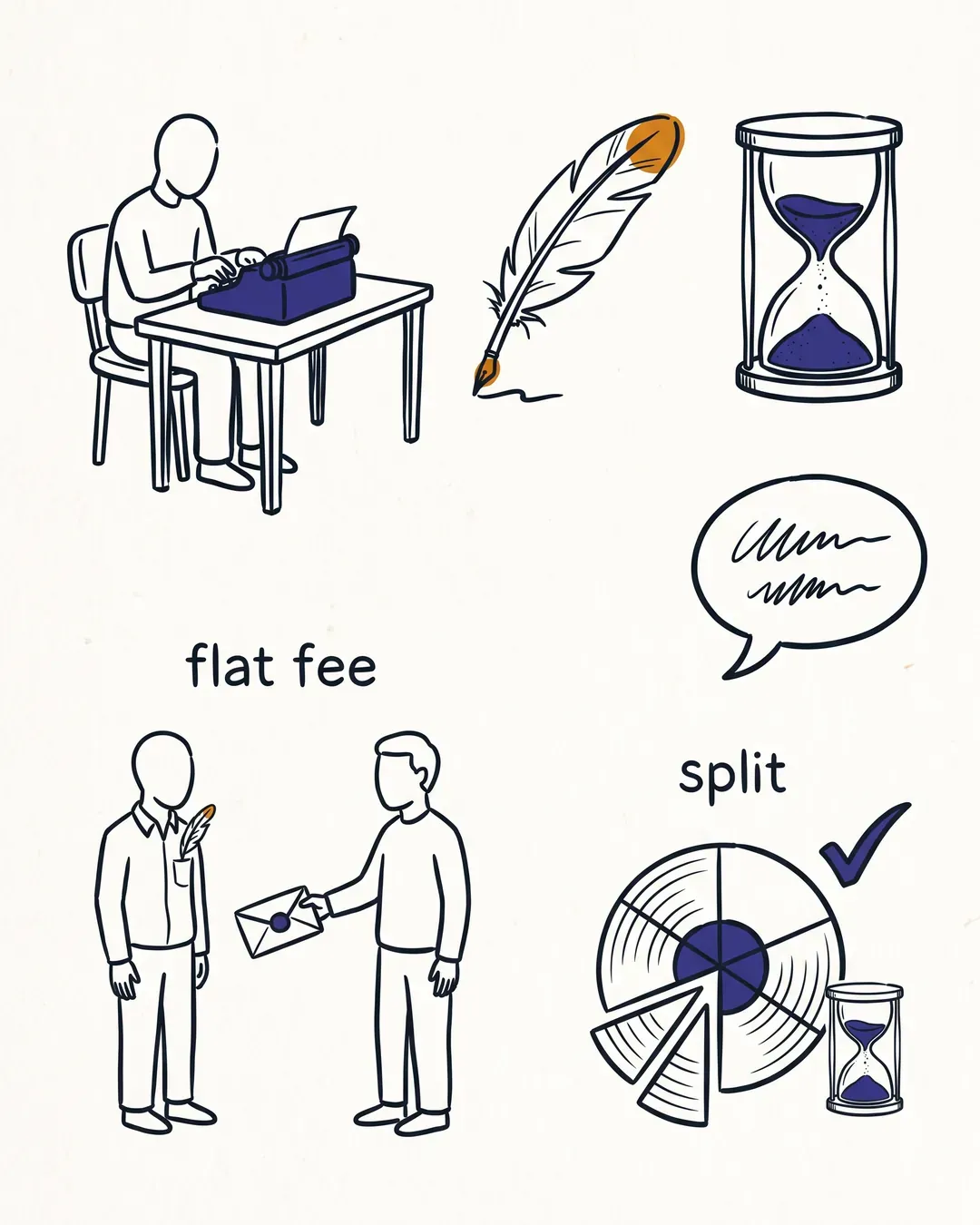
A flat fee pays you now and closes the deal. A songwriting split pays you later and only if the song earns. Rolling Stone defines publishing as the income writers earn from creating the lyrics and melodies for songs.
Set your project rate before you pitch. A ghostwriting rate calculator can turn the income you need into a project rate, which you can then compare against the time a verse or song takes you.
Do ghostwriters get royalties?
A ghostwriter can get royalties if the contract gives them a percentage, but ASCAP performance royalties need one more step. ASCAP’s royalties page says it can only pay you if you are properly linked in its database to the work in question. If your name isn’t on the registration, there’s nothing for ASCAP to pay you.
What the Pact says about giving up publishing
Writers giving up their share is common enough that top songwriters organized against it. Signers of the Pact say they will not give publishing or songwriting credit to anyone who did not create or change the lyric or melody without “a reasonably equivalent/meaningful exchange.” Songwriter Shy Martin told Rolling Stone: “In the beginning of your career, you want to take every opportunity you can. And I didn’t know that I had a choice.” You do have a choice. If you give up a share, ask for something in return, such as a higher fee or a credit.
Who owns the song: work for hire, split sheets and copyright?
A lawsuit over Sarah McLachlan’s album Touch shows how an ownership dispute over uncredited songwriting can turn out. In 1993, Darryl Neudorf sued McLachlan and her label, alleging an uncredited contribution to songs on the album. The judge ruled for McLachlan on the songs, stating that although Neudorf may have contributed, neither regarded the other as a joint author. Neudorf won on a separate payment issue.
If a client’s contract calls your lyrics a “work for hire” or asks you to give up your rights, have a music lawyer explain it before you sign. Ask them to check that it covers any credit you were promised.
Do you need a song split sheet?
Yes, if you’re taking a share: write down every writer’s percentage and have everyone sign it before the session ends. ASCAP lists a collaborator holding a larger portion of the royalty share split as one reason a writer may be paid less than expected. It also says that when there’s a reasonable dispute over credits, it may hold the royalties for the disputed portion.
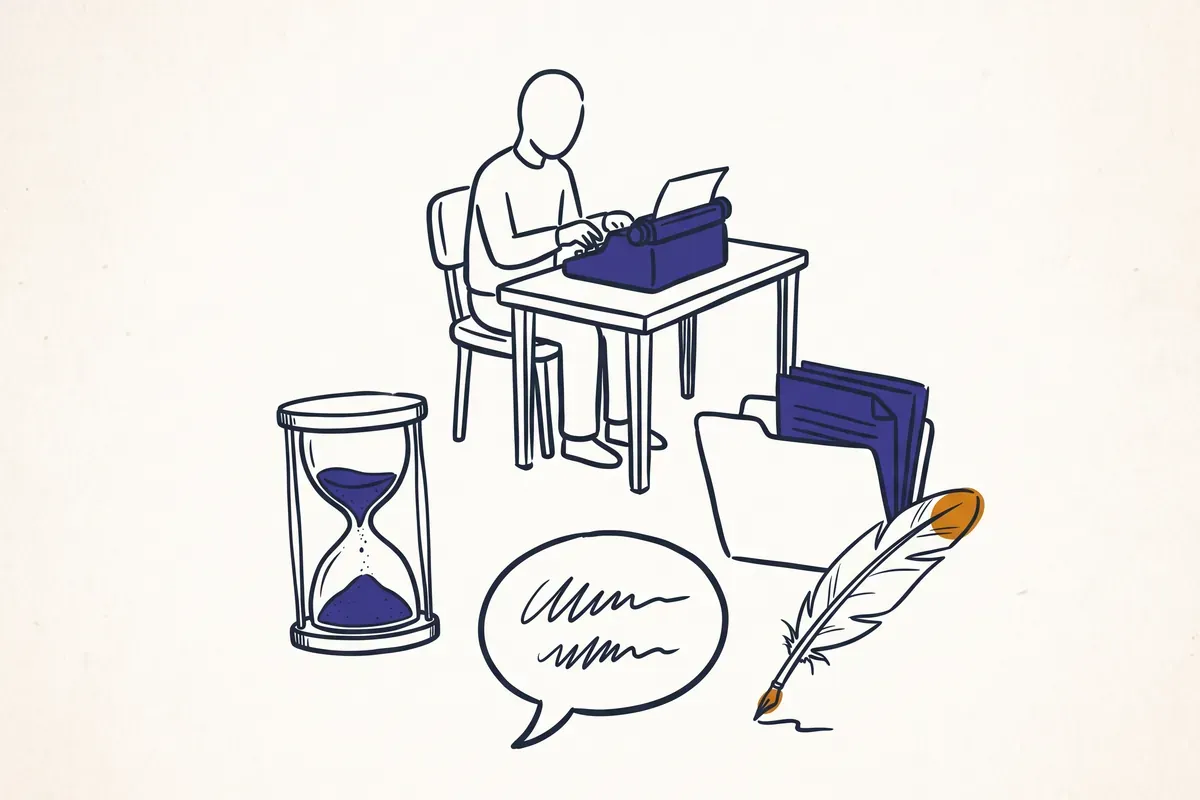
Example: a split sheet for a song written in one session.
- Song: “Late Shift” (working title), dated and signed by all three writers
- The artist: changed the hook melody, 25%
- You: verse and hook lyrics, 50%
- The producer: verse melody, 25%
- Each writer’s PRO, legal name and contact email
Each writer then registers the song with those same percentages. If you sold your share for a flat fee, write that down instead, with the fee and the date.
Should you join ASCAP or BMI, and when do royalties apply?
Join a PRO once you hold a share in a song that will be played publicly. PRO royalties apply only to songs you’re registered on. ASCAP is free to join for writers and says it is the only PRO in America operating on a not-for-profit basis. It reports more than 1.1 million songwriter, composer and publisher members. ASCAP’s pages describe only ASCAP, so read BMI’s own membership terms before you choose.
Checklist
- Register each song through Member Access or the ASCAP mobile app, with every required field and the performer's name
- Add metadata such as alternate titles, performer names and ISRC codes
- For terrestrial radio, upload the audio to Mediabase
- For audio-visual productions, make sure cue sheets reach ASCAP
- For commercials or promos, register the music first, then send the project details
- For YouTube, get your recordings into Content ID through a distributor
- For live shows, submit setlists through ASCAP OnStage with direct deposit set up
- For symphonic or concert music, use the Performance Notification form
- Submit OnStage and Performance Notification claims within the required window
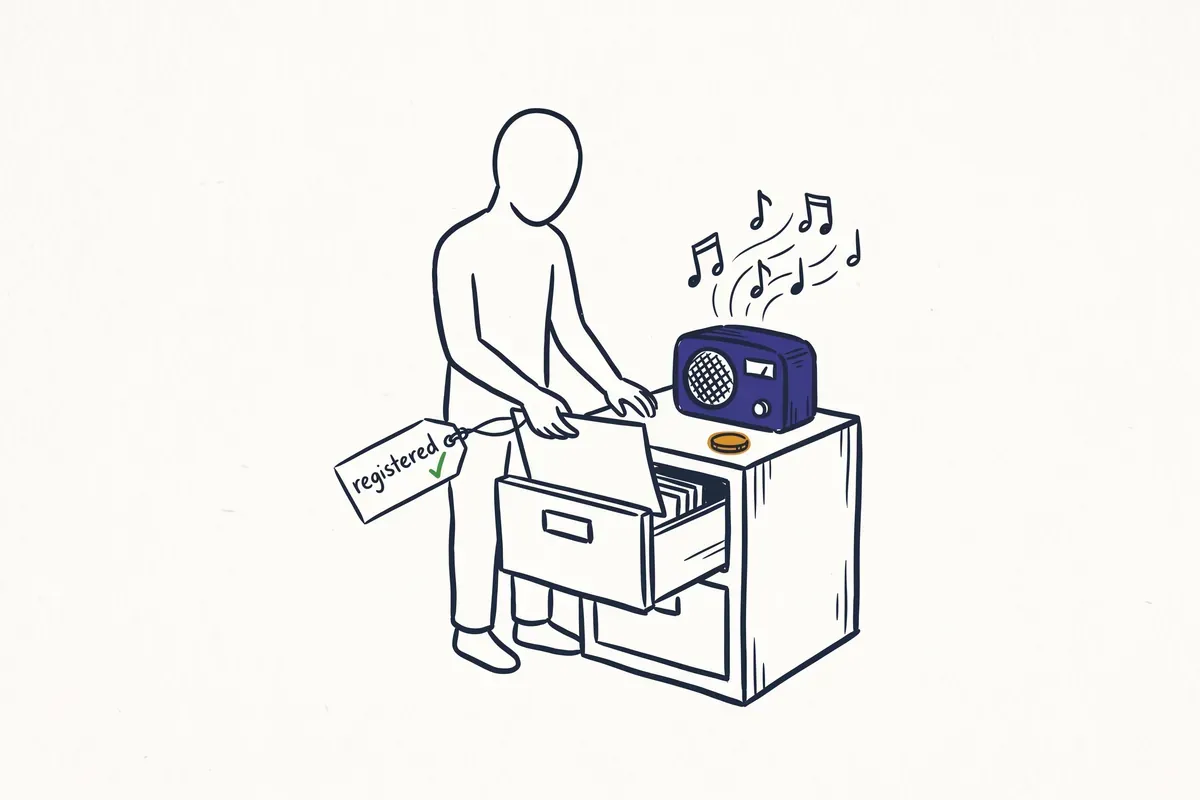
Joining isn’t enough on its own. ASCAP’s royalties page describes steps that help performances get matched and paid, including:
- Register each song through Member Access or the ASCAP mobile app, fill in every required field, and include the performer’s name if the work has been performed.
- Add metadata such as alternate titles, performer names and ISRC codes, which ASCAP uses to match streams to your song.
- For terrestrial radio, upload the audio to Mediabase. ASCAP generally doesn’t pay retroactively for performances that happened before the upload.
- For music in audio-visual productions, ASCAP needs cue sheets for the projects, which it typically receives from production companies.
- For commercials or promos, register the music first, then send ASCAP the additional project details it asks for.
- For YouTube, get your recordings into YouTube’s Content ID system. A distributor like CD Baby or Tunecore should be able to do this for you.
- For live shows at ASCAP-licensed venues outside its survey of top tours and festivals, submit your setlists through ASCAP OnStage. Only an ASCAP writer member can submit, and you must have direct deposit set up.
- If you compose symphonic or concert music, use the Performance Notification form for live performances instead of OnStage.
- Submit OnStage and Performance Notification claims within the required window for that performance period.
How much do music ghostwriters make?
The closest government number covers all writers and authors, and the BLS page doesn’t break it out for songwriters or ghostwriters. The BLS reports a median annual wage of $76,910 for writers and authors in May 2025 and projects little or no employment change from 2025 to 2035, with about 11,900 openings a year. That category includes many kinds of writing, so treat it as context, not a forecast for lyric work.
76,910 USD
Median annual wage for all writers and authors, May 2025 (no separate songwriter figure)
Source: bls.gov, as of Nov 29, 2026
11,900 a year
Projected openings for writers and authors each year, 2025 to 2035
Source: bls.gov, as of Nov 29, 2026
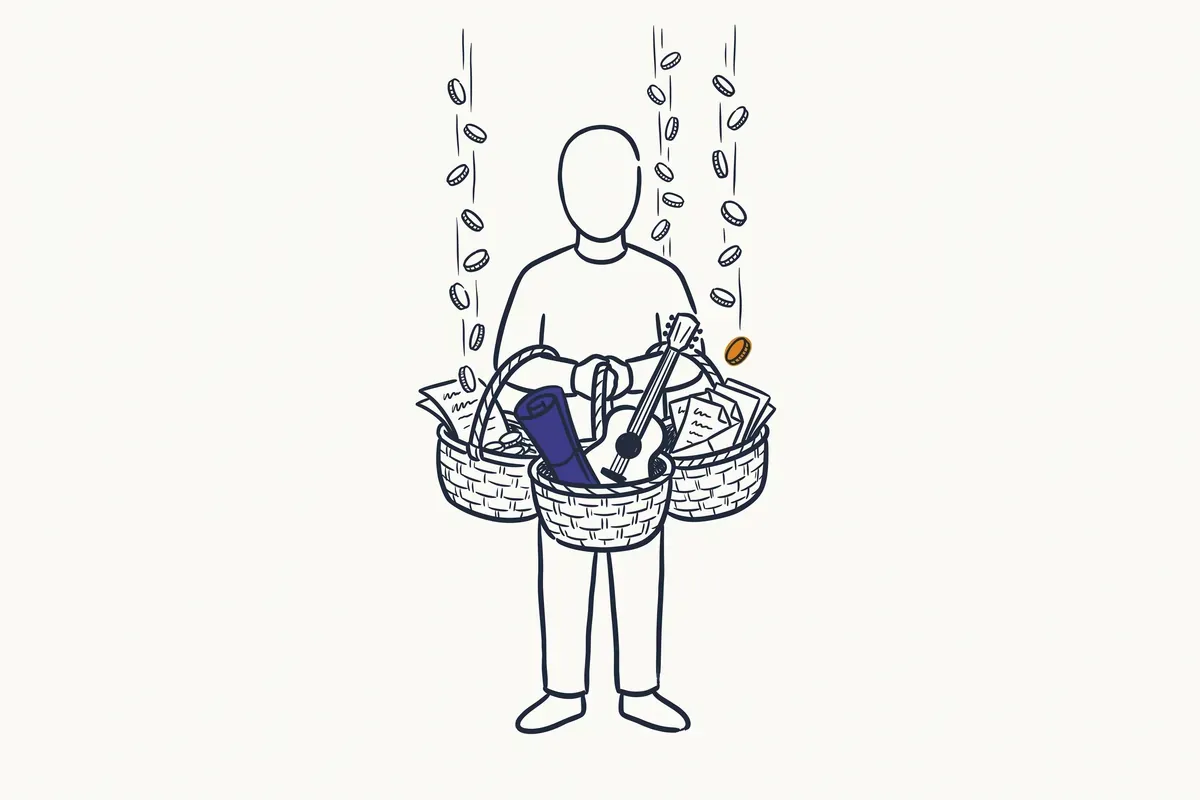
Songwriters describe a tight market. In Rolling Stone, Justin Tranter says streaming has “completely decimated the middle class” of songwriters because per-stream payouts are low. Alastair Webber of The Other Songs warns there may be no non-performing songwriters in less than five years. Plan for lyric ghostwriting to be one income stream among several.
How is the music industry responding to AI?
ASCAP says AI is raising both exciting new possibilities and real concerns for music creators, and it has held an ASCAP AI Symposium on the subject.
If you use AI tools while drafting lyrics, tell your client, and check that your contract says who owns what.
What to do next
You can start on most of this before you have a single client.
- Pick an artist you’d like to write for, study three to ten of their lyrics for voice, and write a verse in that style.
- Draft a one-page agreement template that covers your pay, credit and confidentiality. Have a music lawyer review it once.
- Set your project rate before your first conversation with a client, so you’re not pricing on the spot.
- Join ASCAP or another PRO before your first credited song comes out, and register each work with full metadata.
- Bring a blank split sheet to every co-writing session and get it signed before anyone leaves.
Frequently asked questions
Do music ghostwriters ever get credit?
Sometimes. According to Wikipedia's ghostwriter entry, hip-hop liner notes sometimes credit people for "vocal arrangement," which may be a euphemism for ghostwriting. Some writers later step out under their own name: Frank Ocean started his career as a ghostwriter for artists such as Justin Bieber, John Legend and Brandy.
Can a ghostwriter claim a song later?
A ghostwriter can file a claim, but filing one doesn't mean winning it. ASCAP's royalties page says that if it finds a reasonable basis for a dispute over a work, it may hold the royalties for the disputed portion for as long as it deems appropriate. It will also hold royalties on works in litigation if a court directs it to. Any confidentiality or buyout clause you signed will shape what you can claim, so talk to a lawyer before you act.
Is ghostwriting lyrics legal?
Wikipedia's ghostwriter entry doesn't address whether lyric ghostwriting is legal, but it shows the practice is old: Mozart was paid to ghostwrite music for wealthy patrons. The same entry calls film-music ghostwriting one of the "dirty little secrets" of the business and says it is considered unethical. Have a music lawyer review any confidentiality or rights clause before you sign.
Is ghostwriting in rap bad?
It depends who you ask. When Drake faced questions during his feud with Meek Mill, his producer Noah "40" Shebib defended him by arguing that the end result is what matters musically, as Billboard reported. Ice Cube agreed about making records but said rappers should write their own stuff if they want respect as MCs.
How soon does ASCAP pay after you join?
ASCAP says you can potentially start earning royalties the month after you join, if you register your music soon after joining and it tracks performances in the next distribution period. For radio, it says it can retroactively credit up to one survey year for surveyed performances from before you registered a song, but it generally doesn't pay retroactively for music uploaded to Mediabase after the performance date. Check ASCAP's current distribution schedule for exact payment dates.
Can an AI-generated song make money?
"Heart on My Sleeve" shows both sides. Before it was taken down, the BBC estimated it earned at least US$1,888 from Spotify alone, and Billboard estimated it may have earned US$9,400 across all platforms. The song's removal may also mean the royalties are withheld.
Sources
- Royalties and Payment
- Join ASCAP for Free
- Writers and Authors : Occupational Outlook Handbook: : U.S. Bureau of Labor Statistics
- Ghostwriter - Wikipedia
- Rap Rebirth - Wikipedia
- Heart on My Sleeve (Ghostwriter977 song) - Wikipedia
- Songwriters Are Tired of Having Their Money Taken — By Artists
- Ice Cube: 'I Respect Rappers More When They Write Their Own Lyrics'