Freelance ghostwriting is self-employed writing that a client publishes under their own name. Reedsy's marketplace data puts project fees at $2,000 to $80,000+ and suggests $8,000 to $10,000 for a beginner's first 60,000-word book. Build credited samples, find clients through marketplaces and editors, and sign a contract covering payments, revisions and copyright before writing.
Key takeaways
- Reedsy's data puts ghostwriting project fees at $2,000 to $80,000+, with book projects averaging 35 cents a word.
- Reedsy suggests a brand-new ghostwriter start around $8,000 to $10,000 for a 60,000-word book.
- BLS reports a $76,910 median wage for writers and authors in May 2025, but the page doesn't say whether self-employed writers are counted.
- Credited bylines come before ghostwriting work, because clients need proof that you can write in different voices.
- A commissioned work counts as work made for hire only if it fits one of nine statutory categories and both sides sign a written agreement.
Freelance ghostwriting is self-employed writing that a client publishes under their own name. The work includes books, memoirs, speeches and online content. You interview the client and draft the text, and the client takes the credit. Reedsy’s breakdown of ghostwriter fees puts pay anywhere from $2,000 for shorter-form content to well over $100k for longer formats, and most book work is priced as a flat project fee.
To get started, you need two things. The first is credited samples that show you can write in other people’s voices. The second is a contract that settles payment and rights before you write anything.
| Question | Short answer | Source |
|---|---|---|
| Median pay, writers and authors (all kinds) | $76,910 a year, May 2025 | BLS |
| Openings for writers and authors | About 11,900 a year, 2025–35 | BLS |
| Ghostwriting flat-fee range | $2,000 to $80,000+ per project | Reedsy |
| Average book fee on Reedsy | Around $20k | Reedsy |
| Suggested starting fee for a new ghostwriter | $8,000 to $10,000 for a 60k-word book | Reedsy |
| Industry rate reference | EFA 2026 Rate Chart, “for guidance only” | EFA |
| Work made for hire | Only in one of nine statutory categories, with a signed written agreement | Kernochan Center |
What is freelance ghostwriting?
Freelance ghostwriting is ghostwriting you do as an independent contractor instead of as an employee. Reedsy defines a ghostwriter as “a professional writer who writes for others without taking credit for the work or putting their name on the final product.” It lists fiction and nonfiction books, speeches and online content among the projects (Reedsy).
The ideas usually belong to the named author. Reedsy’s guide to becoming a ghostwriter describes the ghostwriter’s job as putting those ideas into words. That means working closely with each author and noting their thoughts and style, so the finished text reads as theirs.
The BLS profile of writers and authors says they “may work anywhere they have access to a computer,” and that many are self-employed.
Is freelance ghostwriting a real career?
Federal job data covers writers and authors as one group, and the BLS says many of them are self-employed. The Bureau of Labor Statistics reports a median annual wage of $76,910 for writers and authors in May 2025. It projects little or no change in employment from 2025 to 2035. Even so, it expects about 11,900 openings each year, mostly to replace people who change occupations or retire.
76,910 USD a year
Median annual wage for writers and authors, May 2025
Source: bls.gov, as of Nov 29, 2026
11,900 openings a year
Projected openings for writers and authors each year, 2025 to 2035
Source: bls.gov, as of Nov 29, 2026
66%
Share of writers and authors who were self-employed in 2014
Source: bls.gov, as of Nov 29, 2026

Be careful with that median. The current BLS page doesn’t say whether self-employed writers are included. An earlier BLS post on writing careers said its May 2016 wage figures “do not include self-employed workers.” The same post said about two-thirds of writers and authors (65.7%) were self-employed in 2014.
How much do freelance ghostwriters charge?
Freelance ghostwriters set their own rates. The most detailed published ghostwriting figures come from Reedsy’s marketplace, which says they’re based on thousands of projects on Reedsy over 24 months. These figures are Reedsy’s own (Reedsy):
- General nonfiction0.6 USD per word
- Biography & Memoir0.4 USD per word
- All book projects (average)0.35 USD per word
Source: reedsy.com, as of Nov 29, 2026
- Book-writing averages run from roughly $0.15 to $2.50 per word depending on genre, or $2,000 to $50k per project.
- The average fee for book writing on Reedsy is around $20k. Many of its ghostwriters charge more than $80,000 for a full-length book.
- Book projects average 35 cents a word. Biography & Memoir averages $0.40 and general nonfiction averages $0.60.
- Children’s and picture books usually run $1 to $2.50 per word.
Reedsy’s figures differ from page to page. Its career guide gives $2,000 to $60,000 per project, and six figures for celebrity or high-profile authors. If you quote a Reedsy figure to a client, say which page it came from.
The Editorial Freelancers Association publishes a second reference. Its 2026 Rate Chart is based on a survey of over 1,100 people, run from November 2025 to mid-January 2026. The EFA says the rates “are for guidance only and are not mandated or recommended rates.” The EFA rates page adds that the association “neither sets rates nor advises members on what rates or rate types to use.” That page offers the chart as a PDF with a Writing section, plus a converter that switches between per-hour, per-page and per-word rates.
Should you charge per word, per hour or per project?
A ghostwriter quoted in Reedsy’s fee breakdown says freelance ghostwriters are “almost always paid per project.” Reedsy says per-word pricing leaves out the time spent researching, interviewing and outlining, so it suits shorter work. One ghostwriter it quotes charges per word only for projects under 50,000 words. Reedsy’s per-word range runs from $0.15 to $4.
Reedsy sees “very few occasions” to charge per hour in ghostwriting. Clients worry about paying for slow work, and writers feel punished for working fast. It says consulting on voice and content may warrant an hourly rate, and suggests one for revisions beyond what the contract includes.
A flat project fee should cover the research, the writing and a couple of rounds of revision. Reedsy recommends taking payment in installments over the course of the project instead of in one lump sum.
What should a beginner ghostwriter charge?
Beginners can charge less than veterans, but Reedsy warns against working for free. It suggests about $8,000 to $10,000 per book for a brand-new ghostwriter, assuming 60k words. With experience, it says, you can aim for $30,000 to $60,000 per book (Reedsy). Reedsy also advises against taking a share of royalties in place of a fee, because indie book royalties are unpredictable and you may have to chase authors to get paid.
8,000 USD
Low end of the suggested fee for a brand-new ghostwriter, 60k-word book
Source: reedsy.com, as of Nov 29, 2026
10,000 USD
High end of the suggested fee for a brand-new ghostwriter, 60k-word book
Source: reedsy.com, as of Nov 29, 2026
30,000 USD
Low end of the per-book fee to aim for with experience
Source: reedsy.com, as of Nov 29, 2026
60,000 USD
High end of the per-book fee to aim for with experience
Source: reedsy.com, as of Nov 29, 2026

Where do ghostwriting freelancers find clients?
Ghostwriting freelancers find clients on publishing marketplaces such as Reedsy and by contacting editors, agents and businesses directly.
Reedsy
Reedsy is a publishing marketplace. Authors browse profiles of editors, designers, marketers and ghostwriters, request quotes, and then “share files, exchange messages, and manage payments all from one safe place.” Its homepage tells authors that a Reedsy ghostwriter can “help you shape your concept, craft a compelling proposal, and capture your voice.” It also says projects are covered by a project protection guarantee. Reedsy’s career guide notes that there are various freelancing sites for writing jobs, but argues that publishing-specific marketplaces like Reedsy “are more likely to bring you serious requests and lucrative collaborations.” That claim comes from Reedsy itself.

Direct outreach
Your own network can bring in your first project. A ghostwriter interviewed in Reedsy’s career guide got started by letting a few editors and agents know about an interest in ghostwriting. One of them came back with a potential client, and that client later hired the writer for another book. The guide also suggests writing “About” pages for people and organizations whose websites need them.
How do you build a ghostwriting portfolio when your name isn’t on the work?
You build a ghostwriting portfolio from credited writing first, then add whatever your ghostwriting clients let you show. Reedsy’s career guide calls previous credited work “absolutely crucial,” because clients need to judge how well you handle other people’s voices. It recommends doing freelance writing before you take on ghostwriting. It suggests these steps:
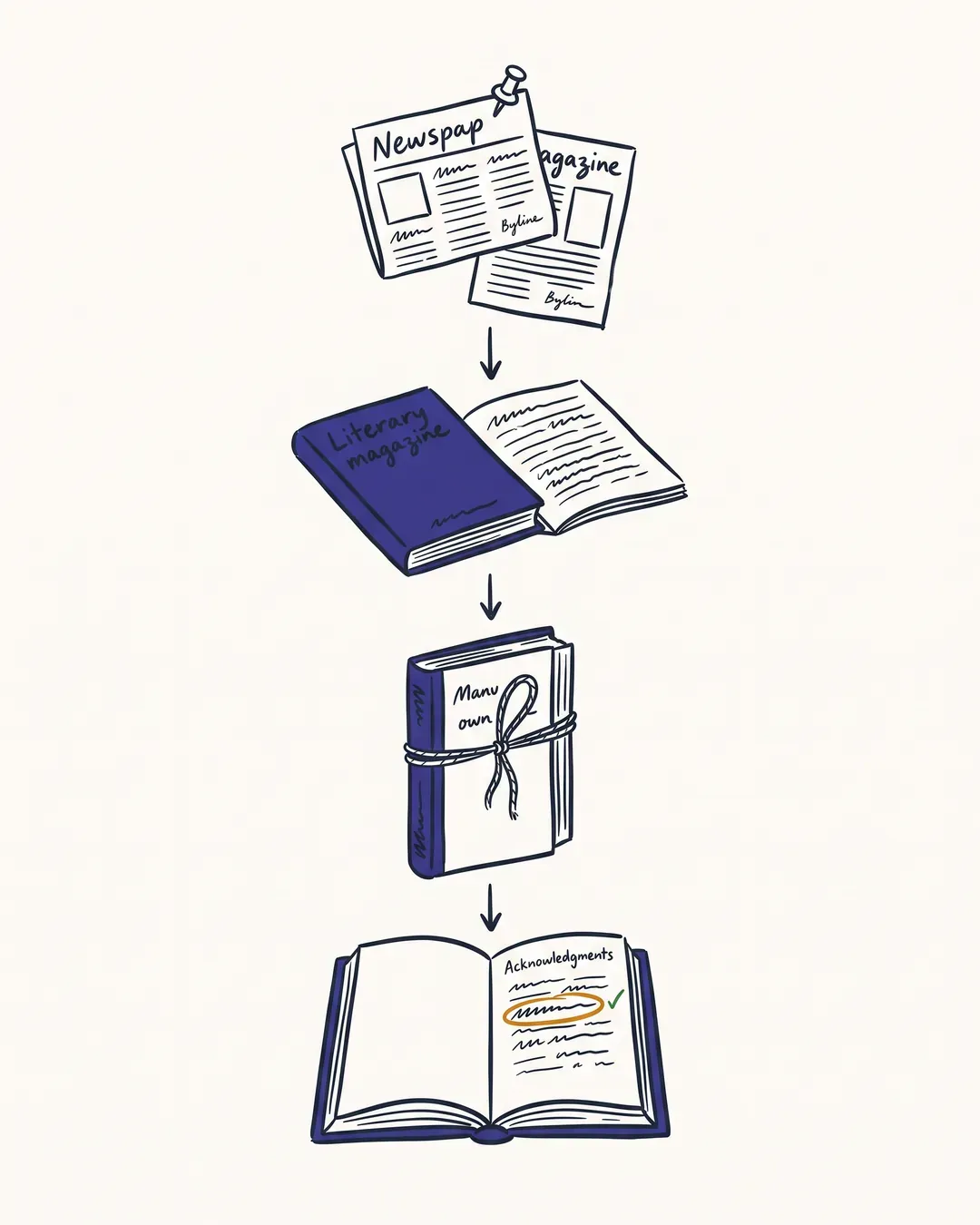
- Pitch magazines, blogs and newspapers with op-eds, listicles and short stories, so you collect bylines in several styles.
- Write longer credited pieces, such as essays for literary magazines, and match them to the ghostwriting you want. For fiction work, that means fiction samples.
- If you want to ghostwrite books, write your own book first. A veteran ghostwriter quoted in the guide suggests at least 50,000 words.
- Practice voice by imitating authors you like in short exercises, or by drafting a friend’s email so it sounds like them.
BLS made a similar point about writers in general. By researching what editors want, writers build a portfolio of “clips” that improves their chances (BLS).
After you finish a project, ask the client for one of the credits Reedsy lists: your name on the copyright page under the author’s, a thank-you in the introduction, foreword or acknowledgments, or a testimonial you can show future clients. Reedsy notes that even though ghostwriting takes place amid NDAs and secrecy, it runs on contacts and bona fides.
What should a ghostwriting contract cover?
A ghostwriting contract should state what the ghostwriter is responsible for, how many interviews or brainstorming sessions there will be, how many rounds of revision you’ll do, and the payment terms, according to Reedsy’s career guide.
Checklist
- What the ghostwriter is responsible for
- How many interviews or brainstorming sessions there will be
- How many rounds of revision are included, and the charge for extra rounds
- Payment terms, with payments tied to deliverables such as an outline or two sample chapters
- Scope set from the word count, timeline, existing material and research needed
- A realistic timeline for a long project, such as six to seven months
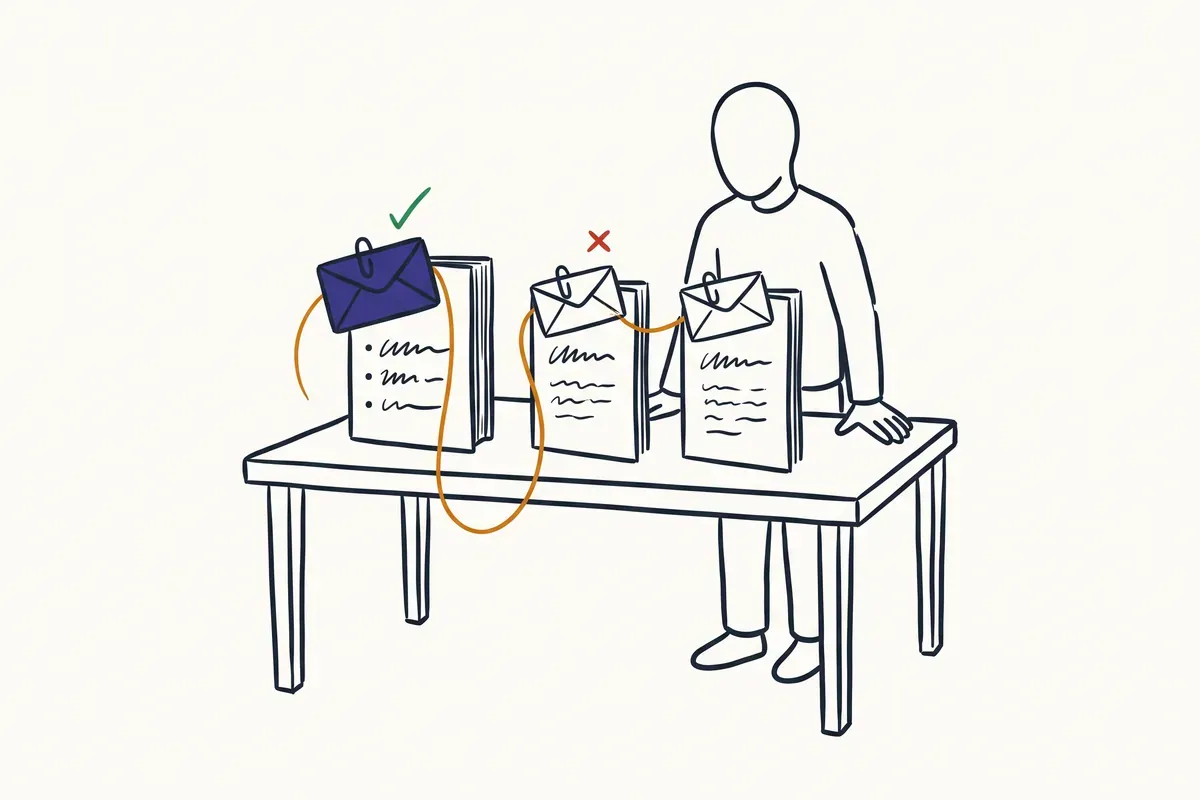
Reedsy’s fee breakdown adds several points:
- Be as specific as possible, and charge extra for revisions beyond what you agreed.
- Tie payments to deliverables, such as a book outline or two sample chapters, so a refund is easy to work out if you part ways.
- Set the scope from the word count, the timeline, any existing material and the research the project needs.
- Plan for a long project. One ghostwriter Reedsy quotes aims for six to seven months, and some books take over a year.
Who owns the copyright: is it work made for hire?
Under the copyright statute, work a freelancer is commissioned to write counts as a work made for hire only in narrow cases, according to Columbia’s Kernochan Center. Two conditions apply. The work must fall into one of nine categories in the statute. Two of the most significant are contributions to a collective work, such as a magazine or anthology, and parts of an audiovisual work. Both sides must also sign a written agreement that explicitly calls the work for hire. If the work doesn’t fit a category, the Kernochan Center says “it is NOT a work for hire, no matter what your contract says,” and you start out owning all the rights.

The Kernochan Center adds that the agreement should be signed before you create the work. It warns against after-the-fact moves, such as a check whose endorsement line says that signing it makes the work for hire. This section is general information, not legal advice.
How do you price your first ghostwriting project?
You price a first project by starting from a published reference, converting it to the unit you’ll quote in, and splitting the fee into milestones.
Before
My rate is $10,000 for the book.
After
Memoir, approx. 60,000 words, approx. seven months. Fee: $10,000, paid in four equal installments: one quarter on signing; one quarter when you approve the outline and two sample chapters; one quarter on delivery of the full first draft; one quarter on delivery of the final manuscript, after two rounds of revision. Additional revision rounds are billed at an hourly rate agreed in advance.
Example: you’ve been asked to ghostwrite a memoir of about 60,000 words, and it’s your first book.
- Start from a reference. Reedsy’s suggested starting range for a new ghostwriter is $8,000 to $10,000 for a book this long. At Reedsy’s Biography & Memoir average of $0.40 a word, the same book would cost $24,000.
- Pick your number. Say you choose $10,000, the top of Reedsy’s beginner range.
- Split the fee by deliverable.
Before:
My rate is $10,000 for the book.
After:
Memoir, approx. 60,000 words, approx. seven months. Fee: $10,000, paid in four equal installments.
- One quarter on signing; interviews begin
- One quarter when you approve the outline and two sample chapters
- One quarter on delivery of the full first draft
- One quarter on delivery of the final manuscript, after two rounds of revision
Additional revision rounds are billed at an hourly rate agreed in advance.
Swap in your own word count and fee. Then divide the fee by the word count to see how your per-word figure compares with Reedsy’s genre averages.
What do clients hiring ghostwriting freelancers look for?
Clients hiring ghostwriting freelancers look for proof that the writer can match a voice, and for a contract they understand. Reedsy’s career guide says clients use credited samples to judge whether a writer suits their book idea. It also says a good proposal answers the questions of someone who has never hired a ghostwriter before. One ghostwriter in the guide tells clients up front that no writer nails someone else’s voice on the first try, and that getting it right takes some back-and-forth. If you’re the client, ask for samples in your genre and a contract that lists interviews, revision rounds and payment dates.
Can AI tools help freelance ghostwriters?
An AI tool such as mull can draft posts under your own name from an interview with you. Reedsy’s career guide doesn’t mention AI, but it does say it’s crucial to write regularly in the field that interests you, because that leads you toward the clients you want to work with.
With mull, you say what’s on your mind, or type it, and it asks one question at a time, quoting your own words back to ask for what’s missing. Before it writes, it shows every name, number, date and quote it heard so you can confirm or correct them. It then drafts the post in your voice and marks any sentence your confirmed facts don’t support.
What to do next
You can start on freelance ghostwriting today with the clips you already have, a written fee and a contract template.
- Collect your credited clips and sort them by voice and genre.
- Write down a per-project fee and a per-word fee, checked against the beginner range and the EFA rate converter.
- Draft a contract template with your responsibilities, number of interviews, revision rounds and milestone payments.
- Read the Kernochan Center's page on works made for hire before signing any for-hire agreement.
- Email a handful of editors and agents you know to say you're taking ghostwriting projects.
- Offer to write an About page for a business in your niche, for a byline or a testimonial.
- Collect your credited clips and sort them by voice and genre. Pick the ones that come closest to the work you want.
- Write down a per-project fee and a per-word fee, using Reedsy’s beginner range and the EFA rate converter to check them.
- Draft a contract template that states your responsibilities, the number of interviews, revision rounds and milestone payments.
- Read the Kernochan Center’s page on works made for hire before you sign any agreement that calls your work “for hire.”
- Email a handful of editors and agents you know to say you’re taking ghostwriting projects.
- Offer to write an “About” page for a business or organization in your niche, and ask for a byline or a testimonial in return.
Prices and features as of Nov 28, 2026, from each product's own pages.
Frequently asked questions
Do ghostwriting freelancers need experience?
For full-time writing jobs, the BLS says a college degree in English, communications or journalism is generally required, and experience from internships or blogging helps. A freelance ghostwriter quoted in Reedsy's career guide calls the early phase a "breaking in" period, when setting a lower fee than experienced ghostwriters improves your chance of being hired. The same guide sets the absolute minimum for ghostwriting a book at $2,000.
Is ghostwriting legal and ethical?
Reedsy's career guide calls ghostwriting "very much legal, so long as the idea behind the book is the author's." It also says getting no public credit is normal for a ghostwriter and is legal as long as you get paid. The guide doesn't discuss ethics beyond that.
Do ghostwriters ever get credit?
Sometimes. If the author agrees to share credit, Reedsy says the ghostwriter's name often follows "as told to" on the cover or in the front matter. When a ghostwriter is named as co-author, Reedsy's pay breakdown says they can get 8% to 50% of royalties, depending on the negotiation.
How do I make sure I get paid fairly?
Reedsy warns against letting an acknowledgment in the book stand in for proper pay, especially when the client offers royalties only. To check a quote against published figures in another unit, use the EFA's rate converter, which switches between per-hour, per-page and per-word rates.
How much do ghostwriters make at the top end?
Reedsy's pay breakdown says ghostwriters with several bestsellers who are represented by agents can expect six-figure fees. Its career guide also expects a six-figure payment for a book written for a celebrity or high-profile author.
Can a beginner join Reedsy as a ghostwriter?
You can apply, but Reedsy's homepage says it accepts only around 1% of freelancer applications to its marketplace. The same page says every professional has a detailed Reedsy profile showing their experience, past projects and real-world results.
Sources
- Writers and Authors : Occupational Outlook Handbook: : U.S. Bureau of Labor Statistics
- Put Your Writing Skills to Work : U.S. Bureau of Labor Statistics
- EFA Announces 2026 Editorial Rate Chart - The Editorial Freelancers Association
- Editorial Rates - The Editorial Freelancers Association
- Works Made for Hire | Kernochan
- How Much Do Ghostwriters Make: The Ultimate Breakdown
- How to Become a Ghostwriter in 8 Steps (Pro-Level Advice)
- Reedsy: Find the perfect editor, designer or marketer | Reedsy